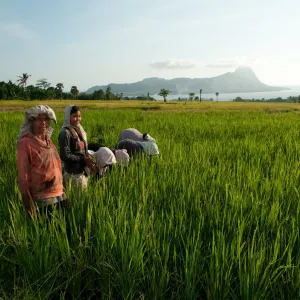
Launch of the CGIAR Research Program on Dryland Systems


Launch of the CGIAR Research Program on Dryland Systems
Learn more about our global research partnership.
How we work to reduce rural poverty, improve food security, nutrition and health and sustainably manage natural resources.
Our collaborative research agenda.
Our 15 agricultural research centers innovating for poor people
Securing investments for a food secure future

Helping farmers use seasonal forecasts as a tool for improving crop strategies

The famous quote, “Water, water, everywhere, nor any drop to drink”, may become a quote of past, at least for the coastal cities, if desalination by renewable energy takes off. Desalination is a process that removes salt and other minerals from sal…

Lionel Maeliu, 40, lives at Busurata village in the highlands of Malaita Province, Solomon Islands. He is a subsistence farmer with six children and has limited formal education. In an interview with Lionel he said since his youth days, he has seen his…

Join us on a journey to find out more about work we are doing to promote the use and conservation of agricultural and forest biodiversity. Bioversity International celebrates smallholder farmers who are using and conserving vital biodiversity around th…
Throughout the world, poor fisheries management contributes to resource degradation, poverty, and food insecurity. This European Union project on an Ecosystem Approach to Small-scale Tropical Marine Fisheries is led by WorldFish and implemented in coll…
Mangroves are an important resource for the rural coastal people of Solomon Islands. Mangrove forests are critical for food security and the livelihoods of coastal communities in Solomon Islands. In particular, mangroves are an important source of food…

There is a great need for research aimed at understanding drought tolerance, screening for drought tolerant varieties and breeding crops with an improved water use efficiency. Bananas and plantains are a major staple food and export product with a worl…

Highlights from an independent assessment of stakeholder perceptions