

Sustainable Animal and Aquatic Foods

Overview
We will provide a way to boost access to nutritious foods while reducing emissions and supporting inclusive livelihoods. By combining diverse livestock and aquatic systems, we will create opportunities to address local challenges with integrated solutions tailored to specific contexts.
We envision to improve the lives and well-being of people in low- and middle-income countries by sustainably transforming animal and aquatic food systems, so they foster inclusive, healthy, and nutrient-dense food supply chains that are climate- and environmentally- friendly.
Our goal
Our work contributes through
Technical Report

Where we bring benefits
The countries and locations listed below reflect where CGIAR and its partners reasonably expect their work to generate benefits:
- Global
- Region: Eastern Africa; Southeast Asia, Latin America, South Asia, West Africa
- Countries: Bangladesh, Colombia, Ethiopia, Ghana, India, Kenya, Malaysia, Mali, Nepal, Nigeria, Tanzania, The Socialist Republic of Viet Nam and Uganda
Challenges
Challenges we’ll address
- Animal and aquatic food systems impact and are impacted by climate change
- Limited access and affordability in animal and aquatic food value chains
- A lack of comprehensive data that constrains investment and policy decisions in value chains
- Productivity gaps and understanding what bundles of solutions work in specific contexts
- Animal disease and antimicrobial resistance because of environmental degradation
Our publications
Identify, locate and download research and other outputs produced by our program/accelerator
-

A rapid tool for understanding how knowledge users engage with research findings in researchfordevelopment contexts
Promoting the use of research findings in development projects is essential but often overlooked during study design. Existing frameworks for...
-
Impact evaluation of a small ruminant flock health intervention on animal health welfare and farmer income in Ethiopia
This study evaluated the impact of a flock health intervention addressing key animal health and welfare challenges in small ruminants in Ethiopia...
-

Advancing iCLEANED Progress applications and priorities for scaling
The iCLEANED technical workshop, held in Nanyuki, Kenya, on 28–30 September 2026, reviewed progress in tool development, regional applications and...
-
Animal welfare as a driver for One Health progress Unlocking the potential of animal welfare for the One Health in approach to transform agrifood systems

Areas of work
Productivity+
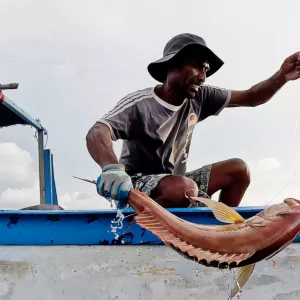
Increases the productivity, profitability, and emissions efficiency of livestock and aquatic systems by developing and scaling integrated innovations across genetics and breeding, feeds and forages, and animal/fish health.
Climate and the Environment
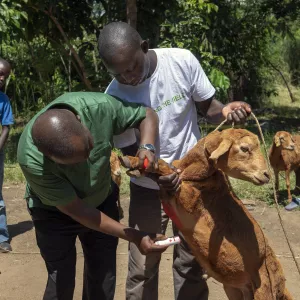
Builds the evidence base and tools for low-emission, climate-resilient animal and aquatic food systems, advancing emissions measurement (e.g., enteric methane monitoring), low-methane forages, climate finance mechanisms, and community-led adaptation.
One Health
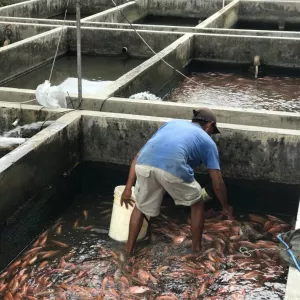
Tackles shared health risks across people, animals, and ecosystems by reducing zoonotic and foodborne disease, improving food safety in informal markets, and curbing antimicrobial resistance, while operationalizing integrated One Health service delivery.
Market Systems, Policy Solutions and Scaling
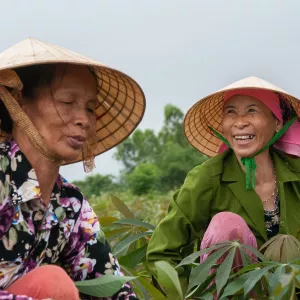
Strengthens inclusive market systems through decision-support tools, institutional and behavioral models, and policy engagement that catalyze investment and scale innovations into national strategies and private-sector delivery.
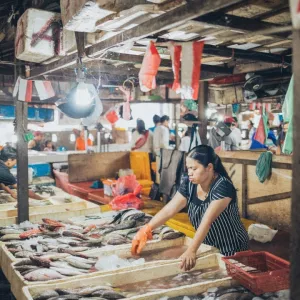
Gender, Youth and Social Inclusion
Leads strategic research and coordinates integration across the other AoWs to advance gender-equitable norms, women's and youth empowerment, and inclusive access to services through tools, tested interventions, and measurable behavior change.
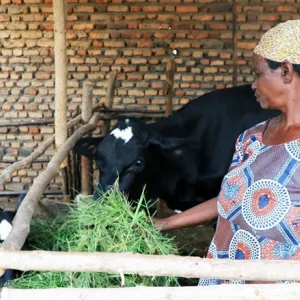
Data and Digital Solutions
Provides the digital backbone for the program by developing FAIR-aligned data systems, AI-enabled analytics, and scalable digital public goods (e.g., Peskas, AQUADMC, advisory apps) that translate data into decision-support across farm to national levels.
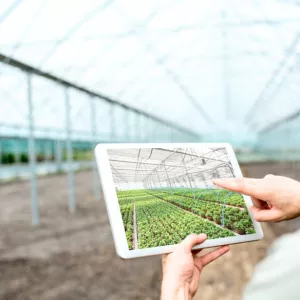
Our approach
Interlinked support across CGIAR’s portfolio
Our program will complement the Better Diets and Nutrition, Breeding for Tomorrow, Climate Action, Multifunctional Landscapes, Sustainable Farming, Policy Innovations, and Scaling for Impact programs, and the Capacity Sharing, Digital Transformation, and Gender Equality & Inclusion accelerators.
Working to share our capacity with
- national partners, government agencies, and decision-makers
- smallholder farmers and small and medium entrepreneurs
- scientists and researchers
Our expertise
- Strong ties with agricultural research institutes, governments, local universities, community-based organizations, and NGOs
- Excellent laboratory facilities embedded in different areas worldwide
- Interdisciplinary teams of biophysical and social scientists and data analysts with extensive knowledge and experience in the low- and middle-income countries
Events
News
-

Strengthening Local Leadership to Protect Fisheries and Water Resources in Cambodia
In Cambodia’s Tonle Sap floodplains, water connects farms, fisheries, ecosystems and communities.
-
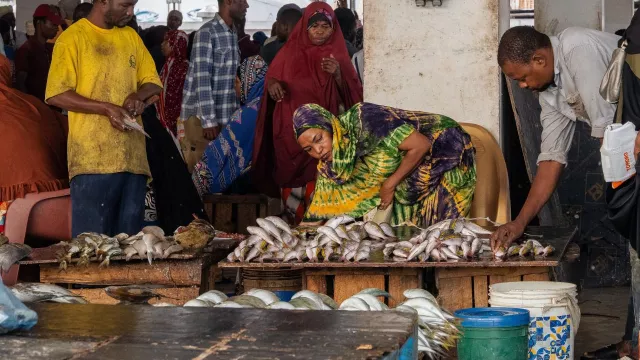
New Fisheries Initiative Targets 25,000 Jobs
Africa’s fish market is worth an estimated USD 22 billion a year and demand is growing.
-
Open configuration options Weather-Proofing Aquafeed Research in Zambia
Every year, when temperatures drop across parts of Zambia, fish farmers and researchers face the same challenge.
-

Testing Aquatic Food Business Models for Livelihoods, Nutrition and Conservation in Cambodia
Aquatic food business models have the potential to enhance food safety, nutrition, and food security while generating income for small-scale farming...