

Multifunctional Landscapes


Overview
The CGIAR Multifunctional Landscapes (MFL) Science Program is part of the CGIAR 2025–2030 Research and Innovation Portfolio. It advances integrated management of food, land, water, and ecosystems across scales. While implementation takes place at plot and farm level, where farmers make daily production decisions, these actions are designed to connect to landscape-level processes, where environmental systems, governance, markets, and social dynamics interact. By linking farm-level practice with landscape transformation, MFL supports coherent, system-wide change.
Across the world, food insecurity, biodiversity loss, land and water degradation, climate risks, and inequality are deeply interconnected. Yet responses have often been fragmented, advancing single objectives in isolation and creating trade-offs elsewhere. MFL responds to this challenge by treating landscapes as the unit of transformation, enabling integrated approaches that deliver food production, ecosystem restoration, biodiversity conservation, climate resilience, livelihoods, nutrition, and social inclusion simultaneously.
Our goal
The goal of the Multifunctional Landscapes Science Program is to enable productive, biodiverse, climate-resilient, and socially inclusive landscapes, where progress on food security, climate action, biodiversity, and livelihoods reinforces rather than undermines each other.
By 2030, MFL contributes to CGIAR portfolio ambitions to:
Technical Report

Where we bring benefits
The countries and locations listed below reflect where CGIAR and its partners reasonably expect their work to generate benefits:
- Global
- Regions: Eastern Africa, Latin America; Northern Africa; Southern Africa; South Asia; Southeast Asia; Western Africa
- Countries: Cambodia, Colombia, Côte d'Ivoire, Ethiopia, India, Kenya, Laos PDR, Peru, Senegal, Tanzania, Tunisia, Zimbabwe, Vietnam
- Ecoregions: Andes-Amazon Systems (Colombia and Peru); Sudano-Sahelian Systems (Senegal); Forest-Savanna Transition Zones (Côte d’Ivoire); Dryland Mediterranean Systems (Tunisia); Central India; Lake Victoria (Kenya, Tanzania); Gibe-Omo Basin (Ethiopia); Lower Mekong (3S River Basin—Sesan, Sre Pok, Sekong—Lao PDR, Cambodia, Vietnam); Highland Hot Sub-Humid Rainfed Transition (Central India), Lower Zambezi Basin (Zimbabwe)

Challenges
Food systems and land use sit at the center of multiple global crises. Agriculture and food systems are major drivers of deforestation and greenhouse gas emissions, while ecosystem degradation undermines food production, water regulation, and climate resilience. At the same time, nearly three billion people cannot afford a healthy diet, and climate change is increasing the frequency and intensity of droughts, floods, and heat stress, particularly in low- and middle-income countries.
Despite decades of investment, many responses remain sector-based and fragmented, focusing on productivity, conservation, or climate mitigation in isolation. This has often led to unintended trade-offs, where gains in one area undermine progress in others. The core challenge is not a lack of solutions, but the absence of approaches that can manage trade-offs and unlock synergies at the scale where these challenges intersect: the landscape.
Our publications
Identify, locate and download research and other outputs produced by our program/accelerator
-

When scale matters Drivers of faunal diversity in cacao production landscapes in the Peruvian Amazon
-

Strengthening market linkages and SRP certification to support agroecological transition in Vietnams Mekong Delta rice sector
In 2025, the Alliance of Bioversity International and CIAT and Rikolto International Vietnam supported rice cooperatives in Đồng Tháp Province,...
-

Implementación del BioComercio Lecciones aprendidas desde la Estrategia Regional para la Promoción del BioComercio con Enfoque Agroecológico de Ucayali Perú
Informe de Politicas - Implementación del BioComercio: Lecciones aprendidas desde la Estrategia Regional para la Promoción del BioComercio con...
-
Leaf functional traits and farmer knowledge predict decomposition of shadetree leaves in Colombian cacao agroforestry

Areas of work
Solutions and Innovations: Agroecology, Nature-positive, Regenerative and Nutrition-sensitive
Agroecology+ solution bundles enhance food production and human diets, while supporting ecosystem restoration, biodiversity protection, and climate adaptation and mitigation. Integrating science-based experimentation with local knowledge, the Program applies agroecological principles and collaborates with stakeholders in target multifunctional landscapes to co-develop technological, socioecological, organizational and institutional innovations.
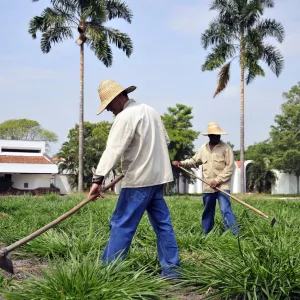
Landscape Optimization and Inclusive Planning
Actionable land- and water-use plans for multifunctional landscapes are informed by forecasting and modeling. To ensure landscape decisions help reconcile agricultural, conservation, livelihood and climate objectives, the Program works with partners and stakeholders in prioritized landscapes to co-develop inclusive landscape planning processes, scenarios, and shared visions. Spatial analysis tools such as Digital Twins are applied to optimize multifunctionality and assess trade-offs.
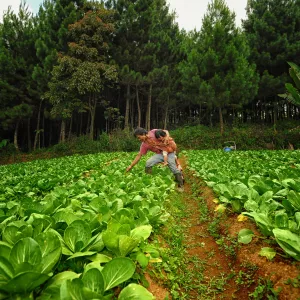
Business Models, Markets, and Sustainable Finance
The co-creation of knowledge on markets and consumer preferences provides incentives for the adoption of multifunctional landscape solutions. Options include green business opportunities, circular economy approaches, as well as economic and financial valuation of ecosystem services and disservices to support investment and long-term viability. The approach prioritizes demand-driven capacity strengthening of producer organizations and stakeholders so they can effectively respond to emerging market opportunities and sustainability requirements.
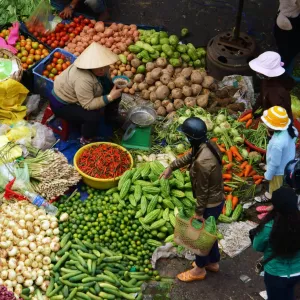
Governance, Institutions, Policy, and Inclusion
Evidence, tools and policy engagement support decision makers at all levels in managing inclusive multifunctional landscapes sustainably and advancing global biodiversity commitments. The Program integrates political economy and institutional analysis with capacity sharing and science-policy dialogue. Social science research develops strategies to address gender inequality and social exclusion. Continuous engagement and learning reshape research priorities in response to feedback, megatrends, and evolving stakeholder needs.

Performance Assessments & Evidence Generation
Co-developed assessment frameworks, stakeholder-centered knowledge systems, and AI-enabled digital monitoring tools, strengthen evidence–based decisions. Cross-CGIAR impact indicator frameworks are aligned and applied to evaluate landscape multifunctionality in collaboration with local to global stakeholders. Evidence is made accessible in knowledge hubs that enhance accessibility and usability of information for individual, institutional, and collective decision-making.
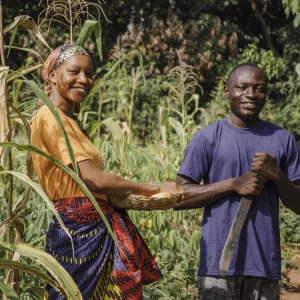
Our approach
Landscapes are where ecological processes, production systems, governance arrangements, markets, and social relations converge. These dynamics play out across interconnected scales, from individual farms and plots to forests, rangelands, wetlands, and aquatic systems. Decisions about land use, water management, food production, and conservation are negotiated in real places, linking farm-level practices with broader landscape processes.
Working at landscape scale allows the Program to address multiple objectives simultaneously, align local action with national and global goals, and generate solutions that are context-specific yet transferable.
How We Work
The Multifunctional Landscapes Science Program works through Multifunctional Living Landscapes, place-based territories for integrated landscape transformation. These are operational landscapes where research, policy, investment, and local action intersect.
Within Living Landscapes, CGIAR researchers work with partners to:
- co-design context-specific solution bundles
- align land, water, food, and ecosystem management
- improve landscape governance and institutional arrangements
- Engage in policy processes and developing enabling environment
- Strengthen agency and inclusive participation (GEYSI)
- mobilize and align finance mechanisms
- generate evidence for scaling and transfer across similar systems
Our expertise
MFL brings together multidisciplinary expertise across CGIAR centers and partners, combining biophysical, social, economic, and policy sciences to address complex landscape challenges. This includes expertise in agroecology and restoration science, spatial analysis and landscape modelling, markets and sustainable finance, governance gender, youth and social inclusion, and integrated monitoring and learning systems.
Partnerships at the Core
The Multifunctional Landscapes Science Program is designed and delivered with partners. Governments, communities, Indigenous Peoples, producer organizations, NGOs, private sector actors, and financiers co-lead landscape visioning, solution design, governance, and implementation. CGIAR contributes integrated science, convening power, and evidence systems, while partners provide local knowledge, legitimacy, delivery pathways, and scaling leverage.
Events
News
-

CGIAR science for biodiversity action at COP17
CGIAR is bringing science, evidence and practical solutions on agricultural biodiversity, landscape restoration and sustainable production to CBD...
-

From research to policy action
Through research, policy engagement, and collaborative action, ILRI, Lukenya University and EdSource Africa are helping reposition Africa's drylands...
-

Culture meets peace and development in Karamoja
Seven days in Moroto for the 11th Karamoja Cultural Event (KCE) 2026 reveal how culture, dialogue and community-led action are shaping a more...
-

Where food, nature and livelihoods meet: CGIAR Multifunctional Landscapes at Tropentag 2026
CGIAR scientists and partners will join Tropentag 2026 in Göttingen, Germany, to share research and solutions on multifunctional agro-ecosystems,...