

Genebanks

Overview
The eleven CGIAR genebanks are custodians of the world’s most diverse publicly available crop collections. They conserve more than 700,000 accessions of more than 3,000 plant species. The genetic material is freely available to researchers, breeders, local communities, and farmers under the terms of the Plant Treaty, helping them find their own solutions for a more resilient, sustainable agriculture.
The Genebanks Accelerator will enable smarter, more widespread use of crop diversity, underpinned by rigorous conservation, a supportive policy environment and exceptional phytosanitary controls. By leveraging frontier technologies in genomics, AI, and cryopreservation, we will enhance the availability and impact of genetic resources worldwide.
Our goal
Our work will contribute to
Technical Report

Where we bring benefits
The countries and locations listed below reflect where CGIAR and its partners reasonably expect their work to generate benefits:
- Global
Challenges
Challenges we’ll address
- Biodiversity loss: Increasing threats to genetic diversity in crops and their wild relatives due to climate change and intensive agricultural practices.
- Food security and nutrition: Declining resilience of agricultural systems due to homogenization of landscapes and over-reliance on a small number of crops and varieties.
- Phytosanitary risks: Potential spread of pests and diseases across borders and delays in germplasm distribution if phytosanitary standards not maintained.
- Policy gaps: Need for fair and effective international access and benefit-sharing frameworks, including in relation to Digital Sequence Information.
Our publications
Identify, locate and download research and other outputs produced by our program/accelerator
-

Food plant diversity in a rapidly changing world
Societal Impact Statement Diversity in food plants is essential to human and planetary health. On farms, in diets, and in many other areas of food...
-

Food and land systems transformation Insilico chromosome painting opens new perspective for understanding banana diversity
This is the keynote presentation of the session on "New Tools for Banana Molecular Characterization" that occurred during the IHC Symposium...
-

Phylogenomics of Musa acuminata subsp banksii elucidates its biogeographic history in New Guinea and ancient natural dispersal to Australia
-
Ancestral karyotype reconstruction provides insights into stepwise chromosome evolution and bract coloration in the banana family

Areas of work
Biodiversity Conservation
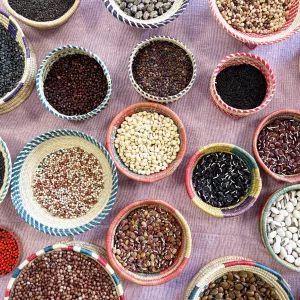
Conservation of one of the world’s biggest and most diverse collections of germplasm, ensuring the highest standards of genetic integrity, quality, health and longevity across all materials - whether preserved as seeds, as in vitro plants, through cryopreservation or in field genebanks. Samples and associated data are continuously made available to requesters worldwide. All CGIAR Genebanks operate under international standards, guaranteeing efficient long-term conservation, global availability and data management of exceptional quality. They optimize best practices through the Seed Quality Management and Cryopreservation Communities of Practice.
Strategic User Engagement
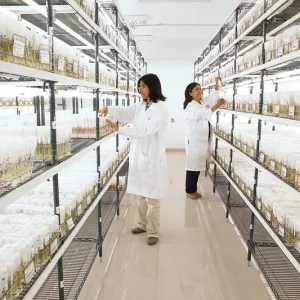
Promotion of proactive engagement with diverse users to increase awareness and use of genebank resources, develop AI-enabled tools which harness genomic sequencing, advanced phenotyping and modern data science for more time-efficient and precise accession selection, and enhance digital infrastructure for seamless access to genetic resources.
Genetic Resources Policy
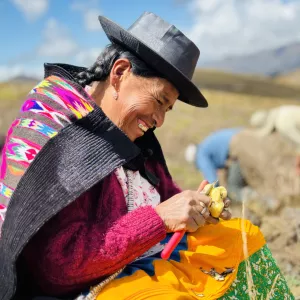
Continued contribution to international policy on genetic resources conservation, access and use, including access and benefit-sharing policies, digital sequence information (DSI), farmers’ rights, representing CGIAR in international forums such as the Convention on Biodiversity (CBD) and the International Treaty on Plant Genetic Resources for Food and Agriculture (IT-PGRFA). We also support national partners in policy development and implementation and help scientists across CGIAR science programs and accelerators comply with evolving standards.
Germplasm Health
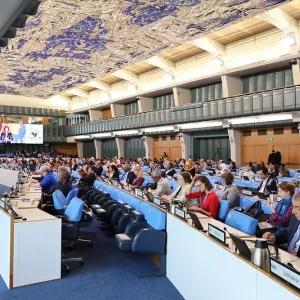
Ensuring phytosanitary compliance for safe global germplasm exchange, developing innovative diagnostic and disease management protocols, and strengthening international collaborations for biosecurity and health testing. We interact directly with National Plant Protection Organizations (NPPOs) across countries, engaging on development and implementation of best practices on phytosanitation.

Strenghtening Capacity for In Situ and Ex Situ Conservation
Area of Work 5 strengthens the global community of genebanks and phytosanitary agencies through hands-on capacity building, partnership and regional coordination. Our proven model rests on four components: Regional Networks, Hubs, NARS Thematic Communities of Practice, and Training & Capacity Building. National systems set priorities, CGIAR and NARS jointly deliver agreed activities, and equity is monitored throughout. Donor support will help replicate this model worldwide — making national genebanks self-sufficient and stronger players in climate-resilient agriculture, food security, biodiversity conservation and the Sustainable Development Goals.
Gender Equality & Social Inclusion
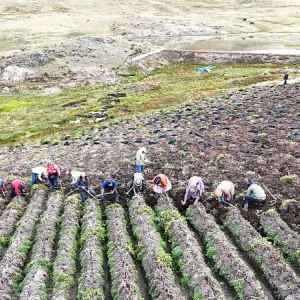
Genebanks actively promote gender-inclusive approaches by ensuring equitable access to genetic resources for women, smallholder farmers, and Indigenous communities. They also facilitate capacity-sharing initiatives to support underrepresented groups in biodiversity conservation and sustainable agriculture.
Our approach
Interlinked support across CGIAR’s portfolio
Genebanks will work closely with the Breeding for Tomorrow and Multifunctional Landscapes programs and the Digital Transformation accelerator.
Working to share our capacity with
- National partners
- Governments and policymakers
- Scientists and farmers
Our expertise
- Global leader in genebank management, conserving and making available over 700,000 accessions
- Collections offer unique diversity, including underused crops and valuable landraces, and wild relatives
- Pioneering use of AI, genomics, and cryopreservation for genetic conservation, characterization, and distribution
- Strong policy influence in international genetic resource governance
- Established partnerships with breeding programs, universities, and national genebanks
- Direct support to hundreds of farmers through the complementary conservation of local diversity and the reintroduction of diversity lost in situ.
Events
News
-

How growing forage for livestock turned a small plot into a thriving family business
In Ethiopia's Hadiya Zone, smallholder farmers are turning small plots of oats into profitable forage seed businesses that provide supplementary...
-

Pressure on global food systems risks exacerbating gender gap by 2050 without targeted interventions, finds new report
PRESS RELEASE Nairobi, 15 October 2026 Addressing gendered impacts of the polycrisis on food systems needs cross-cutting efforts by governments,...
-

Advancing Gender Equality in Food, Land and Water Systems by 2050: The CGIAR GENDER Report 2026
The latest report from the CGIAR Gender Equality and Inclusion Accelerator, Advancing Equality, Transforming Futures: A Path to Resilient and...
-

Beyond production: a broader conversation on rice in Africa
What does investment actually change? Africa no longer lacks ideas about what works. The real challenge is to create the conditions to finance those...