

Southeast Asia and the Pacific
About
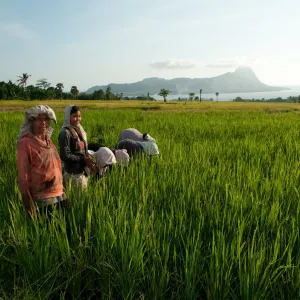
Southeast Asia and the Pacific (SEA) is a dynamic region that hosts extremely rich but vulnerable landscapes important for the maintenance of biodiversity and ecosystem services and are intertwined with agri-food systems. The Southeast Asian region is home to 61 million undernourished people, around 9% of its population, and more than 33 million are severely food insecure. Various challenges in the region irregular, more frequent, and intensified events such as droughts, floods, temperature extremes, pest and disease outbreaks, and sea-level rise, all of which are worsened by climate change. These issues are compounded by rapid urbanization and value chain disruption caused by the COVID-19 pandemic, which has significantly increased poverty and hunger in many countries, with rural areas and women disproportionately affected.
Leveraging its unified mission and strategy, CGIAR works with and supports national and regional partners to achieve sustainable and resilient food, land, and water systems in alignment with the ASEAN Vision and Strategic Plan for Cooperation in Food, Agriculture, and Forestry 2016-2025, the ASEAN Community Vision 2025, the ASEAN Comprehensive Recovery Framework, and the United Nations Sustainable Development Goals. With a long history of partnership in the region, CGIAR offers a holistic and demand-driven research agenda that addresses realities on the ground and embraces bottom-up and locally customized solutions.
Challenges and Opportunities
- The SEA region is heavily dependent on rice, and solutions need to be developed that address food, nutrition, safety, and environmental challenges.
- Promotion of diversified crop systems can allow farmers to benefit from new products as well as build a foundation of economic resilience and environmental sustainability.
- Research and programs that take place from the plant and plot to landscape scale, with integrated research can be designed to address the interconnectedness of problems.
- Food systems transformation offers tremendous opportunities to address responsible use of natural resources, protect biodiversity, improve the nutritional status of people through healthy and affordable foods, and include marginalized groups as agents and beneficiaries of positive change.
Research and Action
- Germplasm exchange and evaluation network for food crops for regional safety: Accelerate selection and release of climate-smart varieties at the country level.
- Cooperation through institutions: Collaborate and coordinate among communities within and across scales, strengthening existing institutions, building new ones to address gaps, and improving connectivity between scales.
- Nourishing ASEAN megacities: Collaborate between public and private partners to ensure healthy and safe foods for urban people, produce healthy foods in the cities with limited land, and increase focus on rural-urban linkages for better food systems coordination and governance across value chains.
- Youth entrepreneurship and technology: Promote youth entrepreneurship for sustainable agri-food systems through a youth innovation platform, supported by innovative financing models and bridging engagement through startups and youth agripreneurs.
- Recovery, resilience and transformation: With ASEAN, focus on policy, market integration and trade, climate-smart agriculture and establishing decision-support mechanisms on agricultural, climate change, and food security policies and institutions for climate-resilient food systems.
Partners
CGIAR and ASEAN can build stronger cooperation based on the need to address various challenges outlined earlier and build a much more resilient agri-food system, thereby enabling the region to emerge strongly from COVID-19 and other existing challenges through a well-designed recovery plan that transforms agri-food systems to be more sustainable and climate smart.
CGIAR aims to work with the ASEAN Secretariat and Member States to develop a multi-year research-for-development program to support ASEAN’s Vision and Strategic Plan for Cooperation in Food, Agriculture and Forestry (2016-2025), especially focused around the three strategic themes of recovery, resilience and transformation. This research program will contribute to the vision of ASEAN to create a competitive, inclusive, resilient and sustainable Food, Agriculture, and Forestry (FAF) sector integrated with the global economy, based on a single market and production base contributing to food and nutrition security and prosperity in the ASEAN Community.
News
-

Scaling precision nutrient management for a greener rice future in Vietnam's Mekong Delta
Through hands-on training, digital innovations, and locally led scaling plans, IRRI and partners are strengthening capacity to bring precision...
-

Advancing gender-inclusive precision nutrient management in Vietnam's rice–shrimp systems
In Vietnam, CGIAR and partners are strengthening farmer-centered approaches to precision nutrient management, ensuring that women and ethnic minority...
-

Strengthening Local Leadership to Protect Fisheries and Water Resources in Cambodia
In Cambodia’s Tonle Sap floodplains, water connects farms, fisheries, ecosystems and communities.
-

Food is always close by: Why availability alone doesn’t explain adolescent diets in Viet Nam
Healthy and unhealthy foods are equally accessible to adolescents in Viet Nam, a study shows. Food options were available close to adolescents’ homes...
Publications
-

A rapid tool for understanding how knowledge users engage with research findings in researchfordevelopment contexts
Promoting the use of research findings in development projects is essential but often overlooked during study design. Existing frameworks for...
-
What happens after the boom Aquaculture land use change and smallholder resilience in Central Thailand
There has been a proliferation of research on Southeast Asian crop booms over the past 15 years. Most studies take place at the height of booms or...
-
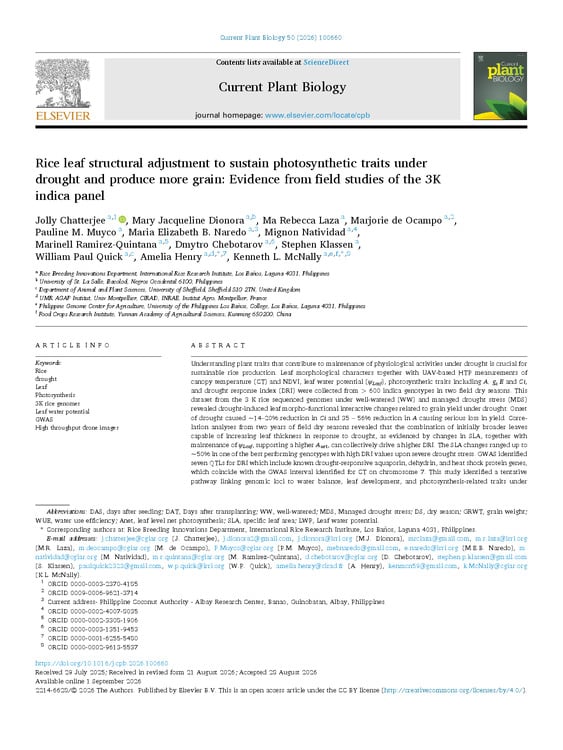
Rice leaf structural adjustment to sustain photosynthetic traits under drought and produce more grain Evidence from field studies of the 3K indica panel
Understanding plant traits that contribute to maintenance of physiological activities under drought is crucial for sustainable rice production. Leaf...
-

Animalsourced food revolutions and their implications for prices consumption and nutrition in low and middleincome countries
Livestock and aquaculture are increasingly regarded as high-priority sectors for nutrition-sensitive agricultural development in low- and...