Enable
Enable is an Area of Work within CGIAR Breeding for Tomorrow Science Program, which brings together CGIAR's global crop breeding efforts to develop improved crop varieties that meet farmers' needs.

Overview
Enable serves as the coordination and partnership unit of the Program, connecting CGIAR breeding teams with National Agricultural Research and Extension Systems (NARES), Small- and medium-scale companies, universities and other partners. Enable helps ensure that breeding efforts are better aligned and more efficient between them, as well as more responsive to local priorities.
Working through regional breeding networks, Enable supports partners throughout the breeding process — from building capacity and sharing knowledge to improving breeding practices and facilitating the exchange of germplasm. Its goal is to help CGIAR and national breeding programs work together to deliver improved crop varieties to farmers more quickly and effectively.
In short, Enable fosters better partnerships and coordination between CGIAR and NARES research, development breeding teams.
Enable has five main objectives, spread across High-Level Outputs (HLO):
- HLO: Partner, strengthening partnerships between CGIAR, NARES, and other breeding partners through innovative collaboration models.
- HLO Share, building national and regional breeding capacity, including a strong focus on human capacity development.
- Part of share: Modernizing breeding programs through adoption of best technical practice, costing of pipelines, institutionalization of structured product advancement, etc.
- HLO Assess, measuring the impact of breeding investments, including on-farm verification of variety performance.
- HLO Exchange, Facilitating the exchange of public germplasm to accelerate breeding and increase access to improved genetic resources.

Methodology
CGIAR Breeding for Tomorrow Area of Work Enable focuses on building more inclusive and efficient CGIAR-NARES/SME breeding networks that fully maximize the human and operational capacity that exists across institutions in order to effectively respond to the food needs of millions of people in the Global South.
Enable builds on best practices from existing CGIAR-coordinated breeding networks and partnership models in order to ensure:
- Clear division of labour, roles, and responsibilities for all partners involved in a collaborative breeding network aligned to individual partner capacity and comparative advantage;
- Increased ownership and empowerment of partners, particularly NARES, in decision-making and building a collaborative research agenda;
- Focused capacity development for partners aligned to their operational needs and role in breeding networks;
- Ensuring there are clear accountabilities for all partners (CGIAR and NARES) and that NARES have sufficient capacity and resources to fulfill their network roles and responsibilities.
The modalities of collaboration between Enable, NARES, sub-regional organizations, universities, and other national partners are discussed and approved during annual high-level consultations involving the relevant stakeholders; the conclusions of these discussions are recorded in public, validated Aide-Memoires (see the "Resources" section of this page).

Network Mapping
Enable is focusing on crop networks in Sub-Saharan Africa and South Asia, and Latin America. The dashboard below provides an overview of the breeding networks identified and/or assessed by Enable.
Meet the team
Meet the team
Leading CGIAR crop breeding partnerships and capacity development globally since 2022, Bish previously worked for the CGIAR Excellence in Breeding platform with a focus on capacity development for national partners. Field breeder with 15 years of practical experience running large breeding pipelines in both industry (Syngenta) and CGIAR (CIMMYT) in Latin America and Southern / Eastern Africa, Bish was born and raised in Zambia on a commercial farm. He's passionate about seeing national institutes strengthened and agriculture establishing itself as a viable business sector in the Global South. Bish holds PhD and MSc degrees from Imperial College London where he was a Beit Fellow.
Dragan is a plant breeder with over 20 years of experience in crop improvement, quantitative genetics, and breeding program modernization. Currently, Dragan works alongside CGIAR Centers and national partners to strengthen breeding systems and accelerate the delivery of improved varieties across Africa. Previously, Dragan led national forage crop breeding programs in Serbia and conducted research in Europe and the United States. Born and trained in Serbia and now based in Kenya, he contributes to the modernization of breeding programs and capacity development across CGIAR–NARES partnerships.
Lennin is a plant breeder and breeding optimisation specialist with extensive experience in Africa’s seed and crop improvement sector. Lennin obtained his PhD in Plant Breeding from the University of KwaZulu‑Natal in 2014. Between 2007 and 2020, he worked with Seed Co Pvt Ltd, where he contributed to the development of maize inbred lines and commercial hybrids adapted to diverse agro‑ecological environments across Africa.
Since 2021, Lennin is based in Kenya and supports National Agricultural and Extension Research Systems (NARES) and international breeding programs in designing and implementing breeding improvement strategies to accelerate genetic gain for smallholder farmers, and he provides technical support to breeding teams across Africa to modernize operations, enhance data-driven decision-making, and strengthen collaboration with CGIAR institutes and regional partners.
Lennin also specializes in optimizing and costing breeding programs to improve genetic gain, operational efficiency, and resource allocation across CGIAR, NARES, and small- and medium-sized-enterprise breeding networks. His work supports the development of robust costing frameworks, breeding scheme adjustments, standardized cost comparisons, and evidence-based budgeting, contributing to more efficient and sustainable breeding pipelines and projects.
Vish has over 15 years of experience in agribusiness (marketing, research, agronomy and breeding), and he currently serves as Product Manager for root, tuber and banana crops at IITA. Vish also Leads the Inclusive Delivery Area of Work within the Breeding for Tomorrow. His third hats involves being IITA's Center focal point for Enable. Previously, VIsh served as Portfolio Manager for vegetable seeds in Syngenta for Africa and the Middle East. VIsh has extensive experience working with large scale commercial farmers as well as smallholder farmers in sub-Saharan Africa and South Asia. His strongest abilities revolve around establishing strong collaborations, partnerships, and driving change for impact.
Vish is based in Ibadan, Nigeria.
Dean is a plant breeder with over 23 years of experience, specializing in maize, and with extensive expertise in seed systems, product management, marketing, and seed laws and regulations. Currently serving as Product Manager for Grain Crops at IITA, Dean is based in Ibadan, Nigeria. In this role, Dean support the definition of market segments and target product profiles during the product design phase, as well as product advancement and licensing during the product delivery phase. Dean has also been working on the licensing of IITA-bred varieties and the registration of already licensed varieties under regional harmonization frameworks such as COMESA.
Previously, Dean worked as a Product Development Manager for the Seed Co Group, where he established the product development function across the organization. Dean also led the mechanization and digitization of breeding processes and operations at Seed Co. Furthermore, Dean established the research program at Agriseeds (Pvt) Ltd, now owned by Klein Karoo, leading to the release of over six maize hybrids, some of which have become key revenue-generating products for the company.
Alice is a plant breeder and agronomist by training, with 19 years of experience in the agricultural sector, spanning research, extension, agronomy, and breeding operations. Alice currently serves as West and Central Africa Enable Network Coordinator, supporting network development and capacity strengthening across the region, while also serving as Breeding Resources (another Area of Work of Breeding for Tomorrow) Breeding Operations Support Manager for West and Central Africa. In this role, Alice supports CGIAR Centers and national partners in strengthening breeding systems, improving operational efficiency, and accelerating the delivery of improved crop varieties across the region.
Previously, Alice worked as a researcher in Rwanda’s national bean breeding program and conducted research at the University of California, Davis (USA). Alice was born and trained in Rwanda, and she is currently based in Senegal.
Resources
- High Level Sub-Saharan Africa NARES - CGIAR meeting on Genetic Innovation, Nairobi 27-28 June 2022 - Aide Memoire
- Second Leadership Consultation Meeting hosted by Genetic Innovation, Marrakech 26 October 2023 - Aide Memoire
- Third Leadership Consultation Meeting hosted by Genetic Innovation, Dubai 28-29 October 2024 - Aide Memoire
- Aide Memoire: high level guidance to 2030 for genetic innovation implementation in CWANA++

Events
-

Costing of Breeding Operations
-

Flexible licensing agreements for NARES
-

CGIAR Breeding for Tomorrow at the 4th African Plant Breeders Association (APBA) Conference
Launched in 2019, the African Plant Breeders Association (APBA) Conference serves as a platform to share cutting-edge innovations and insights in plant breeding, with the goal of strengthening research and development (R&D) efforts for sustainable agricultural systems across Africa. Held biennially, the APBA Conference gathers about 400 global experts and scientists from a wide range of institutions, including CGIAR Centers, universities, research organizations, private sector companies, and donor agencies.
-

2nd NARES-CGIAR Genetic Innovation Leadership Meeting
-

3rd African Plant Breeders Association (APBA) Conference


News
-
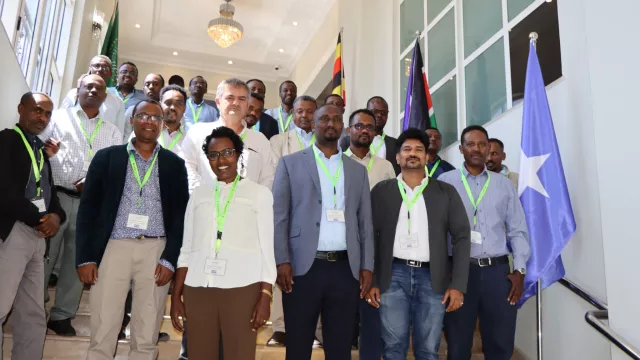
Aligning wheat breeding with market needs in Ethiopia
-

Mainstreaming on-farm verification in CGIAR breeding
A meeting was held recently held in Nairobi to advance the design and integration of on-farm verification trials (OFVT) as a core component of...
-

CGIAR initiates the development of a Product Design Standard for breeding
Breeding for Tomorrow transdisciplinary teams synthesized learnings from over 130 national stakeholder consultations and defined a Product Design...
-

Seed licensing explained: a Q&A
CGIAR Breeding for Tomorrow recently hosted a public webinar on licensing agreements, in partnership with New Markets Lab (NML). This article brings...