

Aligning wheat breeding with market needs in Ethiopia
- Enable
Aligning wheat breeding with market needs in Ethiopia
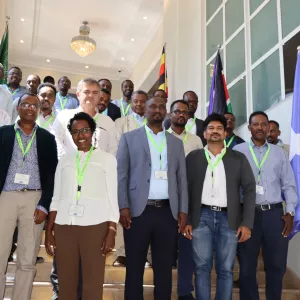
As part of the long-standing collaboration between the Ethiopian Institute of Agricultural Research (EIAR) and CIMMYT, a wheat Product Design Team (PDT) meeting was convened by in November 2025 by Breeding for Tomorrow’s Enable Area of Work, the coordination and partnership engine of CGIAR crop breeding science.
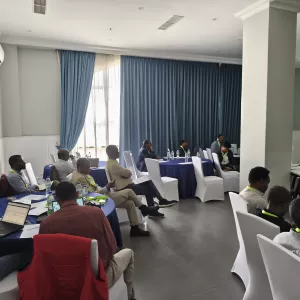
The meeting brought together EIAR and CIMMYT scientists, along with stakeholders from the wheat value chain in Ethiopia (millers, exporters, and other industry partners), to review Ethiopia’s wheat market segments and refine Target Product Profiles (TPPs). This was an essential step to ensure that breeding efforts are aligned with farmer needs, market demand, and national food self-sufficiency goals.
The PDT discussions built on years of sustained EIAR–CIMMYT collaboration, including earlier work under the MERCI (Modernization of Ethiopian Research for Crop Improvement) project, where initial wheat market segmentation was developed.
Defining wheat market needs in Ethiopia
Breeding for Tomorrow promotes a market-driven approach to crop improvement. A first step is defining market segments; the specific combinations of production environments, farmers, processors, and consumers for a given crop in a country.
During the PDT meeting, participants reviewed market insights in Ethiopia and identified six wheat market segments spanning both bread and durum wheat. From these, four priority bread wheat segments were agreed, together accounting for approximately 93% of Ethiopia’s wheat-growing area:
- Medium-altitude (1,900–2,400 masl), medium-maturity (116–125 days), rainfed and offseason irrigated wheat (≈50%);
- High-altitude (>2,400 masl), high-rainfall, long-maturity (>125 days) white bread wheat (≈20%);
- Lowland (1,500–<1,900 masl), early-maturity (≈100 days), rainfed and offseason irrigated white bread wheat (≈15%);
- Lowland irrigated, early-maturity (≈100 days), heat-tolerant white bread wheat (≈8%).
These priority segments were translated into updated target environments, providing clearer guidance for breeding decisions and resource allocation.
“The PDT discussions helped ground breeding priorities in Ethiopia,” said Sridhar Bhavani, CIMMYT Wheat Improvement Lead for East Africa. “By jointly refining the key market segments, we can focus breeding targets on the environments that matter most at national scale, ensuring closer alignment with farmer needs, market demand, and Ethiopia’s self-sufficiency ambitions.”

Strengthening Ethiopia’s wheat breeding program
Following the PDT, a joint assessment of EIAR’s wheat breeding program was conducted at Kulumsa Research Center and in Addis Ababa. Working together, EIAR, CIMMYT, Breeding for Tomorrow, and the ENABLE cross-cutting team reviewed breeding pipelines, operational processes, and coordination mechanisms.
The objective was to strengthen alignment between national breeding priorities and CIMMYT-supported activities, while identifying opportunities to improve efficiency and collaboration.
“This was a collaborative review, not an audit,” noted Sridhar. “It confirmed strong alignment around target environments and highlighted practical opportunities to improve coordination and operational effectiveness across the breeding pipeline.”
The assessment highlighted EIAR’s strengths in long-term collaboration and strategic alignment, while also identifying areas where processes and coordination could be further strengthened.
A shared roadmap for EIAR, CIMMYT and Breeding for Tomorrow
Findings from the breeding program assessment, together with outcomes from the PDT discussions, informed the development of an EIAR Wheat Improvement Plan. The plan captures agreed priority actions and provides a joint reference framework to:
- strengthen EIAR’s wheat breeding capacities,
- enhance collaboration with CIMMYT,
- and guide continued technical support under CGIAR Breeding for Tomorrow.
By linking market needs, breeding design, and operational improvements, the collaboration reinforces Ethiopia’s capacity to deliver wheat varieties that are better adapted, more productive, and aligned with national food security goals.
***
This work contributes to CGIAR Breeding for Tomorrow Science Program.