

Nutrition, health & food security
Ending hunger and enabling safe, affordable, healthy diets for the world's most vulnerable people.
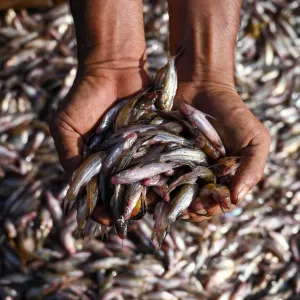
Objectives
Through research and innovation, CGIAR aims to address these challenges and contribute to collective global targets for nutrition, health, and food security:
- Ending hunger for all and enabling affordable healthy diets for the 3 billion people who do not currently have access to safe and nutritious food (SDG 2).
- Reducing cases of foodborne illness (600 million annually) and zoonotic disease (1 billion annually) by one third (SDG 3).
Activities
To contribute to these collective global targets, CGIAR Initiatives will:
- Provide evidence and options for improving diets and human health through food systems outcomes, policy research, and technical and institutional innovations for making healthy sustainable diets affordable, targeting consumer behavior, local urban and informal markets, and social protection.
- Accelerate innovation in agronomy, livestock, and fisheries management to increase and diversify food supply and to manage zoonotic diseases, food safety, and anti-microbial resistance.
- Advance research on a wider range of foods and farming systems, including vegetables, insects, and urban farming, with a focus on affordable diets and perishable foods.
- Focus on dietary diversity, quality, and resilience underpinned by custodianship and distribution of a wide variety of genetic materials of crops and their wild relatives, and livestock; breeding of nutrient-dense legumes, roots, tubers, bananas and cereals, including biofortification and market relevant traits; and breeding of more productive livestock and fish to increase the supply of nutrient dense animal-source foods.
All CGIAR Initiatives will contribute to Nutrition, Health, and Food Security. Below, browse a selection of Initiatives that primarily contribute to this Impact Area.
News
-

Improved Carp Boosts Profits by 25% in Bangladesh’s Polyculture Ponds
A selectively bred carp strain is boosting productivity and profits across polyculture ponds in Bangladesh, improving overall pond performance in...
-

FASA Project Shifts Toward Scalable Digital Solution in Final Phase
A new digital feed formulation tool is at the center of the Development and Scaling of Sustainable Feeds for Resilient Aquatic Food Systems in...
-

Strengthening Global Food Security: Strategic Banana Diversity Moves from Belgium to Colombia
A strategic set of banana genetic resources has recently been transferred from the International Musa Germplasm Transit Centre (ITC) in Leuven,...
-

Can Better Fish Processing Improve Diets Without Undermining Local Nutrition?
Anchovy, locally known as dagaa, sits at the heart of Zanzibar’s fisheries, diets and livelihoods. These small fish are rich in essential...
Publications
-
Progress Report Ethiopias Partnership for Accelerating Agricultural Solutions Scaling PAASS
-
Operational Sentinel2 System for Monthly Nearrealtime Irrigated Area Mapping in the Limpopo River Basin
Monitoring irrigated agriculture is critical in the water-scarce Limpopo River Basin (LRB). However, existing approaches are often coarse,...
-
Factors influencing Newcastle disease vaccine use in village chicken flocks in rural Burkina Faso
Background: Newcastle disease (ND) is endemic in traditional poultry farming in Burkina Faso. Despite government's efforts, international...
-
Impact of invasive weed Parthenium hysterophorus Asteraceae on mosquito abundance and plantfeeding behavior in an arboviral endemic region in Kenya
Background: Invasive alien species (IAS) are rapidly altering ecosystems, undermining biodiversity, ecosystem processes, and interspecies...