

Gender equality, youth & social inclusion
Closing the gender gap and enhancing opportunities for youth in food, land, and water systems.

Objectives
Through research and innovation, CGIAR aims to address these challenges and contribute to collective global targets for Gender Equality, Youth, and Social Inclusion:
- Close the gender gap in rights to economic resources, access to ownership, and control over land and natural resources for over 500 million women who work in food, land, and water systems.
- Offer rewarding opportunities to 267 million young people who are not in employment, education, or training.
Activities
To contribute to these global collective targets, CGIAR Initiatives will:
- Focus on gender-transformative approaches, communication, and advocacy that lead to empowerment of women and youth, encourage entrepreneurship, and address the socio-political barriers to social inclusion in food, land, and water systems.
- Develop and implement interventions designed to enable equal access to innovations and capacity development, as well as financial, informational, and legal services for women and young people to enable them to shape agrifood systems.
- Supply improved varieties and breeds that are affordable and accessible to women, youth, and disadvantaged social groups, meeting their specific market requirements and preferences.
All CGIAR Initiatives will contribute to Gender Equality, Youth, and Social Inclusion. Below, browse a selection of Initiatives that primarily contribute to this Impact Area.
Platform
Each CGIAR Impact Area is supported by a dedicated Platform. CGIAR’s GENDER (Generating Evidence and New Directions for Equitable Results) Platform was launched in 2020. In support of CGIAR’s new 2030 Research and Innovation Strategy, this existing platform has transitioned into CGIAR’s Impact Platform on Gender Equality, Youth and Social Inclusion and is expanding its work to support the entire Impact Area.
To enable CGIAR to achieve maximum impact, this Platform:
- Guides and amplifies CGIAR research, ensuring meaningful and lasting contributions to the global targets above.
- Strengthens the performance of gender and social science research within and beyond CGIAR by identifying the highest standards and setting strategic direction.
- Conducts independent research across the CGIAR portfolio, to synthesize evidence and fill gaps.
- Engages a wide range of partners, builds capacity and informs global policy discussions.
You can learn more about the work of the Platform here.
News
-

How women view marriage and childbearing decisions: Recent WEMNS evidence from Liberia and Sierra Leone
A key component for promoting gender equality is understanding how women perceive women’s ability in society to make basic choices about family...
-

WorldFish Launches Venture Platform to Mobilize Capital to Scale Aquatic Food Innovation
WorldFish today announced the launch of WorldFish Ventures (WFV)
-

ICRISAT and University of Queensland Partner to Accelerate Climate-Resilient Crop Breeding for Dryland Farmers
In a move set to accelerate the development of climate-resilient crops for some of the world’s most vulnerable farming regions, the International...
-
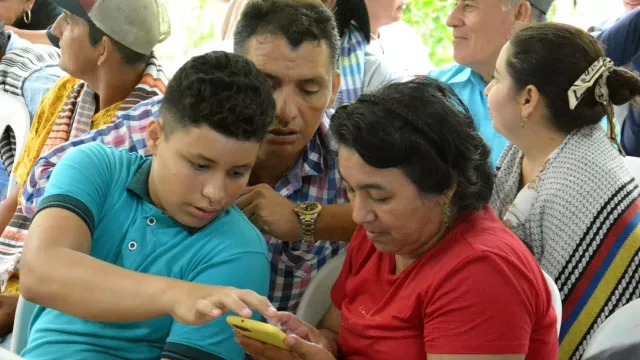
Lacteos del Hogar Dairy Suppliers Align with Zero-Deforestation Agreements
During two sessions in Morelia and Florencia (Caquetá), suppliers of Lácteos del Hogar were trained in MyGeoFarm and ZDA MRV systems to certify...
Publications
-
Progress Report Ethiopias Partnership for Accelerating Agricultural Solutions Scaling PAASS
-
Spatial and temporal risk mapping of human and porcine Taenia solium infections in Malawi a systematic review and geostatistical approach
Background: <i>Taenia solium</i>, colloquially called the pork tapeworm, is a zoonotic parasite with a human definitive host and a...
-
Operational Sentinel2 System for Monthly Nearrealtime Irrigated Area Mapping in the Limpopo River Basin
Monitoring irrigated agriculture is critical in the water-scarce Limpopo River Basin (LRB). However, existing approaches are often coarse,...
-
Factors influencing Newcastle disease vaccine use in village chicken flocks in rural Burkina Faso
Background: Newcastle disease (ND) is endemic in traditional poultry farming in Burkina Faso. Despite government's efforts, international...