
- From
-
Published on
17.02.20
- Impact Area
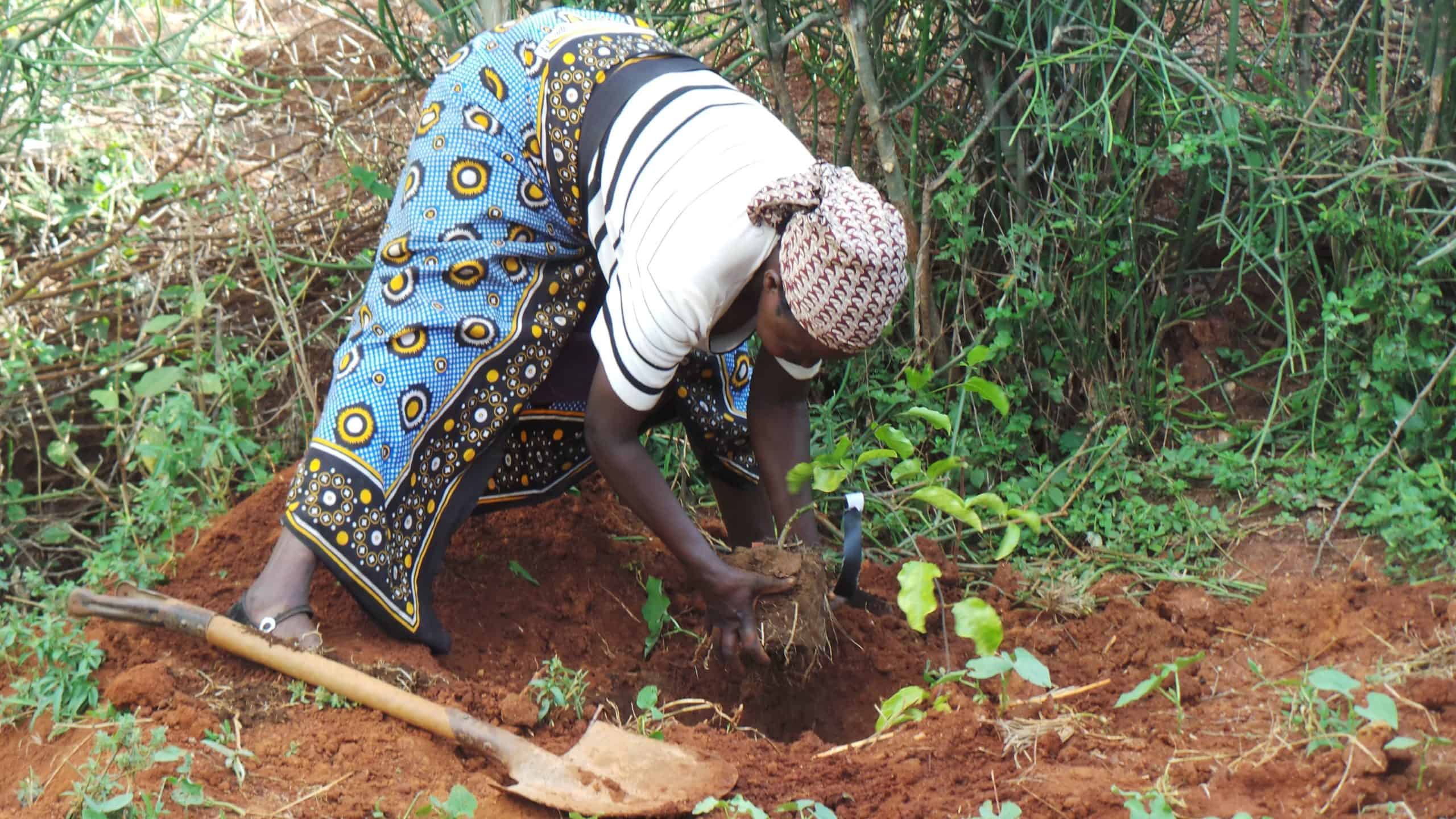
Every year, millions of dollars are spent on attempting to restore landscapes to health by planting trees. Success is very scanty. Researchers explain why and how rethinking the words will help achieve success.
Over the last five decades there are few success stories of land-restoration efforts and even those few did not meet all the objectives for which the resources were spent.
Typically, the tree seedlings in mass-planting schemes have a low survival rate, making the return on investment low and a mockery of well-meaning attempts to restore our planet’s health.
Why is it that often very large, well-resourced and well-publicized schemes aren’t able to achieve their goals, for the benefit of all?
A study by researchers at World Agroforestry (ICRAF) argues that often tree ‘planting’ is stated as the ultimate objective: ‘We will plant a billion trees!’ Rather, the objective should instead be ‘growing’ trees.
The success of restoration projects is often measured by the number of trees planted or the size of the area, not the number of trees grown, or the area of land covered with grown trees.
Related news
-

A Regional Learning Alliance for a Transition to Sustainable Rice Straw Management
06.12.25-
Climate adaptation & mitigation
-
Mitigation
The annual rice harvest yields not only a vital food source but also millions of…
Read more -
-

From Waste to Wealth: Transforming Rice Straw into a 'Strategic Biomass Resource' in the Mekong
05.12.25-
Climate adaptation & mitigation
-
Mitigation
Can Tho City, Vietnam – On November 19, 2025, a critical discussion unfolded in Can…
Read more -
-

New climate roadmap outlines pro-active strategy for livestock management in East Africa
05.12.25-
Climate adaptation & mitigation
As droughts recur, heat stress rises, and floods become more frequent, East Africa’s livestock sys…
Read more -