
- From
-
Published on
06.03.20
- Impact Area
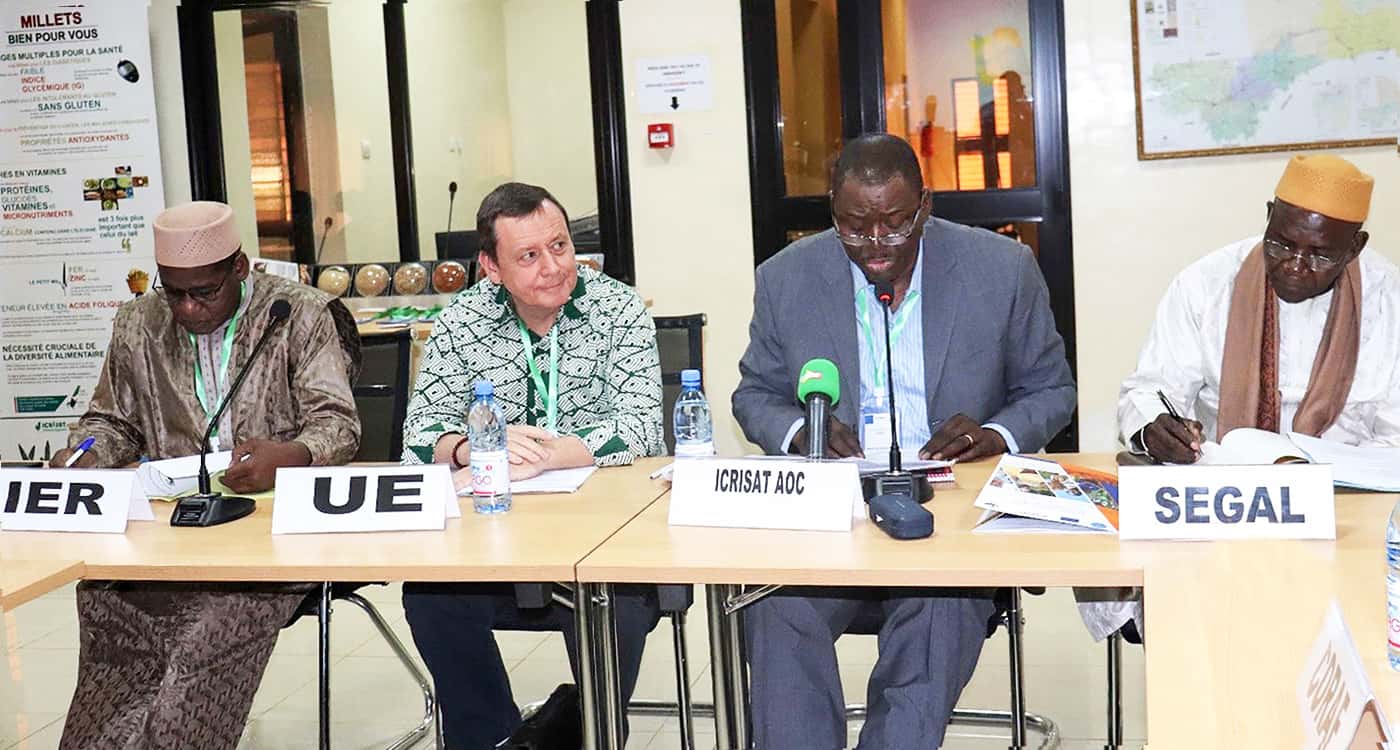
A new project aimed at improving food and nutrition security in Mali by enhancing crop productivity and climate resilience was recently launched by ICRISAT in Mali. The five-year EU-funded project is set to benefit around 40,000 people in Kayes, Koulikoro, Ségou and Mopti regions of Mali. The project also aims to strengthen seed-systems through public-private partnership.
The project, ‘Enhancing Crop Productivity and Climate Resilience for Food and Nutrition Security (APSAN–Mali)’, will target to improve food and nutrition security, climate resilience and agricultural productivity by delivering pearl millet, sorghum, groundnut and cowpea cultivars through modernized breeding programs. It also targets strengthening seed systems around new improved varieties and hybrids through public-private partnership, to facilitate the exchange of genetic material and data at regional scale and to durably reinforce research teams in modern breeding approaches.
Related news
-

New Genomic Discovery from ICRISAT Could Save Farmers Millions by Preventing Groundnut Sprouting Before Harvest
02.12.25-
Food security
-
Poverty reduction, livelihoods & jobs
Breakthrough study identifies varieties and key genes to halt sprouting before harvest in groundnut …
Read more -
-

Reinventing Kenya’s Snack Future with Dryland Grains
21.11.25-
Nutrition
-
Poverty reduction, livelihoods & jobs
Faces of Impact - Video Feature Story On a quiet backstreet in Mihango, Kenya, the…
Read more -
-
Cultivating climate-smart rice: How specific cultivars and smarter fertilizing can cut emissions and maintain yield
19.11.25-
Climate adaptation & mitigation
-
Food security
By Bushra Humaira Sadaf A team of researchers from the Bangladesh Rice Research Institute (BRRI), I…
Read more -