

Food Frontiers and Security


Overview
We will focus on three food systems of growing importance: fragile and conflict-affected food systems, urban and peri-urban food systems, and island food systems.
These systems are highly vulnerable to shocks and crises, marked by large youth populations, isolation with limited and resource-scarce food value chains, significant food and water insecurity, widespread malnutrition, and severe environmental threats and degradation. There is weak governance across these systems, and new solutions and investments must be catalyzed to support the world’s most vulnerable communities.
Our goal
Our work aims to help
Technical Report

Where we bring benefits
The countries and locations listed below reflect where CGIAR and its partners reasonably expect their work to generate benefits:
- Global
- Regions: Africa, Asia, Oceania
- Countries: Ethiopia, Kenya
Challenges
Challenges we’ll address
- 1.5 billion individuals from fragile and conflict-affected areas are disproportionately impacted by poverty and food insecurity
- Rapidly growing urban areas struggle with high unemployment, dietary shifts, climate risks, and environmental pollution
- Island nations face rising sea levels, limited resources, malnutrition, and non-communicable diseases
Our publications
Identify, locate and download research and other outputs produced by our program/accelerator
-

Climate change is fuelling African conflict governments are developing a shared response
Climate change is making life tougher. Across Africa, failed harvests, shrinking water supplies and more extreme weather are leaving millions of...
-
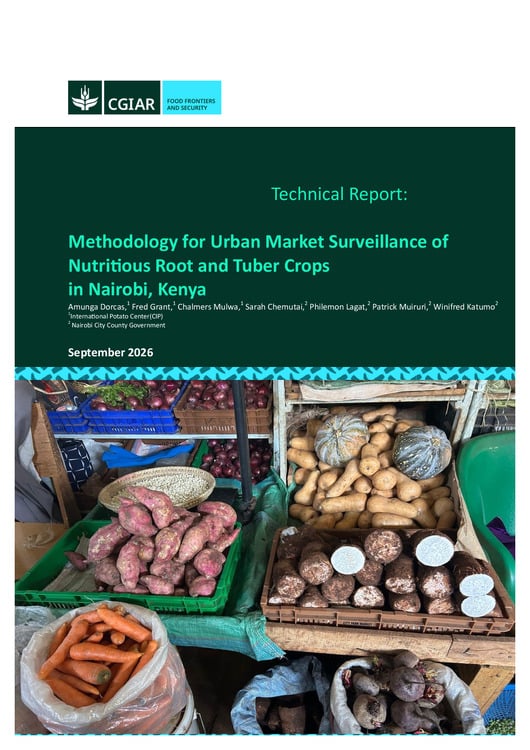
Methodology for urban market surveillance of nutritious root and tuber crops in Nairobi Kenya
Urbanization is contributing to changes in food environments, with implications for food access, choice and diet quality. Urban households obtain a...
-

Climate change conflict and intersectional vulnerability among pastoral women in the East and horn of Africa Evidence from Key Informant Interviews KIIs with pastoralist womenled humanitarian peacebuilding and policy organizations across Kenya Soma
Across Sub-Saharan Africa, pastoralist women are not 0nly experiencing climate change as an isolated event. Climate change is restructuring pastoral...
-
Inequities in Childrens Food Environment A Comparison between Slum and Nonslum Settings in Urban Bangladesh
Children living in urban slums face persistent nutritional and health inequities, many of which are rooted in the food environment. This study...

Areas of work
Future Food Systems Lab
We create a dynamic space for foresight, innovation, evidence synthesis and continuous learning to tackle the complex, intersecting challenges facing frontier food systems. Through collaborative partnerships with local actors, governments, research institutions, and the private sector, we co-develop and scale forward-looking solutions that integrate local knowledge with scientific evidence. By linking foresight to action, the Think Tank drives informed decision-making, catalyzes innovation, and supports adaptive responses to emerging risks and opportunities.

Fragile and Conflict-Affected Food Systems
Fragile and conflict-affected food systems are on the frontlines of global change. They are places where conflict, displacement and demographic transitions, climate and environmental change, resource pressures, market disruptions, and governance challenges intersect, often revealing emerging risks before they are seen elsewhere. By working in these contexts, we deepen understanding of how food, land and water systems adapt and transform under pressure and identify innovations, advancing practical solutions that help anticipate, prevent, and manage emerging risks while strengthening adaptation and resilience. Through research, foresight, and partnerships, we generate evidence and solutions that support more integrated action across humanitarian, development, and peace actors, helping communities, institutions, and governments make better decisions, reduce vulnerabilities, and strengthen resilience across interconnected landscapes, livelihoods, and institutions.

Urban Food Systems
Rapid urbanization is one of the most transformative global megatrends of the 21st century, reshaping social, economic, and environmental landscapes. Urban food systems are strained to provide consumers with sufficient, nutritious, affordable and safe food whilst ensuring that environmental degradation and socio-economic inequalities are not exacerbated. Through research and leveraging strategic partnerships and networks, we will generate evidence to guide city governments, investors and partners to strengthen urban food systems’ resilience and sustainability. Initiatives will reduce food loss and waste, enhance safe urban food production, improve circularity through organic waste recycling and safe wastewater reuse, boost food safety in informal food markets, create equitable employment opportunities for women and youth in urban areas, and improve access to fresh, safe, nutritious, and affordable food especially in low-income areas.

Island Food Systems
We will guide national programs in island contexts to foster sustainable food systems, climate resilience, and healthier diets. Through co-designed innovations, resilient production methods, and inclusive platforms, communities will develop more resilient food production systems, safer aquatic food distribution practices, and increased access to nutritious foods including indigenous foods. This effort addresses malnutrition, climate change, youth unemployment, and environmental challenges in coastal and marine contexts, transforming island food systems and providing models for global resilience and sustainability.

Gender Equality & Social Inclusion
We will enhance gender equality in frontier geographies by empowering women and youth, supporting livelihoods in crisis-prone settings, and addressing urban and island challenges. It builds our and our partner’s expertise in measuring empowerment, strengthens partner programs, and promotes inclusive policies for improved food security and resilience in vulnerable food systems.
Our approach
Interlinked support across CGIAR’s portfolio
We will work closely with the Better Diets and Nutrition, Climate Action, Multifunctional Landscapes, Policy Innovations, Scaling for Impact programs, and the Capacity Sharing, Digital Transformation, and Gender Equality and Social Inclusion accelerators.
Working to share our capacity with
- government partners, policy think tanks, NGOs, UN agencies
- research & advocacy networks
- local communities
Our expertise
- Strong partnerships with international universities and research institutes bring cutting-edge methodologies and discoveries
- Long-term relationships with local stakeholders underpinned by a physical presence in many countries
- Excellent laboratory facilities for advanced scientific and technical research
Events
News
-

Feeding Growing Cities: Collaborative efforts to tackle food loss and waste
On August 25 2026, the CGIAR Food Frontiers and Security Program convened the Feeding Growing Cities: Reducing Food Loss and Waste through...
-

What does food system resilience look like on the frontlines?
The Frontlines Learning Exchange 2026 webinar series creates learning spaces to tackle complex agricultural challenges in a changing world.
-

Beyond the violence: How farmer-herder conflict is reshaping rural livelihoods in the Sahel
Conflict in the Sahel region is growing due to a number of interlinked causes. Competition over land and water is intensifying as populations grow,...
-

Waste not what want not: Nairobi schools recruit flies to help
The concept is simple: separate organic waste, feed it to BSF larvae, harvest the larvae as animal feed and return the resulting frass to the soil....