
What does food system resilience look like on the frontlines?
The Frontlines Learning Exchange 2026 webinar series creates learning spaces to tackle complex agricultural challenges in a changing world.


The Frontlines Learning Exchange 2026 webinar series creates learning spaces to tackle complex agricultural challenges in a changing world.

CGIAR scientists and partners will join Tropentag 2026 in Göttingen, Germany, to share research and solutions on multifunctional agro-ecosystems, climate resilience, landscape restoration, food systems and sustainable livelihoods.

By combining custom-hire machinery models, gender-inclusive scheduling, and national climate policy integration, IRRI and CGIAR enabled Cambodian smallholders to adopt mechanized direct seeded rice, significantly boosting yields and profits while cutting input costs and emissions.

Conflict in the Sahel region is growing due to a number of interlinked causes. Competition over land and water is intensifying as populations grow, agricultural land expands, grazing routes contract, and climate variability increases. While farmer–herder relations have historically been cooperative, with mutually beneficial exchange common across many communities, longstanding institutions for managing disputes are increasingly under strain.

The concept is simple: separate organic waste, feed it to BSF larvae, harvest the larvae as animal feed and return the resulting frass to the soil. The World Vegetable Center (WorldVeg), together with the International Institute of Tropical Agriculture (IITA) and project partners including Zehunger Solutions and icipe under the CGIAR Food Frontiers and Security Science Program are exploring the reuse of this organic waste, transforming it into valuable agricultural inputs through a Black Soldier Fly (BSF) initiative.
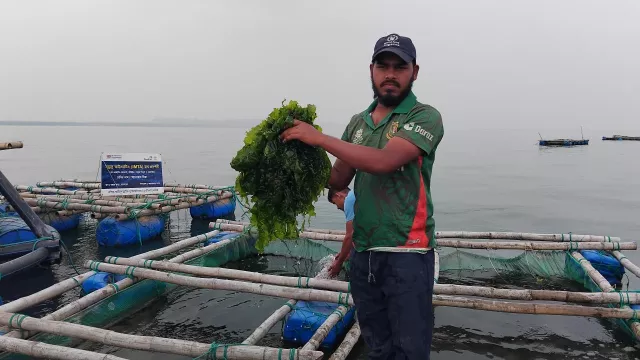
Growing fish, shrimp, shellfish and aquatic plants together could help coastal farmers produce more food from the same farming system.

This blogpost explains how CGIAR Climate Action research helped shape Colombia’s new deforestation-free livestock law, strengthening traceability, recognizing zero-deforestation agreements, linking environmental standards with monitoring systems, and creating financing pathways to support sustainable livestock production and implementation nationwide in practice.

This study examines how climate change could reshape the economics of solar-powered irrigation in Sub-Saharan Africa, increasing system capacity needs and upfront costs while narrowing solar’s advantage over diesel, though falling photovoltaic prices may offset much of the impact overall.