
Models as assets for food security: The impacts of IFPRI’s IMPACT, RIAPA, and SPAM models
By Alix Underwood, Eleanor Jones, Karl Pauw, Keith Wiebe, and Liangzhi You May 15, 2025
China is well positioned to conserve underutilized crops, according to the findings of the Agrobiodiversity Index. Significant progress has been made throughout the years that involve supporting local seed systems, in-situ conservation, and access and benefit sharing – providing evidence to create robust policies and strategies. Balancing development while conserving rich biodiversity resources is a challenge faced by many countries
On a sunny April morning in Nairobi, the United Nations compound buzzed with more than diplomatic chatter. Instead, the air crackled with ideas that could shape the future of farming in the Global South. Scientists, software engineers, and agricultural innovators from across the globe gathered for CGIAR’s Science Week side event titled “AI-Powered Innovation: Accelerating Research for Agri-Food System Transformation.”
GRIN-Global Community Edition (GGCE) is an open-source software platform for managing genebank collections. It enables all genebank staff to conveniently capture and make use of data as they work. The platform offers several benefits: Centralized Data Management: GGCE helps genebanks centralize their data, making it easier to track and manage large collections of plant genetic resources. Improved Access to Genetic
By Steven Were Omamo and David Spielman May 16, 2025 The future of agrifood science was in full view at CGIAR Science Week in Nairobi, Kenya, in April. Expert panels devoted to climate adaptation, digital innovation, soil health, equity, and food systems transformation brimmed with ambition and sophistication. There was much to celebrate: New tools, new partnerships, and bold visions of what research can
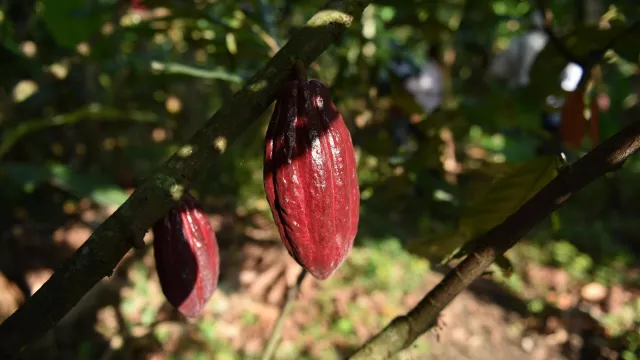
In February 2025, a delegation from the Alliance of Bioversity International and CIAT conducted a mission in Guinea to kick-off the Sustainable Cocoa Value Chain Programme in West Africa. Funded by the Italian Ministry of Foreign Affairs and International Cooperation (MAECI), under the framework of the Piano Mattei per l’Africa, this initiative aims to support local governments in designing
The development of Bioflow, CGIAR’s open-source breeding analytics pipeline, funded by GIZ through Crops to End Hunger, has never slowed down since its launch last year. Following several hackathons in February 2024 and November 2024, staff from all CGIAR Centers contributed their expertise to the ongoing development of the tool, highlighting the collaborative DNA that underpins its development. Here are
Food safety and security threats from aflatoxins have hampered the health and livelihoods of many African consumers and farmers, frequently affecting staples such as maize, groundnut, and sorghum. These harmful toxins are produced by a fungus called Aspergillus flavus and can cause liver cancer, suppress the immune system, and stunt children’s growth. They also make it harder for farmers to sell their