
Bridging the gap: Why regional forecasts must become local decisions
In Southern Africa, a seasonal forecast is more than just a map of probabilities; it is a lifeline for millions of producers.


In Southern Africa, a seasonal forecast is more than just a map of probabilities; it is a lifeline for millions of producers.
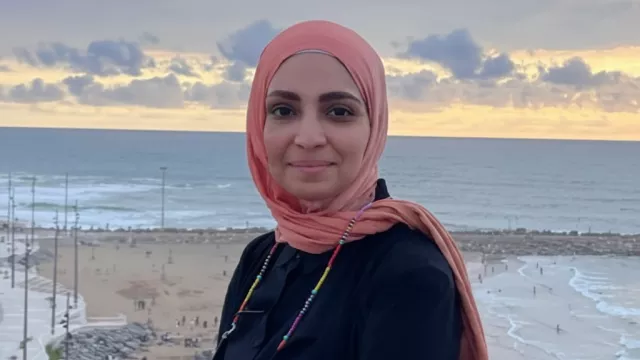
We mourn the passing of our colleague Salma Kadry, who always put people first in her work as a climate, peace, and security specialist with the Alliance of Bioversity and CIAT and CGIAR. Her contributions were fundamental in representing the Middle East and North Africa in climate security science and policy.

After Cyclone Idai, women in rural Zimbabwe carry the hidden cost of recovery. This blog reveals how unpaid care work expands under climate stress, shaping food security, time poverty, and women’s everyday survival.

Climate security is shaped by complex, local interactions. Drawing on leading researchers, this blog explores how climate stress, conflict, data gaps, and system dynamics are reshaping how we study risk, resilience, and peace.

In conflict-affected Cabo Delgado, new CGIAR–WFP research is guiding the design of conflict-sensitive nature-based solutions. By linking ecosystem science with local conflict dynamics, the approach supports recovery efforts that strengthen livelihoods and resilience for 7,000 vulnerable households without worsening tensions.

CGIAR research is strengthening climate information integrity in Brazil by mapping online disinformation about the Amazon and translating evidence into policy-relevant insights, tools, and capacity building that support public trust and more effective climate communication.

Over the past five years, the Department of Cooperative and Rural Development (DCRD), under Vietnam’s Ministry of Agriculture and Environment, has collaborated closely with the Alliance of Bioversity International and CIAT and the National Institute of Nutrition (NIN) to advance the integration of nutrition-sensitive agri-food systems (NSAF) into national policy frameworks.

This post captures key insights from regional training sessions on climate, peace, and resilience conducted with civil society organizations in MENA. It focuses on how integrating social dimensions into climate work, combined with peer-to-peer learning, can strengthen advocacy, collaboration, and community-level resilience in complex contexts.