

Strengthening CSO Capacity on Climate and Peace
This post captures key insights from regional training sessions on climate, peace, and resilience conducted with civil society organizations in MENA. It focuses on how integrating social dimensions into climate work, combined with peer-to-peer learning, can strengthen advocacy, collaboration, and community-level resilience in complex contexts.
- climate security
- Peacebuilding
- Civil Society
- Capacity Sharing
- Climate Resilience
- MENA Region
Supporting Peer-to-Peer Learning on Climate, Peace, and Resilience
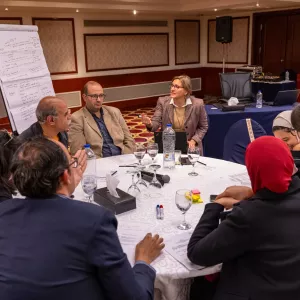
CGIAR’s MENA Regional Climate Security Hub has conducted two online training sessions focused on understanding the nexus between climate, peace, and resilience in the MENA region. The sessions were part of the ALF HANDS ON training program titled "Integrating Social Dimensions in Climate Change Policies: Empowering Civil Society in the Euro-Mediterranean Region”, hosted by Act Sustainable and the Anna Lindh Foundation.The collaborative initiative aims at enhancing the capacities of civil society organizations (CSOs) through an innovative peer-to-peer e-learning platform and empowering CSO professionals with essential skills to address the multi-dimensional challenges posed by climate change. The program is particularly focused on the impacts of climate change on vulnerable communities such as women, youth, and marginalized groups.
The training sessions held by the CGIAR team encompassed a variety of critical themes, including the social dimensions of climate change, disaster preparedness, innovative tools for climate action, and sustainable agriculture practices that foster social cohesion. By integrating theoretical foundations with practical, hands-on activities, participants in this training program were equipped to develop analytical tools and to advocate for policies that prioritize the needs of the most vulnerable. This approach not only fosters robust networks among CSOs across the Euro-Mediterranean region but also encourages ongoing dialogue about climate resilience and social justice.
Importance of Addressing the Climate, Peace, and Resilience Nexus
The intersection of climate change, peace, and resilience is increasingly recognized as a vital area for global attention. As environmental degradation intensifies, it can exacerbate resource scarcity, leading to conflicts over water, land, and food. In the MENA region, where geopolitical tensions are already prevalent, the effects of climate change pose a significant threat to social stability. By understanding this nexus, comprehensive strategies can be developed that address environmental challenges while promoting peace and social cohesion within communities.
Capacity sharing is essential within this framework as it empowers organizations to work collaboratively towards effective climate action. When civil society actors are equipped with the necessary tools and knowledge, they can engage with policymakers more effectively, advocate for inclusive approaches, and implement community-driven solutions. This fosters resilience among affected populations, enabling them to respond proactively to climate-related challenges.
Addressing Gaps in the Nexus
Despite the urgency of these challenges, significant gaps remain in addressing the interconnectedness of climate, peace, and resilience. Many CSOs lack access to specialized training that integrates socio-cultural aspects with technical knowledge in climate change. To bridge these gaps, tailored training programs are crucial for equipping organizations with both theoretical and practical expertise in the climate-peace-resilience nexus.
In addition, fostering collaborative platforms for knowledge exchange and peer-to-peer learning can facilitate the development of innovative solutions. Encouraging dialogue among diverse stakeholders—including governments, communities, and the private sector—can improve policy coherence and implementation in climate action. Ultimately, this multifaceted approach strengthens regional collaboration, enhances community resilience, and promotes a more sustainable and peaceful future.
The Impact of Sharing Capacity
The CGIAR training session on understanding the nexus between climate, peace, and resilience in the MENA region yielded significant outcomes for the participants. One of the most notable achievements was the enhancement of the participants' skills in integrating a climate security lens into their respective areas of work, particularly when working with marginalized or vulnerable communities. Feedback indicated that attendees found the practical exercises particularly valuable, as they not only reinforced theoretical concepts but also allowed participants to brainstorm innovative solutions tailored to their local contexts. The collaborative learning environment fostered lively discussions and knowledge exchange, which deepened participants' understanding of the complexities surrounding climate impacts and their implications for peace and resilience.
Overall, participants expressed a strong resonance with the session's emphasis on the interconnectedness of climate change and social justice. Many remarked on how the training highlighted the specific challenges faced by vulnerable groups, such as women and youth, in the context of climate-related threats. The sessions on advocacy skills and the development of inclusive National Adaptation Plans (NAPs) empowered participants to envision concrete steps they could take in their own organizations and communities. Overall, the training not only equipped CSO professionals with essential knowledge and frameworks but also ignited a renewed sense of commitment to advancing integrated approaches that address both environmental sustainability and social equity in the MENA region.
As policymakers and communities continue to navigate the complexities of climate change impacts in the region, training programs like these pave the way for a more integrated approach. By investing in the capacities of civil society, we can address critical challenges and build a future that is not only climate-resilient but also equitable and peaceful for all.
This work is carried out with support from the CGIAR Climate Action Science Program (CASP) and the CGIAR Food Frontiers, Security (FFS) Science Program and Capacity Sharing Accelerator (CapSha). We would like to thank all funders who supported this research through their contributions to the CGIAR Trust Fund: https://www.cgiar.org/funders/.