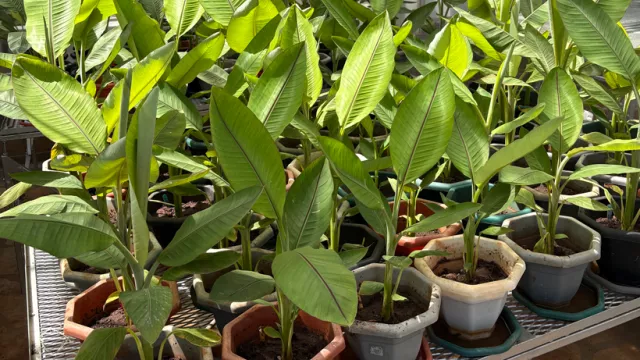
Mainstreaming on-farm verification in CGIAR breeding
A meeting was held recently held in Nairobi to advance the design and integration of on-farm verification trials (OFVT) as a core component of breeding pipelines going forward.
Improving crops has never been more relevant but funding is tighter while expectations are rising. How did CGIAR crop improvement Science Program, Breeding for Tomorrow, respond to this reality in 2025?
Demand system estimation—gauging how consumer choices respond to changing prices and incomes—is a crucial facet of food policy research, yet remains a highly specialized and underdeveloped area in development economics
CGIAR is supporting Honduras’ National Institute of Statistics to integrate climate and displacement into national surveys. By strengthening household data systems, the collaboration makes climate-driven mobility and vulnerability visible, improving evidence for policies that anticipate displacement and support affected communities.
At COP30 in Belém, CGIAR Climate Action successfully shifted food and land systems from the sidelines to the center of the global climate agenda by embedding scientific research into ministerial policies and co-launching major restoration and finance initiatives designed for long-term delivery.
COP30 solidified the transition of aquatic foods from a niche topic to a core pillar of global climate action, with WorldFish and CGIAR now focused on helping nations turn their ambitious new climate plans (NDC 3.0) into funded, scalable realities for fisheries and aquaculture.
Agricultural R&D struggles to scale innovations without intentional private sector collaboration. This article shows how IITA uses evidence-based tools, licensing frameworks, and co-creation models to turn research outputs into market-ready solutions for farmers.
A one-day CIMMYT–CGIAR Scaling for Impact (S4I) workshop with BARI on 8 Dec 2025 brought together 25 early- and mid-career scientists (56% women) to strengthen creative and systems thinking for more innovative, inclusive, and scalable agricultural research.