
Fairgrounds: Advancing CGIAR Data Ecosystems
Launched in January 2025 as a DTA-linked project, Fairgrounds aims to be the gateway for CGIAR to access global research data, while also opening CGIAR’s research data to the world.


Launched in January 2025 as a DTA-linked project, Fairgrounds aims to be the gateway for CGIAR to access global research data, while also opening CGIAR’s research data to the world.

This blog highlights how agribusinesses in Malawi and Zambia are translating science into scalable, investment-ready business models through the CGIAR Scaling for Impact (S4I) Agribusiness Bootcamp—advancing inclusive growth, climate resilience, and market-driven innovation across agrifood systems.
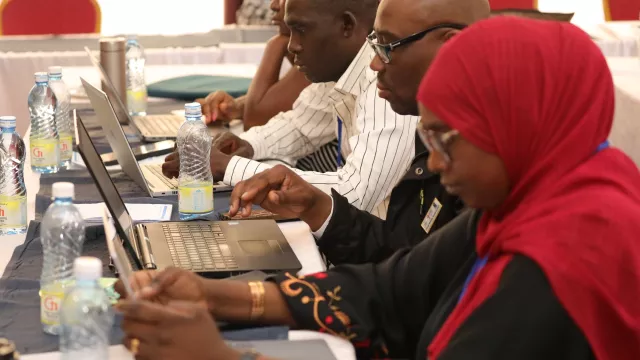
This blog explores how hybrid mentorship models expand access to research training in Africa. Using the African Climate Mobility Academy, it shows how local hubs, global mentors, and alumni networks reduce barriers for women and early-career researchers.

CGIAR Climate Action played an integral role at the 6th Global Climate-Smart Agriculture Conference, steering discussions away from mere pledges toward concrete deals and financial commitments for scaling up solutions.

Due to deep political divisions over finance and technology, the Sharm el-Sheikh Joint Work (SJWA) on agriculture and food security stalled at COP30, deferring crucial implementation decisions to the final six months before its scheduled conclusion at COP31.

At COP30 in Belém, Non-Market Approaches (NMAs) gained significant momentum by formally being linked to the UNFCCC's Mitigation Work Programme, elevating their role as a crucial complement to market-based climate action under Article 6.8 of the Paris Agreement.

CGIAR Breeding for Tomorrow’s Accelerated Breeding team, together with Market Intelligence, recently spent ten days with IITA’s breeders working across maize, cowpea, soybean, cassava, yam, and banana. The goal was simple: strengthen alignment of Market Segments and Target Product Profiles (TPP), review breeding pipelines, and data systems.

Malawian smallholder farmers are turning beans into income and nutrition. Through improved seeds, cooperatives, and market access, farmers boost yields, earn profits, and build resilience, transforming livelihoods and strengthening local seed systems.