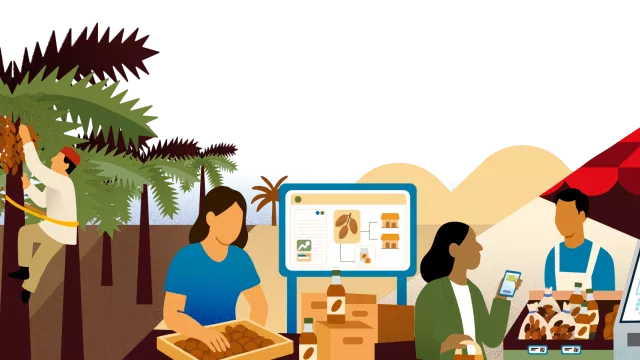
AgriTech4Tunisia Innovation Challenge: Call for applications now open!
Are you developing an agri-tech that addresses Tunisia’s key agricultural challenges and market needs?


Are you developing an agri-tech that addresses Tunisia’s key agricultural challenges and market needs?

In Marcala, innovation is not just a process: it is an opportunity to dream and collectively build a fairer, more resilient, and more prosperous future for all.

Pollinator and fruit diversity on the globe’s smallholder farms – which account for up to 80% of all farms – remains strong, despite ecological fragmentation. The findings could point to how to improve the industrialized farming pollinator crisis.

Currently, 80% of the world’s people rely on just three agricultural commodities as primary food staples: Maize, rice, and wheat.

A recent three-day workshop in Tawa (Makueni County, Kenya) convened researchers, extension agents, private-sector representatives, NGOs, and farmers to tackle a critical barrier in Kenyan agriculture: scaling innovation. This workshop focused on moving beyond successful pilots to develop strategies for achieving widespread, lasting impact for resilient and productive smallholder systems across Kenya.

Many African nations face significant, interconnected development challenges, including over-reliance on rain-fed agriculture, heavy dependence on hydropower for electricity generation, rapid population growth, and related economic pressures. These vulnerabilities are heightened by the impact of climate change and the increasing frequency of extreme weather events such as droughts, which reduce hydropower output and diminish agricultural productivity.

For decades, the global fight against child stunting has been framed around a central trinity: Nutrition, sanitation, and poverty

Climate risks are no longer abstract scenarios. They are reshaping security, governance, and cooperation in real time. At the Montreal Climate Security Summit, military, policy, and research actors confronted what is already breaking and what can still be fixed, together, if climate risk is treated as a call to joint action.