

From research to innovative financing for scaling environmental peacebuilding
Under an innovative pilot in Caquetá, the Alliance of Bioversity International and CIAT helped structure Colombia’s first environmental project under the Obras por Impuestos framework, repurposing domestic tax policy to fund cocoa agroforestry, ecosystem restoration, and peacebuilding in conflict-affected regions.
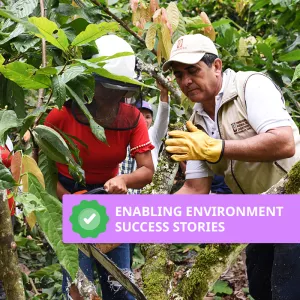
Although climate finance is expanding worldwide, many countries still struggle to convert high-level commitments into on-the-ground results. In Colombia, the Obras por Impuestos (Works for Taxes) framework offered an untapped opportunity. Originally created to attract private investment to conflict-affected regions, this fiscal mechanism allows companies to redirect a portion of their tax payments into local public investments. Historically, however, its use remained narrow, financing physical infrastructure like roads and schools rather than environmental restoration or climate resilience.
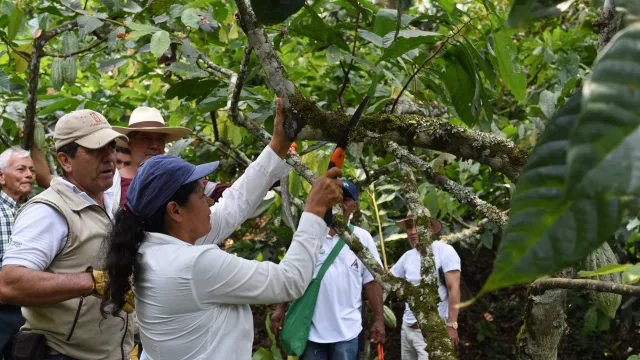
To expand the mechanism's scope, the Alliance of Bioversity International and CIAT, alongside local and national partners, targeted the regulatory and institutional barriers limiting its potential. Through policy dialogues with the Ministry of Environment and Sustainable Development and the National Planning Department, the initiative aligned the Obras por Impuestos framework with national green business and low-emission development priorities. The project focused on Belén de los Andaquíes in Caquetá—a biodiversity hotspot in the Amazonian foothills heavily impacted by conflict and deforestation. By building local technical capacity, municipal authorities and the Asproabelen Cooperative structured a hybrid model combining cocoa agroforestry systems with Payments for Environmental Services (PES).
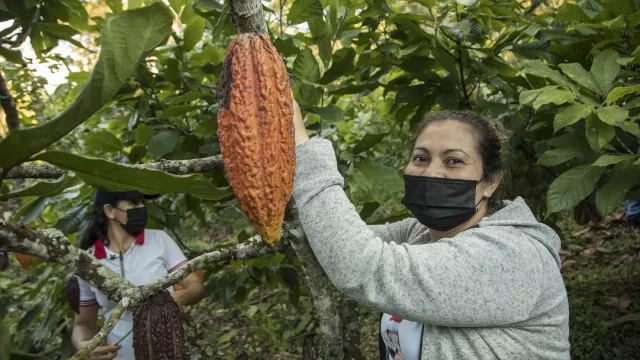
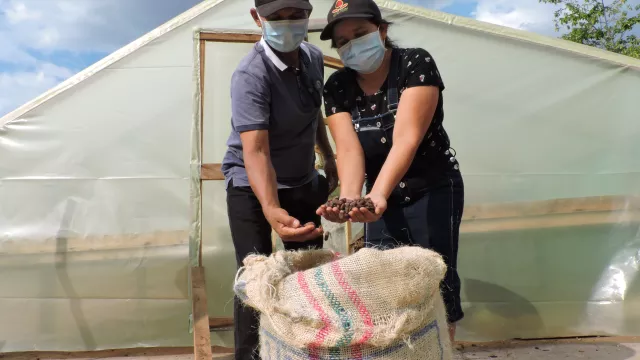
This collaborative effort resulted in the first environmental project formally approved under the Obras por Impuestos program. With a projected value of 1.14 million USD over four years, the initiative directly supports 70 cocoa-farming families, offering annual incentives of 147 USD per hectare to protect surrounding ecosystems while enhancing sustainable livelihoods. Beyond local impacts, the pilot established a crucial institutional precedent by proving that tax-based mechanisms can support non-traditional rural development. The lessons gathered from Caquetá also informed the conceptual design of Colombia’s Nature for Peace Mechanism for Productive Restoration and Community Resilience, an innovative non-market approach currently under government review.

By proving that domestic fiscal mechanisms can be repurposed for ecosystem restoration and peacebuilding, the Colombian experience shifts the narrative surrounding private sector climate action. It offers a practical model for scaling climate-resilient agriculture, strengthening institutional coordination, and delivering lasting environmental and social benefits in fragile, high-deforestation regions.
Read the full Enabling Environment Success Story here.
Compiled by the CGIAR Scaling for Impact (S4I) program, the “Enabling Environment Success and Failure Stories” is a collection of accounts that chronicles both the successful and unsuccessful efforts in creating a supportive environment for scaling agrifood system innovations. Through compelling narratives that highlight specific challenges, key players, and outcomes, this series is designed to demonstrate how CGIAR actively influences and strengthens these environments to achieve a wider, more impactful reach.