

Bridging Markets: Papua New Guinea Women Entrepreneurs Learn from Quezon City’s Vendor Business School
This learning visit was facilitated through the CGIAR Food Frontiers and Security Science Program. Led by Madam Doreka Dai, Vice Chairlady and Tour Coordinator, the delegation learned about the VBS approach, heard firsthand experiences from market vendors, and observed ongoing VBS learning sessions.
Bridging Markets: Papua New Guinea Women Entrepreneurs Learn from Quezon City’s Vendor Business School
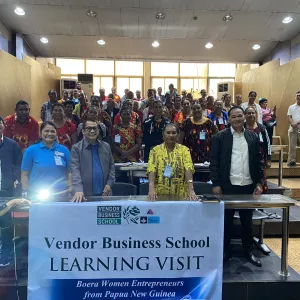
QUEZON CITY, Philippines — August 12, 2026 — Forty women entrepreneurs from the Boera Hisiubada Women’s Ministry of Papua New Guinea visited Quezon City for a full-day learning exchange on the city’s Vendor Business School (VBS), featuring a learning meeting and field visit to Kamuning Public Market.
The learning visit was facilitated through the CGIAR Food Frontiers and Security Science Program. Led by Madam Doreka Dai, Vice Chairlady and Tour Coordinator, the delegation learned about the VBS approach, heard firsthand experiences from market vendors, and observed ongoing VBS learning sessions.
The delegation was welcomed by Quezon City Councilor Victor Bernardo, lead author of the Quezon City VBS ordinance, and Atty. Mark Aldave, Director of the Market Development Administration Office. Councilor Bernardo welcomed the women and expressed appreciation for their interest in the VBS program, while Atty. Aldave expressed hope that the exchange would encourage interest in adapting a similar initiative in Papua New Guinea.
The morning learning meeting focused on the VBS approach, methodology, and Quezon City’s experience in institutionalizing the program. Ms. Arma Bertuso, Research Associate at the International Potato Center (CIP) and Focal Person for the Urban Food Systems area of work under the CGIAR Food Frontiers and Security Program in the Philippines, shared insights into the program’s development and scaling. Mr. Ragie Montes, Lead of the MDAD-VBS Unit, discussed the implementation and institutionalization of the VBS approach in Quezon City.
The women also heard firsthand experiences from VBS graduates Mr. Nolex Mamansag and Mrs. Vilma Admana, market vendors who participated in the pilot VBS in 2024. They shared how the knowledge and skills gained through the VBS program continue to benefit them in managing and improving their businesses.
Following the morning meeting, the delegation proceeded to Kamuning Public Market for a hands-on learning visit. Divided into groups, the women interacted with VBS graduate vendors in the market, observed ongoing Basic and Intermediate VBS sessions, and visited a zero-market-waste management initiative of the city.
The field visit allowed the delegates to see how VBS learning is applied in the day-to-day realities of market vendors, complementing the lessons discussed during the morning session.
The exchange provided an opportunity for women entrepreneurs from Papua New Guinea and Quezon City to share experiences, build connections, and explore how practical business education can strengthen informal businesses and livelihoods.
Through Madam Doreka Dai, the Boera Hisiubada Women’s Ministry expressed appreciation to the Quezon City Government, International Potato Center and CGIAR Food Frontiers and Security for hosting the learning exchange and sharing Quezon City’s VBS experience.
The exchange visit underscored the value of cross-country and women-to-women learning in promoting stronger, more resilient, and better-supported informal businesses.