

Beyond Cash Transfers: Building Resilient Livelihoods in Kenya
The role of Kenya’s Economic Inclusion Program in improving livelihoods and strengthening resilience.
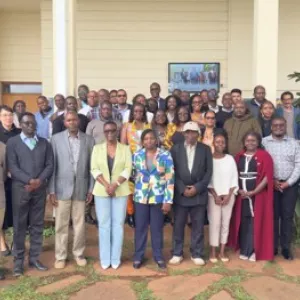
For households living in extreme poverty, a cash transfer can provide an important starting point, but sustainable economic inclusion may require more than cash. Households also need the skills, market opportunities, and support systems to turn that investment into lasting improvements in their livelihoods. This was a central theme of the dissemination event on the impact evaluation of Kenya’s Economic Inclusion Program (EIP), which brought together government, research, and implementation partners to reflect on the program’s results and priorities for its next phase.
From social assistance to economic opportunity
Launched in 2019 the EIP supports extremely poor households to build sustainable livelihoods. Its package at the time of the study combined consumption support (monthly transfer of 2000 Kenyan Shillings (KES)), asset transfer (KES 30,000), skills training, mentorship, and support to participate in Village Savings and Loan Associations (VSLAs). The program aims to help households move beyond meeting immediate needs towards building productive assets, developing enterprises, and strengthening their financial resilience. To understand its impact, IFPRI and the World Food Program (WFP) conducted a randomized controlled trial of the program’s second cohort, implemented by the Government of Kenya. The evaluation covered 164 villages across four counties: Kisumu, Makueni, Murang’a, and Taita Taveta. Data were collected at baseline in April-May 2024 and at endline in April-May 2025.
What did the evaluation find?
The results point to meaningful improvements across several dimensions of livelihood, economic activity and household wellbeing.
More productive assets and business activities: Participating households increased their farm, livestock, and total assets. They were also more likely to operate a business: the probability of running a business increased by 13 percentage points, while starting a new business increased by 12 percentage points.
Higher incomes and improved household wellbeing. The program increased income from livestock and farming, as well as total income. Total household income increased by 50 percent. However, the evaluation found no statistically significant change in wage income. This might be driven by shift to self-employment. Household consumption also rose by 8%, school expenditure increased by 12%, and the food insecurity score declined by 0.6 points.
Greater financial inclusion. Participants were more likely to save and borrow. The probability of having saved increased by 21 percentage points, while the probability of borrowing increased by 12 percentage points. Total savings also doubled relative to the comparison group. The simultaneous surge in saving and borrowing suggests financial deepening and improvement in financial inclusion.
Positive changes for women. The program improved several psychosocial outcomes, including women’s self-efficacy and mental wellbeing, and strengthened gender-equitable attitudes. Participants were also more likely to discuss finances with their spouses. However, the evaluation did not find statistically significant changes in intimate partner violence, the division of household chores, or childcare responsibilities.
Local economy (village level) impacts: The program led to an increase in new enterprises at the village level. At the same time, increased business activity did not translate into statistically significant improvements in village level sales revenue or net profits. Starting or expanding a business is an important step but ensuring that enterprises become profitable and resilient may take time to materialize.
Lessons to inform the next phase of the program
Discussions at the dissemination meeting highlighted the importance of adapting program design to the realities households face, particularly climate shocks, limited market access, and unequal care responsibilities.
Connect enterprises to viable markets and opportunities. Training and start-up capital need to be complemented by stronger value-chain connections, reliable buyers, and market information. These linkages can help households turn productive activity into profitable businesses.
Protect livelihoods against climate shocks. Climate risks can undermine gains in assets and income, particularly in arid and semi-arid areas of Kenya. The workshop participants emphasized the need to integrate climate information, early-warning systems, and appropriate insurance, including livestock insurance, into economic inclusion support. Building assets must go hand in hand with protecting them.
Strengthen mentorship and longer period of support. The next phase offers an opportunity to improve mentor and supervisor training, and provide support over a timeframe that allows households to develop and strengthen their enterprises. The program’s move towards an 18-month implementation period reflects the importance of sustained engagement.
Keep gender and social inclusion central. Improvements in women’s wellbeing are encouraging, but persistent gaps in unpaid care responsibilities and household decision-making underline the need for continued attention to gender-responsive programming.
Invest in government systems and partnerships. As the program expands, stronger implementation capacity, interoperable information systems, and collaboration among government, research institutions, and technical partners will be essential. Partnerships can also help bring climate expertise, insurance solutions, and market connections into the program delivery.
Turning evidence into action
The evaluation is already informing the program’s expansion and scale-up. Following implementation in five counties, the government is now moving toward scaling EIP to 20 counties. This expansion makes continued learning especially important, as the results should not automatically be assumed to apply equally across all settings. Further research can help explain how impacts vary by context, which enterprise models are most viable, and whether initial improvements in livelihoods and wellbeing last. Future evaluations should also examine business profitability and sales, women’s unpaid care responsibilities, the program’s cost-effectiveness, and which design features help households withstand climate shocks. These insights can help decisionmakers refine program design as implementation expands.
Looking ahead
Kenya’s Economic Inclusion Program demonstrates the potential of combining cash support with skills training and mentorship. Its results show encouraging progress in asset accumulation, business creation, savings, consumption, and women’s wellbeing while also highlighting the limits of capital alone. The next step is to strengthen the connections between enterprise development, viable markets, climate resilience, and gender-responsive support. By continuing to use evidence to adapt implementation, Kenya can build an economic inclusion approach that not only helps households establish productive livelihoods but also helps them sustain those livelihoods in the face of uncertainty. Lasting economic inclusion requires both building household assets and protecting the gains households make against recurring shocks, including climate-related vulnerabilities.
Reflecting about the implication of the key findings, Dr. Lynette Ochuma, Director at Kenya's Directorate of Social Services, stated that "The study that was done by IFPRI is very useful. One, because it provides real time data and evidence that we require for decision making and therefore the results will help us in terms of designing and implementing the Kenya socio-economic inclusion program phase 2. The preliminary results we got from IFPRI helped us to design the Kenya ultra poor graduation strategy, so it is key in decision making and policy formulation. The data also helped us to build capacity of the government – able to identify the training needs and from that design an officers' guide based on the evaluation data that was done."