

Sustainable Farming


Overview
Through integrated farm management solutions, we contribute to global food security by delivering 15-30% higher productivity, 10-15% increased profitability, 15% Green House Gas (GHG) emissions reductions, and 20% more efficient water and fertilizer use, while protecting natural resources and supporting sustainable livelihoods for smallholder farmers.
Our work integrates agronomic practices, plant health innovations, and farming-system approaches. It is co-developed and co-delivered with National Agricultural Research and Extension Systems (NARES), governments, private sector, advanced research institutions (ARIs), non-government organizations (NGOs), farmers, and civil society, prioritizing women and youth in low-and middle-income countries (LMICs).
We are scaling equitable public goods to build resilient farming systems, equipping stakeholders to overcome shocks, constraints, and risks for transformative impact.
Our goals
Our work will contribute to
Technical Report
![Patna_Bihar2_Credits Suresh Kakraliya[26].jpg](https://cgiar.widen.net/content/zx9zrtva9o/web/Patna_Bihar2_Credits-Suresh-Kakraliya26.jpg?u=4s1de4&q=80&w=300&h=300&retina=true&x.template=y&keep=c&crop=true)
Where we bring benefits
The countries and locations listed below reflect where CGIAR and its partners reasonably expect their work to generate benefits:
- Global
- Regions: Eastern Africa, Southern Asia; Southern Africa, South East Asia. Central and Western Europe and North Africa, and Western Africa
- Countries: Bangladesh; Cambodia; Colombia; Côte d'Ivoire; Egypt; Ethiopia; Ghana; India, Kenya; Lebanon; Malawi; Mexico; Morocco; Nigeria; Peru; Philippines; Rwanda; Senegal; Tanzania, United Republic; The Democratic Republic of the Congo; The Socialist Republic of Viet Nam; Uganda
Challenges
Challenges we’ll address:
- Need to increase nutritious food production by 60% to meet expanding population demands
- 20-40% reduced agricultural productivity growth because of climate change
- An agricultural environmental footprint equivalent to 1/3 of annual greenhouse emissions
- Persistent social inequities and an aging agricultural labor force
- Exclusion of youth, women, and marginalized communities in agricultural production
Our publications
Identify, locate and download research and other outputs produced by our program/accelerator
-

Fall armywormtolerant maize varieties have lower leaf damage under farmer management
Fall armyworm (FAW), Spodoptera frugiperda (J.E. Smith) is a major threat to maize production in Africa since its invasion in 2016. In sub-Saharan...
-
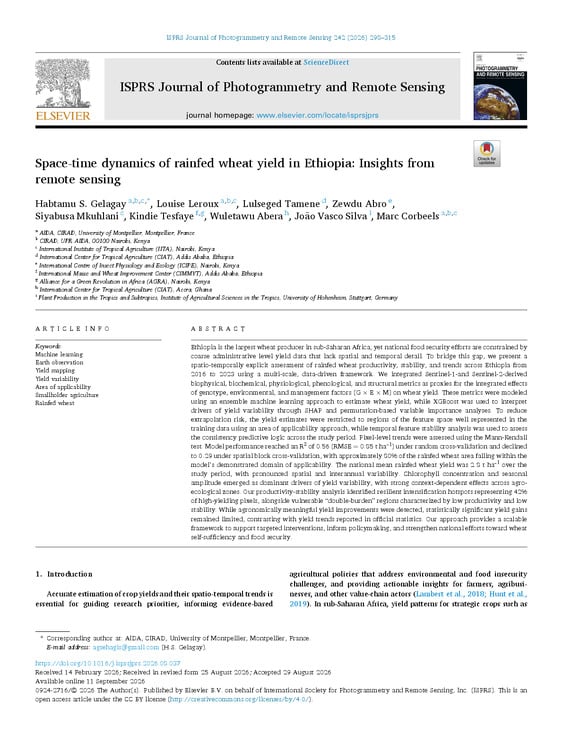
Spacetime dynamics of rainfed wheat yield in Ethiopia Insights from remote sensing
Ethiopia is the largest wheat producer in sub-Saharan Africa, yet national food security efforts are constrained by coarse administrative level yield...
-

Evidencedriven shift toward nitrogen and phosphorusbased fertilizer strategies to boost Ethiopias cereal systems
Over the past five years, Ethiopia has reassessed its national fertilizer strategy by shifting from generalized blended fertilizers to...
-

CIAT soil bestbets compendium for sustainable land management
This Best-Bets Compendium identifies and describes in detail the Sustainable Land Management (SLM) practices, methods, technologies and/or...

Areas of work
Accelerating AI-Enabled Farm Advisory at Scale
Transforming traditional advisory services by delivering accurate, localized, and inclusive guidance through digital and AI tools, grounded in robust agronomic data and validated standards to drive adoption and impact for smallholders.
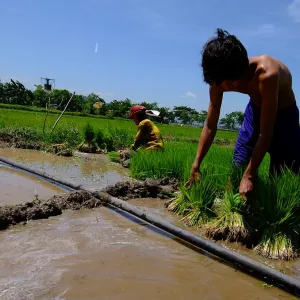
Enabling Preparedness and Rapid Response to Emerging Shocks
Strengthening capacity to enhance prediction of the farm-level impact of emerging biotic & abiotic shocks, and develop actionable, context-specific intelligence and evaluation criteria — to strengthen local and national preparation and response capacities, and protect farmers' livelihoods
and food security.
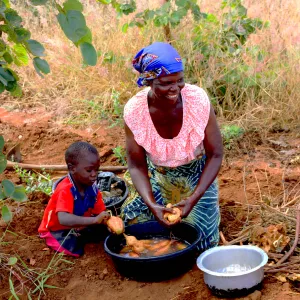
Delivering Integrated Solutions to Systemic Farm-Level Binding Constraints
Addressing interconnected biophysical and socio-economic pressures like soil health, plant health, water management and social inclusion through systematic diagnosis, co-developed farm management solutions, and scaling via inclusive partnerships.
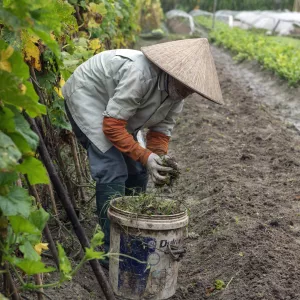
Incubating Innovation in Sustainable Farming
Acting as an internal incubation fund to de-risk high-potential ideas, catalyzing frontier research and technologies to build disruptive prototypes that advance other areas of work.

Accelerating Impact
Providing foundational support through standardized Findable, Accessible, Interoperable, and Reusable (FAIR) and AI-ready data, consistent Monitoring, Evaluation, Learning, and Impact Assessment (MELIA) tools, and partnership platforms to enable scaled implementation and policy influence.
Gender Equality & Social Inclusion
We address gender and social inequalities in agri-food systems through an inclusive, gender-responsive approach integrated across all areas of work. This ensures equitable interventions that close knowledge gaps, bundle innovations effectively, and drive sustainable, farmer-responsive impact.
Our approach
Interlinked support across CGIAR’s portfolio
We will work closely with the Better Diets & Nutrition, Breeding for Tomorrow, Climate Action, Genebanks, Multifunctional Landscapes, Policy Innovations, Scaling for Impact, Sustainable Animal and Aquatic Foods programs, and the Capacity Sharing, Digital Transformation, and Gender Equality and Inclusion accelerators.
Working to share our capacity with
- Governments and Policymakers
- Private sector
- Scientists and research institutions
Our expertise
- A strong capacity and experience in organizing and coordinating an international program around the future sustainability of agricultural systems
- A diverse and global expert pool of agronomists, soil scientists, plant health specialists, desert farming specialists, crop modelers, data scientists, policy scientists, and co-creation and gender experts
- Extensive, locally embedded physical resources within our centers, including research stations, field sites, laboratories, germplasm health units, manufacturing facilities, and long-term experiments
- Solutions and innovations tailored to local contexts while considering broader agricultural development goals
Events
News
-

How growing forage for livestock turned a small plot into a thriving family business
In Ethiopia's Hadiya Zone, smallholder farmers are turning small plots of oats into profitable forage seed businesses that provide supplementary...
-

Bridging the gap: Can Croppie take root in Kenya’s coffee sector?
Researchers from the Alliance and KALRO-Coffee Research Institute met on 11 September 2026 to explore how the AI-enabled mobile app Croppie could...
-

Scaling Mechanized Direct Seeded Rice for Climate-Smart Agriculture in Cambodia
By combining custom-hire machinery models, gender-inclusive scheduling, and national climate policy integration, IRRI and CGIAR enabled Cambodian...
-

New Delhi Marks UN Day for South-South Cooperation with Push to Scale Dryland Innovation Across the Global Sout
A major international push to accelerate agricultural innovation across the Global South took centre stage in New Delhi today, as the United Nations...