Latin America and the Caribbean
Harnessing the region's agricultural and biological diversity to build resilient food systems.


Overview
The CGIAR Liaison Office for Latin America and the Caribbean works with governments, national research systems, farmers, communities, research institutions and the private sector to develop solutions adapted to the region's diverse food, land and water systems.
From crop breeding and biofortification to digital water governance, climate services, sustainable livestock systems and citizen science, research across Latin America and the Caribbean connects agricultural productivity with nutrition, climate resilience, biodiversity and livelihoods.
The region is central to global food security and biodiversity. The region holds around 30 percent of the world's biodiversity and is the world's largest food-exporting region, while continuing to face growing pressures from climate change, land degradation, malnutrition and inequality.
Our Latin America and the Caribbean presence
News
Explore CGIAR news from the Latin America and the Caribbean region.
-
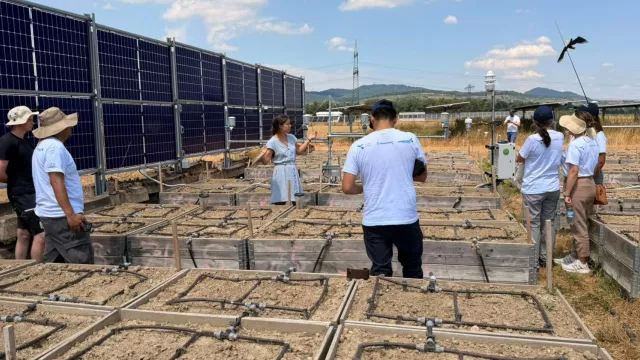
Where crops and photovoltaic energy learn to coexist
This article is adapted from a story originally published by Germany’s International Climate Initiative.
-

Gender and intersectionality research in dialogue at IAFFE 2026
At the 34th conference of the International Association for Feminist Economics, held in Cali, Alliance researchers put their work on gender and...
-

Who shapes the landscape? Gender and youth take the spotlight at Tropentag
Who conserves biodiversity, whose knowledge is passed on, and who gets to lead? In Colombia’s Indigenous territory of Cumbal, research on women’s...
-

When diversity comes together: Cidra papa and peach palm, two crops with much to tell
Peach palm and cidra papa have long been part of Colombia’s farms and food traditions, yet much of their potential remains unexplored. At a four-day...
Events
Explore CGIAR events from the Latin America and the Caribbean region.


Publications
Explore CGIAR publications from the Latin America and the Caribbean region.
-

When scale matters Drivers of faunal diversity in cacao production landscapes in the Peruvian Amazon
-

Postharvest grain system in Ecuador and smallscale farmers perceptions of gender roles and postharvest loss
Smallholder farmers in Ecuador are the main producers of staple grains, yet postharvest losses remain one of the major constraints they face. This...
-
Ecological misreadings landscape eligibility and divergent environmental histories underpin complex vulnerabilities in AmazonCerrado interbiome politics
The Amazon and Cerrado biomes compose almost three-quarters of Brazil's territory. From 1985–2023, 16 million hectares were deforested in the...
-

Animalsourced food revolutions and their implications for prices consumption and nutrition in low and middleincome countries
Livestock and aquaculture are increasingly regarded as high-priority sectors for nutrition-sensitive agricultural development in low- and...