
Bridging the gap: Why regional forecasts must become local decisions
In Southern Africa, a seasonal forecast is more than just a map of probabilities; it is a lifeline for millions of producers.


In Southern Africa, a seasonal forecast is more than just a map of probabilities; it is a lifeline for millions of producers.

ICARDA conducted field visits to Qena and Minya, to follow up on the installation of small post-harvest processing units, paying particular attention to the newly installed small post-harvest machinery.

Insights from a Special Session at the 6th International Agronomy Congress during 24–26 November 2025 in New Delhi, India. The country, India has successfully moved to the status of a surplus food-producing nation, ensuring overall food availability and stability. However, agriculture now faces multiple and interconnected challenges, including climate change, water scarcity, soil degradation, pest pressure, and low farm incomes. To discuss integrated pathways, a Special Session on “Multifunctional Landscapes” was organized during the 6th International Agronomy Congress, focusing on how agriculture can simultaneously support food production, climate resilience, water security, biodiversity, and livelihoods.

Adaptation Futures 2025 brought together researchers, practitioners, community leaders, youth and Indigenous voices to the forefront of adaptation discussions – allowing the opportunity for experts in their respective fields to share knowledge, findings, and experiences in the effort to advance effective and equitable adaptation interventions. Across panels, plenaries, and hallway conversations, a recurring call echoed through the conference halls: We must move ‘beyond adaptation’. The framing of adaptation as a technical response to climate risk is giving way to a more systemic, inclusive, justice-oriented, and transformative vision of change.
The CGIAR System Council consists of twenty voting members and every three years voting members consult and agree upon their constituencies, which may be comprised of one or more governments or organizations.
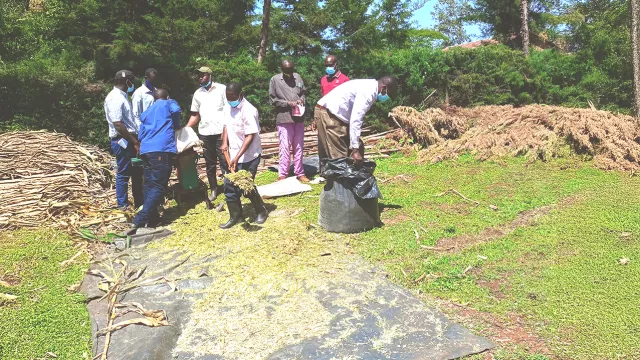
Silage is vital for Kenya’s smallholder dairy farmers, yet poor quality limits productivity. A CGIAR / ILRI demand-driven study in Nandi and Bomet reveals implementation gaps beyond adoption, highlighting farmer-led learning and evidence-based interventions to improve silage quality, yields, and incomes.

As part of the CGIAR 2022–24 Investment Prospectus, 32 initiatives are grouped within three Action Areas: Systems Transformation, Resilient Agrifood Systems and Genetic Innovation.

CGIAR’s new Investment Prospectus provides a body of research and innovation to deliver on the priorities set out in the CGIAR 2030 Research and Innovation Strategy. Covering the 2022–24 business plan period, the Investment Prospectus proposes a set of CGIAR Initiatives to be supported with pooled funding.