

Beyond Adaptation- What Adaptation Futures 2025 Signals for Climate Action
Adaptation Futures 2025 brought together researchers, practitioners, community leaders, youth and Indigenous voices to the forefront of adaptation discussions – allowing the opportunity for experts in their respective fields to share knowledge, findings, and experiences in the effort to advance effective and equitable adaptation interventions. Across panels, plenaries, and hallway conversations, a recurring call echoed through the conference halls: We must move ‘beyond adaptation’. The framing of adaptation as a technical response to climate risk is giving way to a more systemic, inclusive, justice-oriented, and transformative vision of change.
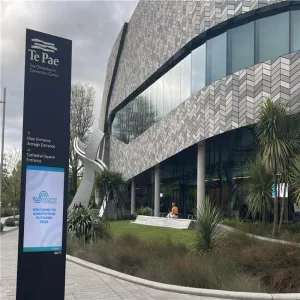
Adaptation Futures 2025 brought together researchers, practitioners, community leaders, youth and Indigenous voices to the forefront of adaptation discussions – allowing the opportunity for experts in their respective fields to share knowledge, findings, and experiences in the effort to advance effective and equitable adaptation interventions. Across panels, plenaries, and hallway conversations, a recurring call echoed through the conference halls: We must move ‘beyond adaptation’. The framing of adaptation as a technical response to climate risk is giving way to a more systemic, inclusive, justice-oriented, and transformative vision of change.
Transformation – Going “Beyond Adaptation”
Transformation emerged as one of the central themes of the conference. Transformation was not discussed as an abstract concept, but as a necessary shift in how adaptation is understood and practiced. The topics within each conference theme underscored that transformational adaptation sits firmly under the “beyond adaptation” umbrella: It is not merely a scaled-up version of existing adaptation, but an interdisciplinary and whole-of-society approach that rethinks existing systems and power dynamics within and between communities, countries, regions and the world.
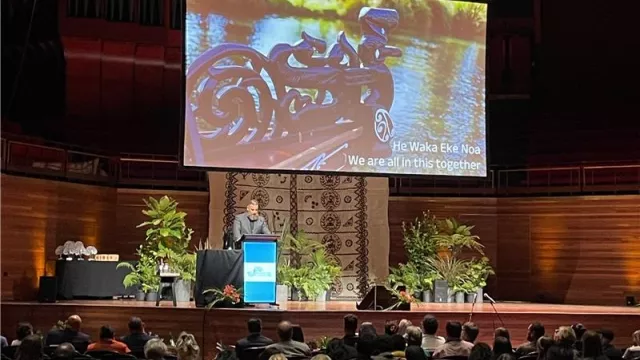
As session speakers noted during the Beyond Adaptation Plenary, transformation means:
- Focusing on root causes of risk, not just their symptoms.
- Operating at the systems level, with interventions that are deep and catalytic.
- Avoiding negative or defeatist framings of adaptation.
- Centering futures thinking and facilitating action.
- Reframing and going beyond the status quo
The Plenary underscored that adaptation can no longer be project-bound or technocratic. Instead, it must be strategic, systemic and long-term, and grounded in justice, inclusion, and trust. Panelists equally highlighted that for transformational adaptation, we need fit-for-purpose funding, indicators for systemic change, be intentional with our language, and acknowledge the reality of our limits. However, an undercurrent of uncertainty exists within transformational adaptation conversation, echoed in what transformational adaptation needs: A definition does not exist, neither do metrics nor indicators for measuring such systemic change. This is connected to a broader concern within and beyond the adaptation community, which is that if transformative adaptation increasingly becomes the litmus test for financing, how can—already challenge and barrier full—financing be accessed by the leading climate and environment funds without clear and agreed-upon language a metrics? How can developing and least developed countries integrate transformational change within their NDCs and NAPS without the capacity, funding and mechanisms required to approach society-level and cross-sectoral change?
Why researching transformative adaptation matters for CGIAR
Agriculture, forestry, and land use account for approximately 21% of global greenhouse gas emissions. At the same time, climate change is steadily diminishing the productivity of food systems worldwide. The World Food Program projects substantial crop yield losses under unaddressed and worsening climate scenarios. Their projects earn that in a world that is 2C warmer, an additional 189 million people will face hunger by 2050. A broader gender divide exists that reduces adaptation effectiveness and climate resilience. In low- and middle-income countries, women make up around 43% of the agricultural labor force yet are often marginalized from decision-making processes (CGIAR). On the global level, UNHCR predicts that climate change will internally displace 216 million people by 2050, placing severe stress on food systems and increasing the risk of conflict and migration.
Together, this highlights an urgent need to integrate cross-sectoral adaptation approaches that place marginalized groups as key stakeholders in the design and delivery of interventions. This raises the attractiveness of transformational pathways – pathways that rethinks power structures, identifies the root causes of climate change and addresses adaptation at the systems level. However, without case studies to reference nor clear definitions, metrics or indicators that are widely accepted, approaching such pathways is a clear challenge. How can we adopt policies if we don’t have a guide?
CGIAR is hosting Adaptation Insights, a project funded by the Gates Foundation and led by the Alliance of Bioversity International and CIAT. ILRI, a partner in this project, is leading the scoping of existing methods, metrics and protocols in adaptation work across research institutes, NGOs, IOs, universities, and more. By doing so, Adaptation Insights helps improve access to data on implemented adaptation actions and evidence of their effectiveness, and will establish a network of adaptation trackers to gather and continuously update data on implemented adaptation actions and their effectiveness.
Tracking methods, metrics and protocols that researchers, IOs, NGOs and others alike are employing allows CGIAR to inform diverse adaptation pathways, including transformational pathways. Adaptation Insights allows CGIAR to better understand adaptation tracking and implementation, and ultimately fill an existing gaps in research that are otherwise unexplored. With the knowledge gained from this Project, CG scientists can support evidence-based pathways development, especially those that include several sectors, diverse disciplines and stakeholders and seek to address the growing need for transformational change.
As a Research Consultant, understanding adaptation is the driving force behind a paper identifying the necessary conditions for societal-level change. Co-authored by ILRI Principal Scientist Dr. Aditi Mukherji and Dr. Alicia Grace Harley of Harvard University, this paper seeks to explore the enabling conditions and shortcomings in historical cases of societal-level change. This scope is relevant as adaptation must be a whole-of-society approach. Increasingly, adaptation is more about adapting to livelihoods and habits than climate change—seen through the climate shocks disrupting smallholder farmers and straining their livelihoods. As a result, we do not necessarily require cases of climate adaptation in order to understand what would catalyze shifts in institutional structures, governance frameworks, behavioral change, energy and economic systems, and more.

Locally-Led Adaptation: Transformation from the Ground Up
If transformation was the destination, locally-led adaptation was the route. Across multiple sessions, from Locally-Led, Transformative Systems Change to Community-Led Formal Planning for Sustainable Development in Fiji, researchers and practitioners reinforced that transformation cannot happen without local engagement, partnerships and leadership.
Dr. Deepa Joshi’s work, CGIAR scientist from IWMI, was particularly compelling. In her presentation Recalibrating the Tipping Point, she emphasized that climate resilience occurs when communities lead their own adaptation strategies, referencing the Eight Principles of Locally-Led Adaptation. Her team’s use of Sensemaker, a digital ethnography tool, demonstrated how marginalized agrarian communities can voice their experiences of climate vulnerability — not just as data, but as lived narratives that shape solutions.
Similarly, Dr. Joeli Varo’s and Dr. Doni Wainigolo’s research from Fiji reminded participants that even when indigenous communities are resource-rich, they can remain cash-poor — raising critical questions about pervasive colonial structures of power and systems that disempower indigenous communities from having economic power, and how disentangle these unjust power structures and systems in empowering adaptation interventions.
Together, these sessions illustrated that locally-led adaptation is both a method and a mindset: it is about power redistribution, narrative sovereignty, and trust.
Indigenous Innovation and Leadership
Indigenous innovation and leadership was another cross-cutting theme, woven throughout the conference. Many sessions emphasized that indigenous knowledge must not be considered as merely a “complement” to science, but rather as a central pillar for transformative change and effective adaptation efforts.
This was echoed at the Indigenous Forum, which took place on the Sunday before the opening plenary. Speakers at the Forum and at proceeding sessions noted that present adaptation efforts are built on Western knowledge systems and values, highlighting that adaptation pathways must be decolonized and built by communities, for communities.
Discussions on community-led planning, cultural landscapes, and indigenous governance frameworks highlighted how indigenous innovation is already driving adaptation in ways that are holistic, intergenerational, and built on Indigenous values and knowledge frameworks. In the Pacific, for example, adaptation is not simply about “coping with climate change,” but about strengthening Vanua — the interconnection between land, people, and spirituality. The framing of this theme—innovation, instead of ‘rights’ for example, underscores an integral narrative: Indigenous communities are to be granted their rights. It is not the responsibility of Global North leaders to “give” rights. It is the responsibility of the Global North, however, to recognize the success of indigenous innovation and that all peoples have adapted overtime, it is the resting state of people and communities – to adapt, and engage with “knowledge justice”, which is not extracting knowledge, but having shared conversations and understanding what knowledge is needed and what adaptation solutions can come from this. That said, it is time to empower and amplify the innovative solutions and long-held practices and knowledge of indigenous communities—communities who know their lands. As Deputy Chair of the NZ Climate Commission put it, “Indigenous knowledge is beginning to validate the science.”

Overshoot, Grief, and the Emotional Landscape of Adaptation
One of the most striking and unexpected threads at Adaptation Futures 2025 was emotion, which was especially understood during the plenary Beyond Adaptation: Limits, Overshoot, and Justice. Overshoot — the idea that the world will exceed the 1.5°C temperature target — was discussed as both a scientific and moral frontier. Session panelist Dr. David Dodman noted that overshoot discourse is still in its infancy and UNEP is only now beginning to formally address its implications, which will likely include maladaptation, irreversible damage, and profound equity challenges.
Dr. Johanna Nalau, session panelist, warned that assuming we can overshoot 1.5°C and the temperature will come back down risks undermining adaptation ambition. Participants also voiced discomfort with overshoot discussions, cautioning that they could normalize loss and failing mitigation measures. Dr. Dodman responded candidly:
“Saying we will remain at 1.5°C is now a fiction.”
There was clear reflection in the room when one fisheries researcher asked: How do we grapple with entire livelihoods being lost? On the back of the release of the Tipping Points 2025 report, this question marked a sobering intervention that led to a moment of collective reflection and grief. As one participant later said, perhaps grieving is an essential part of adaptation in an age of irreversible loss, highlighting the cross-disciplinary nature of climate adaptation, including environmental psychology.
Financing the Present—and the Future
Despite its importance, adaptation finance remained somewhat fragmented throughout the conference. While sessions touched on the Green Climate Fund, city-level economics, and the adaptation finance gap, finance was not a designated theme. This was a noticeable gap given the repeated calls for stronger means of implementation for years by Global South leaders at previous COPs, regional-level conferences and general climate-related events.
Panelists like Matthias Garschagen (LMU Munich) and Pia Treichel (IIED) highlighted persistent inequities in access to finance: only 7% of GCF funding is channeled through national entities, and some of the most vulnerable countries have yet to receive any support. The message within this session was clear: the flow of finance still does not align with the reality of vulnerability and disproportionate impacts of climate change.
The task ahead as we leave Adaptation Futures is clear: to deepen our understanding of transformative and effective adaptation, strengthen monitoring, evaluation, and learning frameworks, and ensure that local and Indigenous communities are central to the co-design of adaptation interventions. When the global community reconvenes at Adaptation Futures 2027 in Cancún, Mexico, the collaborations and insights gained in New Zealand will ideally have evolved into actionable knowledge—guiding us toward a more resilient, equitable, and just future. CGIAR is at the forefront of this work, engaging in cross-disciplinary research and innovation to develop resilient agrifood systems globally.
Author: Judith Koren, CGIAR Climate Action