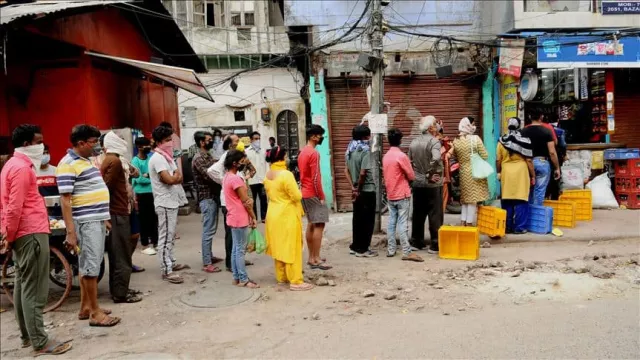
COVID-19: How India fared during lockdown
The authors share 10 facts on India’s urban employment during the pandemic and the lockdown in this opinion piece which originally appeared in the Financial Express.


The authors share 10 facts on India’s urban employment during the pandemic and the lockdown in this opinion piece which originally appeared in the Financial Express.
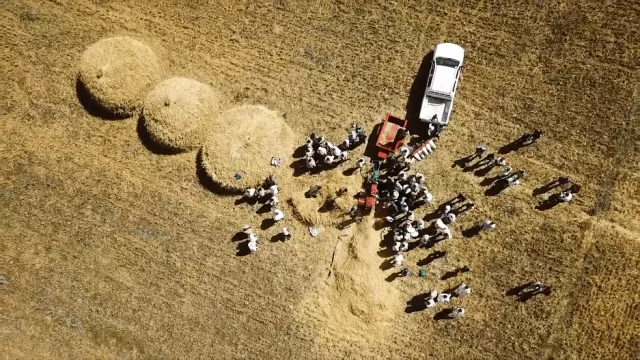
In Ethiopia, farming systems rely heavily on animal and human power, reducing productivity and efficiency. In recent years, the government and development partners have made significant efforts to modernize agriculture. In 2013, CIMMYT introduced one-axel multipurpose tractors in various districts of Amhara, Oromia, South and Tigray regions. This new technology has helped to improve farmers’ lives and phase out outdated

Crop wild relatives (CWR) are the ancient ancestors of our domesticated crops. Because they have been growing in the wild for millions of years, CWR have naturally developed characteristics that allow them to survive in unfavorable, hostile environments. Among those notable traits are disease and pest resistance, and their ability to thrive in water-scarce and extremely hot conditions. Through domestication
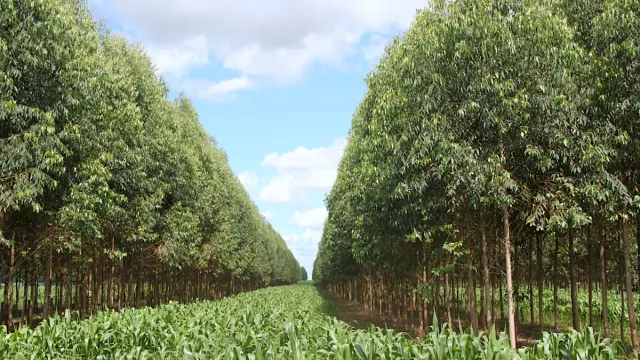
Originally published as a blog in CoSAI news. Brazil is a large country spanning several climatic zones. Its bountiful supplies of fresh water, abundant solar radiation and rich biodiversity have enabled it to become one of the world’s largest producers of food, feed, fibers and renewable fuels. But it is not these natural endowments alone that put Brazil decisively on
As experts meet online for the Future Directions of Subseasonal to Seasonal Predication over South Asia, researchers from the Indian Institute of Tropical Meteorology and the International Water Management Institute discuss the potential of subseasonal weather forecasting – and the important role it can play to optimize agricultural production and help reduce farmer vulnerability to climate-related disasters. Economic losses from weather-related shocks have doubled in India over

Breeders, economists, gender specialists, and food technologists gathered to advance new approaches to breeding crop varieties that people will want. A two-day online “hackathon” jointly organized by the CGIAR Research Program on Roots, Tubers and Bananas (RTB) and the Excellence in Breeding Platform focused on key improvements to the impact of breeding programs. As these clonally-propagated crops are a foundation

Dr Anxious Masuka, Zimbabwe’s Minister of Lands, Agriculture, Fisheries, Water and Rural Resettlement, during a recent visit to the ICRISAT Matopos Research Center, called for continued close collaboration between the Government of Zimbabwe and ICRISAT to ensure the benefits of research quickly reach poorly-resourced communal farmers and help Zimbabwe achieve a middle income economy by 2030. Dr Masuka informed that
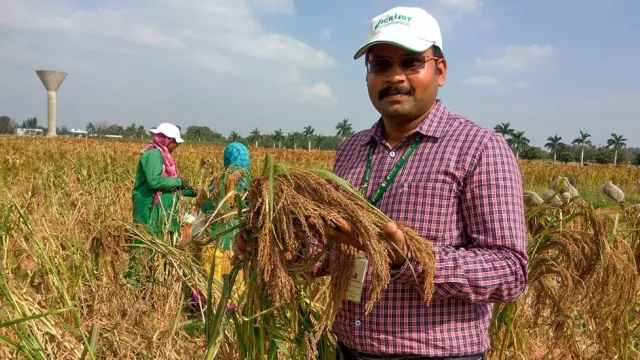
A team of researchers has zeroed in on little millet germplasm with high nutrients, high yield and biomass potential following analysis of the crop’s 200 landraces conserved at ICRISAT’s Genebank in India. These landraces hold the key to developing nutritious and high-yielding varieties of the crop, which can prove significant for food systems in drylands facing changing climate, the scientists