
How Ethiopia’s indigenous plant secures the future
What if food and feed could grow continuously, be harvested at any time of year, and provide both protein and energy from a single plant?


What if food and feed could grow continuously, be harvested at any time of year, and provide both protein and energy from a single plant?

In Serera Kebele, in Doyogena district of the Central Ethiopia Region, Abebe explains “It started with a mindset shift, seeing two sheep not as animals, but as a start of a business."

The resilience of integrated farming systems relies on keeping essential links among their components. In Ethiopia's Doyogena district, the most vulnerable part of the sheep-enset mixed farming system is the availability of feed during the dry season.

After Cyclone Idai, women in rural Zimbabwe carry the hidden cost of recovery. This blog reveals how unpaid care work expands under climate stress, shaping food security, time poverty, and women’s everyday survival.

Climate security is shaped by complex, local interactions. Drawing on leading researchers, this blog explores how climate stress, conflict, data gaps, and system dynamics are reshaping how we study risk, resilience, and peace.
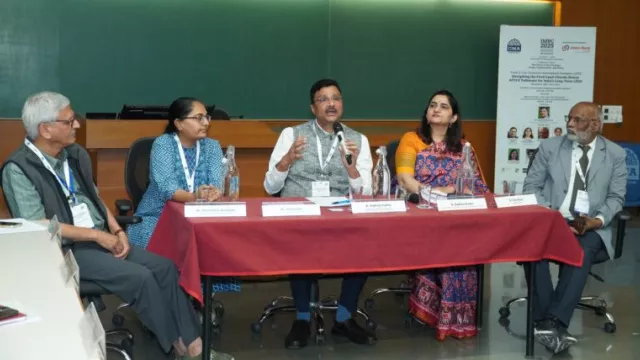
India stands at a critical juncture in its agricultural transformation. With over 60% of the population dependent on agrifood systems for their livelihoods and the Agriculture, Forestry, and Other Land Use (AFOLU) sector accounting for 14% of the country’s greenhouse gas (GHG) emissions, the challenge is no longer a choice between agricultural and economic growth and sustainability, but the need to find a pathway that ensures agricultural growth and livelihoods while increasing the sustainability of the country’s food production systems.

In conflict-affected Cabo Delgado, new CGIAR–WFP research is guiding the design of conflict-sensitive nature-based solutions. By linking ecosystem science with local conflict dynamics, the approach supports recovery efforts that strengthen livelihoods and resilience for 7,000 vulnerable households without worsening tensions.

CGIAR research is strengthening climate information integrity in Brazil by mapping online disinformation about the Amazon and translating evidence into policy-relevant insights, tools, and capacity building that support public trust and more effective climate communication.