
Cultivating Resilience in Gran Cumbal
Education, Seeds, and Women’s Leadership in Action.


Education, Seeds, and Women’s Leadership in Action.

Enable, the partnership coordination engine of CGIAR Breeding for Tomorrow Science Program, worked closely with the Ethiopian Institute of Agricultural Research (EIAR) to strengthen bean breeding efforts in Ethiopia.

The Enhancing Climate Resilience in East Africa (ECREA) project continues to deepen its engagement with county partners in Kenya, following a recent call to the Director of Climate Change in Homa Bay County. The meeting provided a valuable platform to assess the project’s progress in the county and explore opportunities to strengthen the delivery of climate information to smallholder farmers.

Alliance scientists and partners in Uganda are collaborating to improve banana health by distributing pest- and disease-resistant varieties, improving farming approaches, and mapping risk areas.
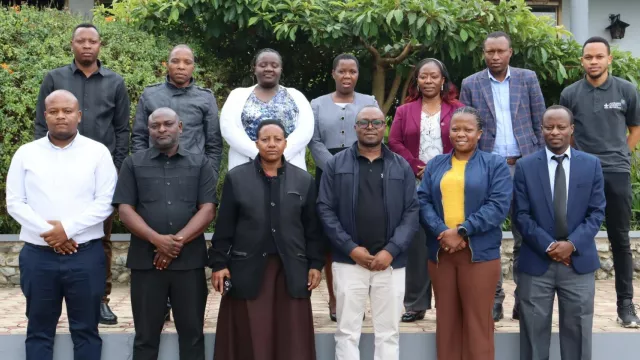
Tanzania has taken a major step toward modernizing its agricultural research and seed system with the coming in of the Research Business Management System (RBMS), a centralized digital platform designed to organize, standardize, and manage breeder data, seed catalogues, research outputs, and project workflows.

Farmer uptake of improved bean varieties should not be the endpoint indicator of success. Low yield improvements in 3 countries, despite significant sowing of improved varieties, point to the need for improved management for farmers to reap benefits

In the paddy fields of Odisha, India, many farmers cultivate land they do not own—and without land titles, they cannot use their fields as collateral for formal credit

This blog highlights how agribusinesses in Malawi and Zambia are translating science into scalable, investment-ready business models through the CGIAR Scaling for Impact (S4I) Agribusiness Bootcamp—advancing inclusive growth, climate resilience, and market-driven innovation across agrifood systems.