

News Overview
7960 search results
-
-
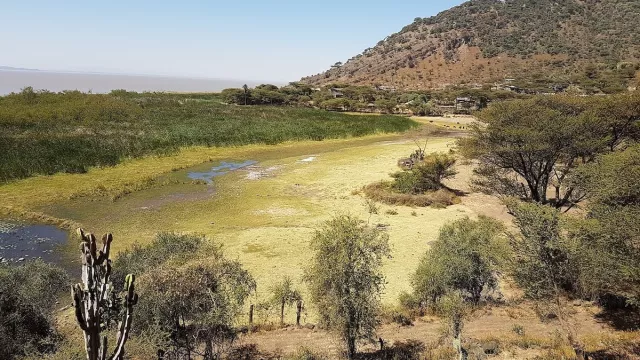
Ethiopia embarks on significant water policy reforms, guided by options from WLE and IWMI
Ethiopia’s development trajectory is placing water resources under extraordinary pressure. To have any chance of continuing on this trajectory – not to mention achieving Sustainable Development Goal 6, water and sanitation for all – the country needs new approaches to managing water use and trade-offs. In 2020, the Government took the initiative with a water policy review that will form
-

Research on business models for fecal sludge management turns into a training agenda across India
In India, more and more people have access to toilets. But the widespread poor management and disposal of fecal sludge from millions of new pits and septic tanks is a fast-accumulating risk for public health and the environment. That risk is the impetus behind a national series of training sessions, which will introduce sustainable models of managing fecal sludge from
-

AKILIMO digital platform improves potato yields in Rwanda
Potato yields are highly-dependent on fertilizer use but pinpointing the amount of fertilizer to be used can be a challenge, especially for smallholder farmers. This challenge is important in Rwanda where average potato yields are currently 8-10 tonnes per hectare (t/ha), compared to the 25-35 t/ha they might expect with improved potato varieties, better pest and disease management, and enhanced extension services and
-

Computer simulations are helping CGIAR breeders develop better varieties faster
In the past, plant breeding has helped avert entire famines by changing a handful of genes in key crop varieties. But today’s breeders must meet similar challenges with consistent excellence, making the right decisions each season to refine natural genetic diversity into a multitude of hard-working food crops. In 2020, CGIAR crop breeders began using computer simulations to model
-

As a decade of ecosystem restoration kicks off, don’t forget the people
Global ecosystem restoration efforts are often measured by billions of trees planted or square kilometers of land restored. But there is a critical void in the agenda: the social and political dimensions that make restoration a success.
-

Global Report on Food Crises 2021: Building resilience can prevent crisis and conflict
BY SWATI MALHOTRA AND ALEXANDRIA RICHTER More than 155 million people experienced acute food insecurity at crisis level or worse around the world in 2020, an increase of 20 million from 2019 and a five-year high, as the COVID-19 pandemic compounded economic shocks, conflicts, and climate and severe weather impacts, estimates the 2021 Global Report on Food Crises (GRFC). In a mutual
-

ISDC Welcomes New Members