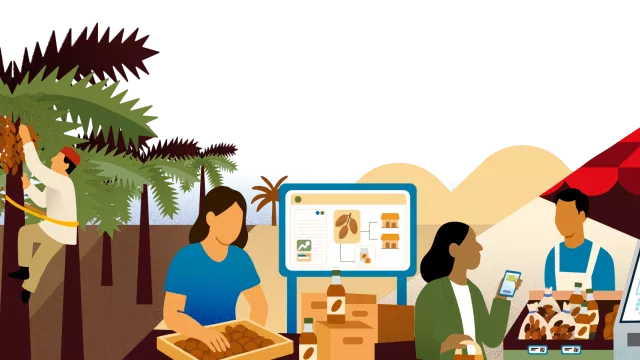
AgriTech4Tunisia Innovation Challenge: Call for applications now open!
Are you developing an agri-tech that addresses Tunisia’s key agricultural challenges and market needs?


Are you developing an agri-tech that addresses Tunisia’s key agricultural challenges and market needs?

Currently, 80% of the world’s people rely on just three agricultural commodities as primary food staples: Maize, rice, and wheat.

Many African nations face significant, interconnected development challenges, including over-reliance on rain-fed agriculture, heavy dependence on hydropower for electricity generation, rapid population growth, and related economic pressures. These vulnerabilities are heightened by the impact of climate change and the increasing frequency of extreme weather events such as droughts, which reduce hydropower output and diminish agricultural productivity.

A recent three-day workshop in Tawa (Makueni County, Kenya) convened researchers, extension agents, private-sector representatives, NGOs, and farmers to tackle a critical barrier in Kenyan agriculture: scaling innovation. This workshop focused on moving beyond successful pilots to develop strategies for achieving widespread, lasting impact for resilient and productive smallholder systems across Kenya.

For decades, the global fight against child stunting has been framed around a central trinity: Nutrition, sanitation, and poverty

We often think of our food system in simple terms: farmers grow food, it travels to a market, and we buy it. It’s a straightforward path from farm to table. But the reality of how people access and eat food is far more complex, filled with hidden challenges and surprising social dynamics that shape the health of entire communities. The gap between our assumptions and the truth can prevent us from making effective changes.

Launched in January 2025 as a DTA-linked project, Fairgrounds aims to be the gateway for CGIAR to access global research data, while also opening CGIAR’s research data to the world.

This blog highlights how agribusinesses in Malawi and Zambia are translating science into scalable, investment-ready business models through the CGIAR Scaling for Impact (S4I) Agribusiness Bootcamp—advancing inclusive growth, climate resilience, and market-driven innovation across agrifood systems.