

Farmers in South America’s Guyana have been battling climate change for years
A new collaboration between the Alliance and Guyanese partners provides guidance for climate-smart agricultural investment
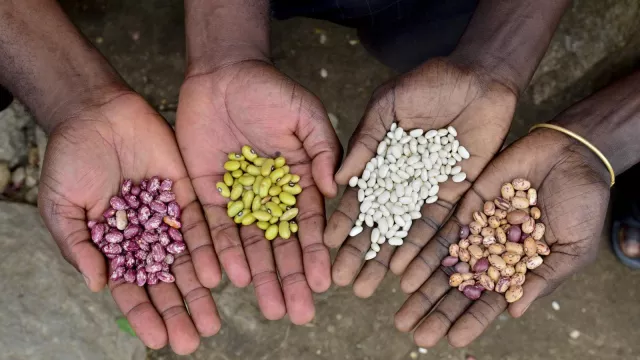
Getting the right traits and the suitable variety for different clients is never easy. Did you know that farmer’s approval for a variety to be released is very critical? To breed common bean varieties preferred by men, women, and youth, farmers, consumers, traders and processors, breeders must involve all partners in the process. Often bean varieties are evaluated based on
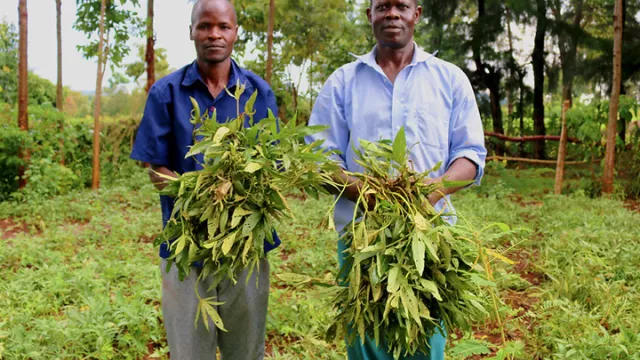
Farmers in Nyando, Kakamega and Vihiga, Western Kenya, are benefiting from the interventions of two seed system focused projects. The first project, Promoting open source seed systems for climate change adaptation in Kenyan, Uganda and Tanzania, led by the Alliance of Bioversity International and CIAT, aimed to facilitate adaptation to climate change by introducing new diversity of sorghum, finger millet
In the Horn of Africa, where pastoralism is an important livelihood activity, people live in close proximity to their livestock and their frequent interaction with animals increases their risk of infection with zoonoses. To characterize and evaluate the nature of zoonoses research in the Horn of Africa, a team of scientists from Addis Ababa University, the International Livestock Research Institute,
As one of the world’s most widely produced and consumed fruits and staple foods, bananas (including plantain) are of vital importance. But pests and diseases, such as the Tropical Race 4 fungal infection, and climate change, have put bananas at risk. In the face of such threats, the Bioversity International Musa Germplasm Transit Centre (ITC), has been working with national
It is a laborious and time-consuming process: chopping plant matter by hand to feed to livestock. In Cox’s Bazar district, in eastern Bangladesh, it is common practice. A mechanized fodder chopper can do the job more quickly and efficiently — yet this simple but effective machine has not seen much use in the region. To address this, a collaboration between
The COVID-19 pandemic made 2020 a challenging year, placing considerable strain on global food systems. A new online report, CGIAR Annual Performance Report 2020: Growing Resilience for a Better Future, details how CGIAR worked with partners to respond to shocks to food security around the world and to build back more resilient land, water and food systems. The fourth in a series of annual performance reports on CGIAR, the online document presents research-to-impact results in 2020 across CGIAR. CGIAR Annual Performance Report 2020: Growing Resilience for a Better Future Despite the year’s challenges, CGIAR continued to work toward, and make, strong
As One CGIAR takes shape it becomes critical to build on the progress already made. Participants in the virtual Golden Egg Transfer Marketplace event held in June 2021 reviewed 36 major research assets known as golden eggs and addressed their suitability for inclusion within the One CGIAR Initiatives. The CGIAR 2022–24 Investment Prospectus calls for the development of 33 Initiatives