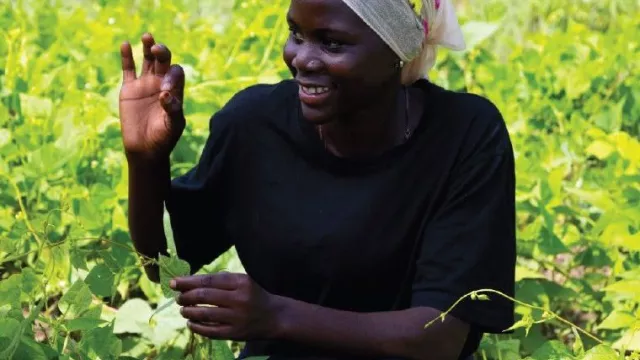
Expanding access to quality seeds for women and youth in Uganda and beyond
CGIAR INITIATIVES Seed Equal Primary Impact Area Nutrition, health & food security Related Impact Areas


CGIAR INITIATIVES Seed Equal Primary Impact Area Nutrition, health & food security Related Impact Areas

Message from Breeding for Tomorrow (B4T) Interim Director Peter Coaldrake to CGIAR Breeders, National Partners, and Funders. CGIAR has a track record of 50 years of success in the field of crop innovation, credited with spurring the Green Revolution and saving a billion lives, primarily in Asia where many people were on the brink of starvation. Today, as we aim

By Dr. Eliud K. Kireger, Director General and Dr. Benjamin Kivuva, Assistant Director, Crop Improvement and Seed Systems Research Programs, Kenya Agricultural and Livestock Research Organization (KARLO) In agriculture for development, collaboration networks play a vital role in the success of research. These networks thrive on the connections between researchers, private companies and public institutions, working together as a system.

By Godfrey Asea, Senior Principal Research Scientist, National Agricultural Research Organisation (NARO) In Uganda, the need for accelerated agricultural innovation is important and high to achieve increased productivity and national effort on agro-industrial exports. While the population grows rapidly, by close to three percent per year, agricultural productivity lags behind, putting pressure on environment and food security, nutrition, and income
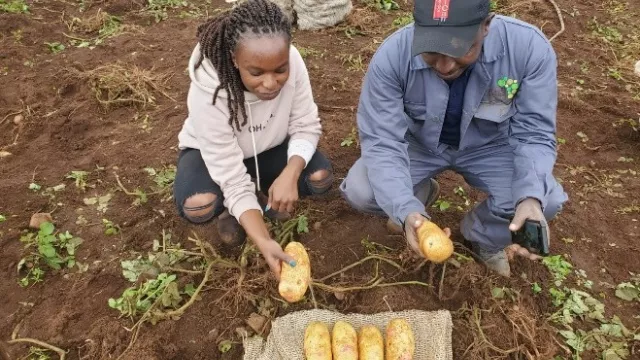
Scientists from The James Hutton Institute have introduced two new potato varieties to Kenya, which are now included in Kenya’s National Variety List. The project was a collaboration with the University of St Andrews, the International Institute of Tropical Agriculture (IITA), the International Potato Center (CIP), and the International Centre of Insect Physiology and Ecology (icipe), as well as the Kenya Plant

By Biswanath Das, Enable Area of Work Lead, CGIAR Breeding for Tomorrow ENABLE is the coordination and support engine of CGIAR Breeding for Tomorrow (B4T) — a cross-functional Area of Work that connects people, processes, and priorities across CGIAR crop improvement networks. We work behind the scenes so that breeding pipelines — national and regional — run more smoothly, partnerships
Scientists from The James Hutton Institute have introduced two new potato varieties to Kenya, which are now included in Kenya’s National Variety List. The project was a collaboration with the University of St Andrews, the International Institute of Tropical Agriculture (IITA), the International Potato Center (CIP), and the International Centre of Insect Physiology and Ecology (icipe), as well as the Kenya Plant
By Biswanath Das, Enable Area of Work Lead, CGIAR Breeding for Tomorrow ENABLE is the coordination and support engine of CGIAR Breeding for Tomorrow (B4T) — a cross-functional Area of Work that connects people, processes, and priorities across CGIAR crop improvement networks. We work behind the scenes so that breeding pipelines — national and regional — run more smoothly, partnerships