
How the Enterprise Breeding System advances IITA legume breeding
Primary Impact Area Climate adaptation & mitigation Related Impact Areas Collective Global Targets End hunger for all and enable
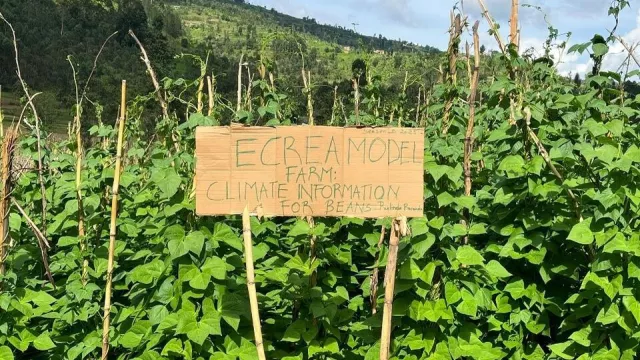
On April 28th, 2025, a field visit in Rulindo District provided a visual comparison between two farming approaches: one based on timely planting using climate and weather information, and another planted later as part of a deliberate family strategy. The visit, organized by the Alliance of Bioversity and CIAT and the Rwanda Agriculture and Animal Resources Development Board (RAB), aimed
Bold investments, strategic partnerships, and scalable solutions were at the forefront of the discussions at the “Future of Global Food Systems Forum,” co-hosted by the International Rice Research Institute (IRRI) and the Asian Development Bank (ADB), to accelerate global food systems transformation, particularly for rice. While rice feeds over four billion people and supports 150 million smallholder farmers globally, its
June 3, 2025 | Svalbard, Norway – Tucked deep inside a mountain in the Arctic Circle, a new batch of seeds from ICARDA has just joined the world’s most important freezer: the Svalbard Global Seed Vault. Our boxes arrived safely and were officially taken into the Vault on Thursday, June 3, 2025, joining nearly a million other seed samples from
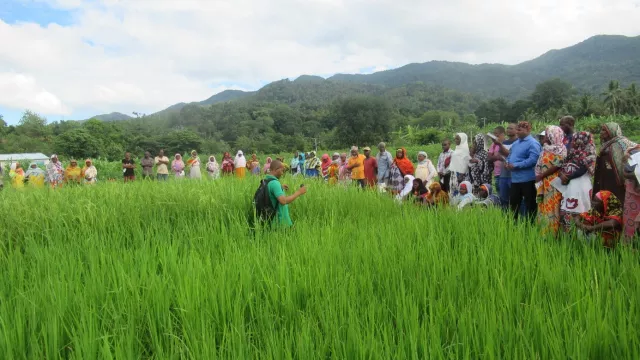
In the Union of the Comoros, agriculture is the backbone of rural livelihoods—but food insecurity remains a pressing challenge. Limited arable land, climate-related stressors, degraded soils, and restricted access to markets and quality inputs have all contributed to low agricultural productivity. As a result, chronic malnutrition, particularly among children under five—remains alarmingly high. Rice, now the preferred staple food in
Press Release – June 23, 2025 A new study published in the Journal of Cleaner Production presents a novel approach to sustainable agricultural intensification, with promising implications for food security and land conservation in Senegal. Conducted by researchers at the International Food Policy Research Institute (IFPRI), the study explores how farmers’ land-use decisions can be guided by the relative risks and returns of different
by Sharif Ahmed, Manik Debnath, and Humnath Bhandari Coastal Bangladesh, which accounts for nearly one-third of the country’s agricultural land, faces significant challenges that limit its cropping intensity. Soil and water salinity, waterlogging, erratic rainfall, and prolonged cultivation of long-duration aman rice leave 30-50% of farmland fallow during the dry season. This underutilization represents a missed opportunity to enhance
By Pramod Gorakhanath Kabade, Uma Maheshwar Singh, Pallavi Sinha, Vikas Kumar Singh, et al. Building on the success of pioneering protocols such as SpeedFlower, the International Rice Research Institute (IRRI) recently introduced Speed Breeding 3.0, a more comprehensive, inclusive, and adaptable framework designed for all crops, regardless of their growth cycle. This advanced strategy represents a critical initiative in