

News Overview
8130 search results
-
-
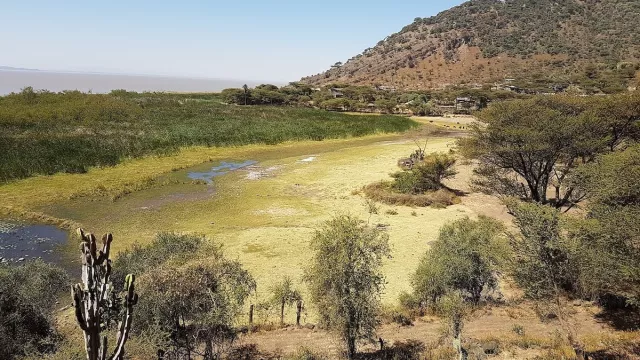
Ethiopia embarks on significant water policy reforms, guided by options from WLE and IWMI
Ethiopia’s development trajectory is placing water resources under extraordinary pressure. To have any chance of continuing on this trajectory – not to mention achieving Sustainable Development Goal 6, water and sanitation for all – the country needs new approaches to managing water use and trade-offs. In 2020, the Government took the initiative with a water policy review that will form
-

Research on business models for fecal sludge management turns into a training agenda across India
In India, more and more people have access to toilets. But the widespread poor management and disposal of fecal sludge from millions of new pits and septic tanks is a fast-accumulating risk for public health and the environment. That risk is the impetus behind a national series of training sessions, which will introduce sustainable models of managing fecal sludge from
-

AKILIMO digital platform improves potato yields in Rwanda
Potato yields are highly-dependent on fertilizer use but pinpointing the amount of fertilizer to be used can be a challenge, especially for smallholder farmers. This challenge is important in Rwanda where average potato yields are currently 8-10 tonnes per hectare (t/ha), compared to the 25-35 t/ha they might expect with improved potato varieties, better pest and disease management, and enhanced extension services and
-

UN dialogue sets pathway for nature-positive aquatic food solutions
Holistic research, policy and business investments can boost sustainable innovations in aquatic food systems and foster a nature-positive transformation in food production, said experts in the second UN Food Systems Dialogue hosted by the Norwegian leadership of the Global Action Network and WorldFish. The Independent Dialogue saw diverse stakeholders in research and policy present transformative solutions and strategies to scale them as part of
-
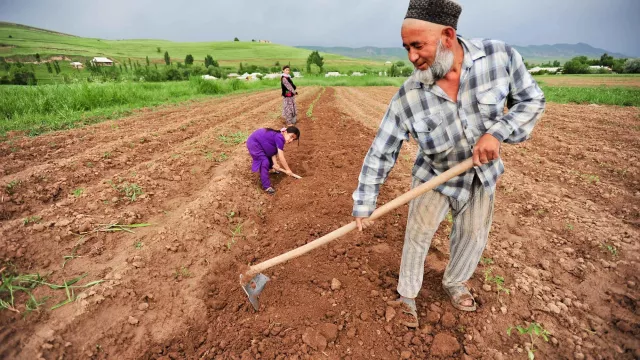
Research shifts policy from energy subsidy to water savings in Uzbekistan's irrigated heartland
In Uzbekistan, most agricultural land is irrigated with water pumped from two rivers, the Amu Darya and Syr Darya. This pumping consumes 20% of the country’s power, and to keep power affordable for farmers and other users, the government sinks USD 450 million into energy subsidies every year. Research by the International Water Management Institute (IWMI) and CGIAR Research Program
-

Time-use agency: A new measure of women’s empowerment
BY SARAH EISSLER, JESSICA HECKERT,EMILY MYERS, GREG SEYMOUR, SHEELA SINHAROY, KATHRYN M. YOUNT AND JESSICA WALLACH Substantial gender gaps in time spent on unpaid domestic and care work can be found in every region of the world, and have expanded during the COVID-19 pandemic. These are due, in large part, to rigid gender norms that place responsibility for unpaid care and domestic work
-

Improving sweetpotatoes for larger markets in Uganda
Bernard Yada is a sweetpotato breeder with Uganda’s National Agricultural Research Organization (NARO). In this interview, he speaks to Vivian Atakos, a communications specialist from the International Potato Center (CIP), to discuss the progress his team has made within the Sweetpotato Genetic Advances for Innovative SeedSystems (SweetGAINS) project. (This is an updated interview from their first discussion in in July 2020) Q: When we last spoke, you talked about the contributions of sweetpotatoes to Uganda’s agri-food systems, the problems you are trying to solve through breeding, and some