


News Overview
7957 search results
-
-

Improving food donation policies is key to fighting food waste
BY EMILY BROAD LEIB AND DOUG O’BRIEN As much as one third of all food produced is lost or wasted. Rather than reaching the estimated 820 million people who face hunger around the world, that food is thrown away and decomposes, contributing 8%-10% of global greenhouse gas emissions. Loss and waste occur across food supply chains: On farms, because of surplus or imperfect products, and downstream
-
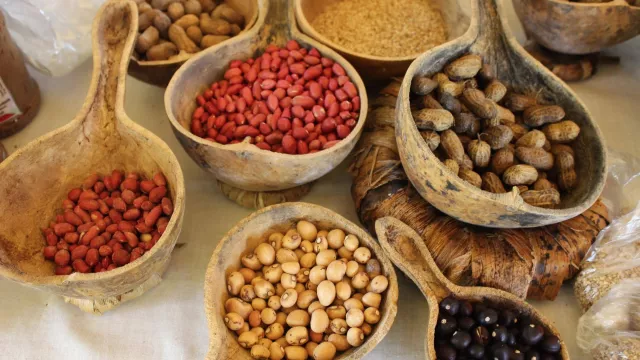
A global manifesto to conserve forgotten foods
We are excited to announce the launch of a global manifesto for collective actions onforgotten foods. Also referred to as neglected and underutilized species (NUS), indigenous foods, orphan crops or future foods, this broad category encompasses tens of thousands of biodiverse plant and animal species that offer us different food options- providing valuable nutrients and supporting resilient, climate-smart agriculture.The Manifesto, promoted by GFAR as part of a collective action program on
-
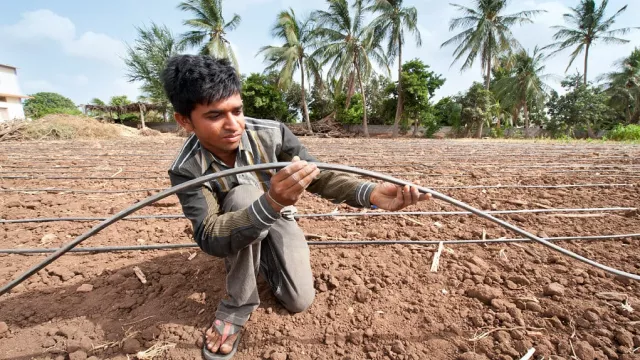
Six key principles for improving agricultural water productivity
Over two billion people already live in areas experiencing high water stress, and that number is expected to grow as a combination of climate change, population growth and unsustainable production and consumption patterns takes its toll. At the heart of the unfolding crisis is food production, which currently accounts for around 70% of global water withdrawals and can reach more
-

“I see your point!” How data visualization and facilitating access to data can help stakeholders make more impactful decisions
How to tailor data visualization and evidence sharing for improved stakeholder uptake and application? New research brief and blog from CIFOR-ICRAF team. Imagine that you’re in charge of a geographical area (let’s say a state) for a period of time. During this time, a disease outbreak is predicted to happen. Your chief medical advisor tells you that the disease will
-

Roots and tubers can help households to weather storms
When super-typhoon Ompong blasted through the northern Philippines in September 2018, farmers who grew sweetpotato and cassava were less affected and better prepared for recovery. That’s the conclusion of a study by researchers from the CGIAR Research Program on Roots, Tubers and Bananas (RTB), recently published in the International Journal of Disaster Risk Reduction. Sweetpotato and cassava have long been
-

My First Dialogue on the Path to the 2021 Food Systems Summit
By Erika Eliana MosqueraI had heard about the Food Systems Summit, the major event the United Nations is promoting for this year. I knew they were promoting multi-stakeholder dialogues in different countries and regions of the world in preparation for the Summit, and I had even helped prepare materials to promote such dialogues in Honduras, Ethiopia, and Bangladesh. But taking
-
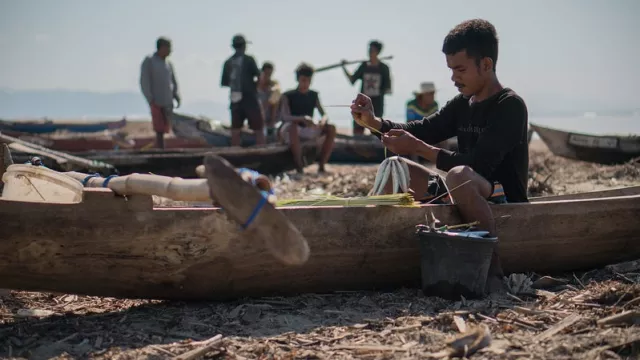
Putting youth at the heart of aquatic food system transformations
Young people today step into the world at a critical crossroads for our food systems. At present, the production, processing, distribution, consumption and disposal of our food does not work for people or our planet. Read more