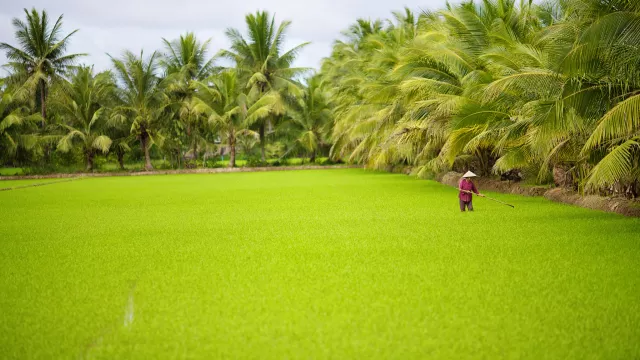
Scaling AMD Innovations in the Mekong Delta
CGIAR INITIATIVES Asian Mega-Deltas Primary Impact Area Climate adaptation & mitigation Related Impact Areas


CGIAR INITIATIVES Asian Mega-Deltas Primary Impact Area Climate adaptation & mitigation Related Impact Areas

CGIAR INITIATIVES Fragility to Resilience in Central and West Asia and North Africa Primary Impact Area Environmental health & biodiversity Related Impact Areas
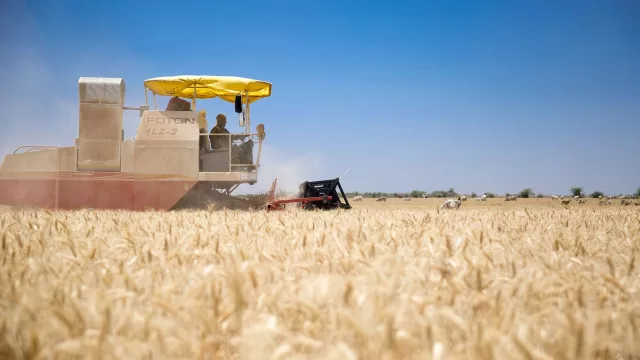
CGIAR INITIATIVES Diversification in East and Southern Africa Primary Impact Area Climate adaptation & mitigation Related Impact Areas
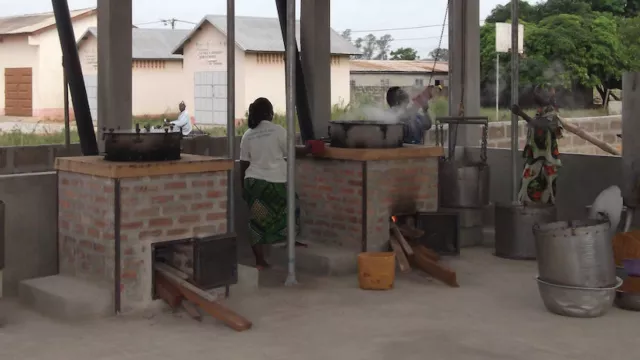
CGIAR INITIATIVES West and Central African Food Systems Transformation Primary Impact Area Poverty reduction, livelihoods & jobs Related Impact Areas
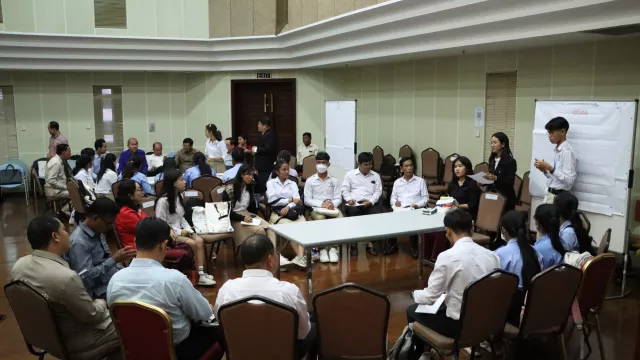
Cambodia’s Mekong Delta faces a food security crisis due to climate change, population growth, and fragmented water and land management. This disjointed approach hinders production of nutritious food and harms fishing communities. This fragmentation is evident at the village and commune levels, affecting irrigation infrastructure, Community Fisheries (CFis), Community Fish Refuges (CFRs), Community Based eco-tourisms (CBEs) and Agricultural Cooperatives (ACs),
By Esther Kihoro, ILRI Impact at Scale Program and Wageningen University and Research; Marc Schut, Portfolio Performance Unit in CGIAR Systems Organization and Wageningen University and Research; Cees Leeuwis, Wageningen University and Research; and Erin McGuire, Feed the Future Innovation Lab for Horticulture at the University of California at Davis. Why does scaling matter? CGIAR, the world’s largest publicly funded

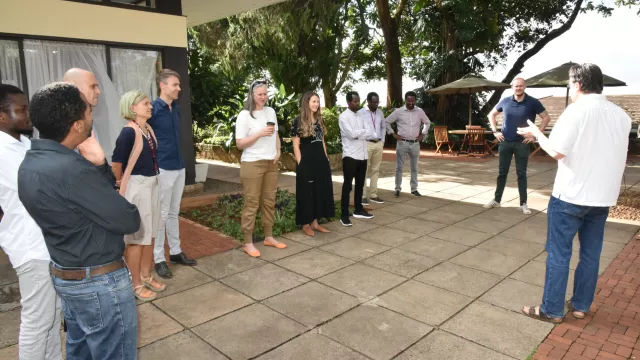
What are the enabling or disabling factors that affect young people, women and marginalized men who engage in agriculture as entrepreneurs? What interventions should be designed in response to these barriers? As part of work on gender equality and social inclusion, the CGIAR Regional Integrated Initiative on Diversification in East and Southern Africa—Ukama Ustawi (UU)—held a two-day dialogue on interventions

The CGIAR Initiative on Asian Mega-Deltas (AMD) organized field days in Takeo and Prey Veng, Cambodia, focusing on improved aquaculture and rice-field pond techniques. With 92 participants, including 36 women, the events aimed to share knowledge, engage farmers, promote sustainable practices, and gain local support. Participants consisted of representatives of PDAFF, Fisheries Administration Cantonment (FiAC), non-government organization partners, agricultural cooperative,