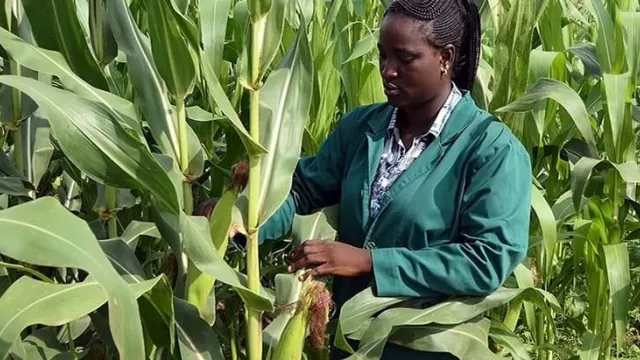
Tool for raising women’s voice gains traction in Nigeria
CGIAR INITIATIVES Gender Equality Primary Impact Area Gender equality, youth & social inclusion Related Impact Areas


CGIAR INITIATIVES Gender Equality Primary Impact Area Gender equality, youth & social inclusion Related Impact Areas
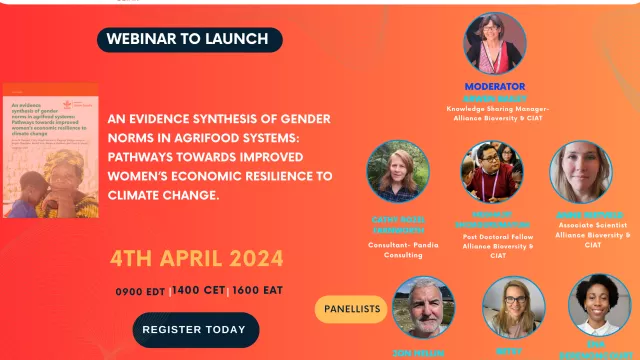
Join us for the webinar launch of “An evidence synthesis of gender norms in agrifood systems: Pathways towards improved women’s economic resilience to climate change.” The report identifies 15 gender norms that affect women’s economic resilience in agrifood systems, proposing an Economic Resilience Pathway Framework for research and action. The framework offers insights for policymakers and practitioners aiming to strengthen
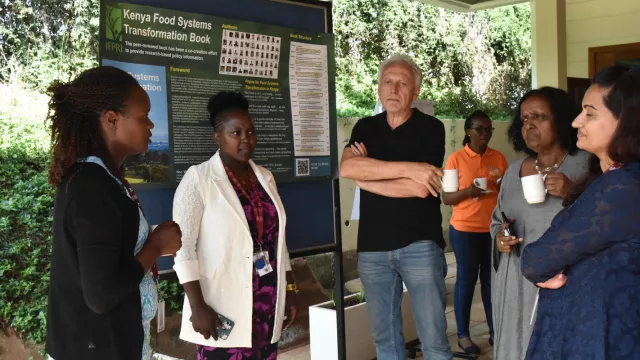
On 13 February 2024, over 40 Independent Science for Development Council (ISDC) members and scientists from across the world hailed to the CGIAR research centre, the International Livestock Research Institute (ILRI) in Nairobi, to learn about current research in Kenya. ISDC is an external scientific advisory body that provides rigorous, independent strategic advice on the CGIAR’s long-term research strategies. This
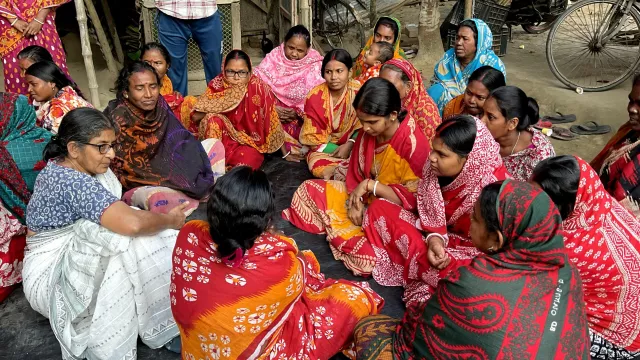
Climate change is exacerbating the uncertainty and risks for farmers and other food systems actors in unprecedented ways. Farmers are dealing with the harsh realities of increasing intensity and frequency of shocks like flooding and extended drought, and higher weather variability. This requires greater resilience to protect and improve their livelihoods. The vulnerabilities are particularly high for women farmers and
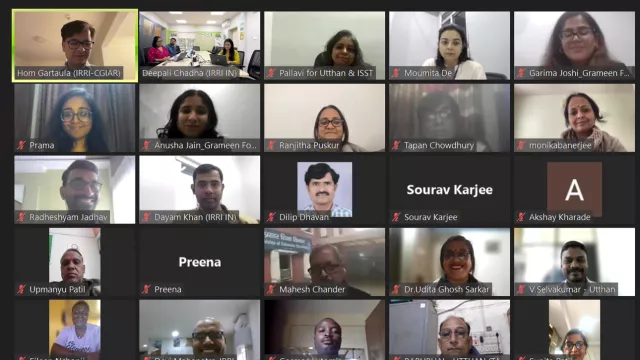
CGIAR GENDER Impact Platform and CGIAR Gender Equality initiative, HER+ began the year with a webinar focused on socio-technical innovation bundling to strengthen women’s resilience to climate change: distilling learnings from case studies. This webinar held on January 25 presented insights on various case studies where STIBs have contributed to women’s empowerment and resilience and learn from them as we
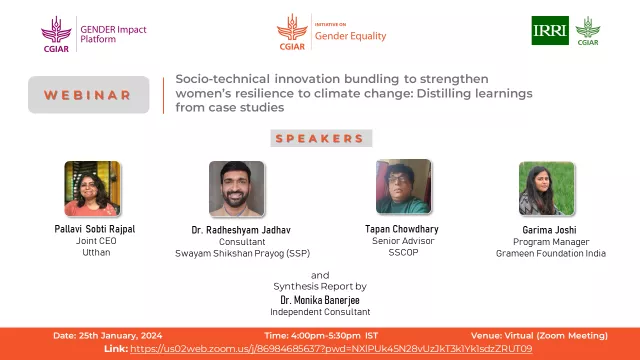
We are delighted to invite you to the Webinar on “Socio-technical innovation bundling to strengthen women’s resilience to climate change: Distilling learnings from case studies” on 25th January, 2024, 4-5:30pm IST. This Webinar is organised by the CGIAR Gender Impact Platform and CGIAR Initiative on Gender Equality (HER+). The Initiative is engaged in understanding whether and how socio-technical innovation bundles
Like many other regions across the globe, South Asia is grappling with the challenges posed by climate change. World Bank estimates that 750 million people in South Asia have been affected by at least one climate-related disaster. The hazards and extreme weather events range from cyclones, monsoon rainfall variability, floods, heat waves, increased average temperatures and salinity in coastal areas,
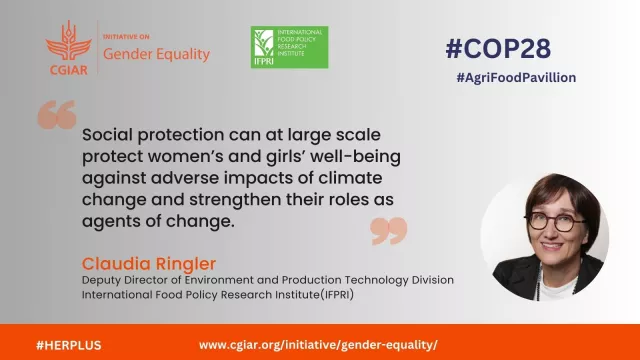
After two weeks of debate at COP28, the message is clear that climate change is hitting hardest some of those already most vulnerable and rapidly exacerbating inequalities, including gender inequality. Climate action is urgently needed – at scale, and with a gender lens. In the CGIAR Initiative on Gender Equality (also known as HER+), we have been accelerating research with