
Building Forward Better: Experts Echo the Call for Food System Transformation
The post Building Forward Better: Experts Echo the Call for Food System Transformation appeared first on International Potato Center.


The post Building Forward Better: Experts Echo the Call for Food System Transformation appeared first on International Potato Center.
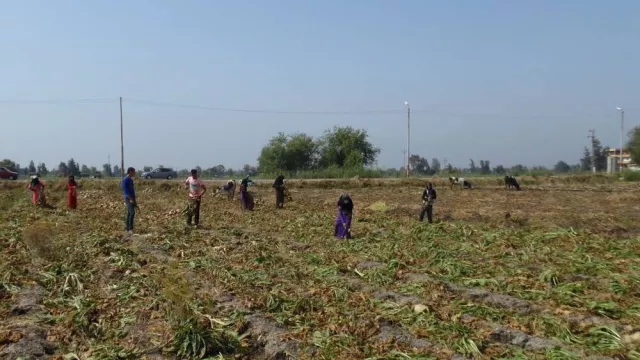
A recent study conducted by ICARDA’s Gender Scientist Dr. Dina Najjar, published in Feminist Economics Journal, examines the gender dimensions of land and non-land assets ownership in Egypt’s Old and New Lands. The study reveals that although rural women are often marginalized when it comes to land or non-land assets ownership, the situation in Egypt may not be as dire

CGIAR CONTRIBUTORS A4NH, IFPRI, IITA, ILRI, LIVESTOCK, WorldFish TYPE OF INNOVATION Biophysical science Genetic (varieties and breeds) Production systems and management practices

CGIAR CONTRIBUTORS A4NH, IFPRI, ILRI, LIVESTOCK TYPE OF INNOVATION Biophysical science Genetic (varieties and breeds) Production systems and management practices Research and communication methodologies and tools

A food systems approach led the extraordinary recovery of hilsa fish stocks while boosting the livelihoods and food security of those dependent on aquatic food systems in Bangladesh.Balancing restrictions on fishing with the promotion of alternative livelihood options offers a lesson in how to manage trade-offs between livelihoods and conservation. WorldFish supported the government to introduce fishing bans during the hilsa

Continuing a long-standing partnership with sorghum scientists across institutes in India, a long-overdue field day showcases elite breeding lines, varieties, hybrids and hybrid show cased parental lines of sorghum at ICRISAT Hyderabad. Proceeding with all necessary precautions in place as per our COVID-19 guidelines, participants shared valuable insights on the progressive evolution in sorghum breeding with modern tools and technologies

The COVID-19 pandemic has impacted urban and rural households throughout Papua New Guinea (PNG). Looking ahead, policy makers and development practitioners must continue to mitigate COVID-19 impacts on PNG households, as well as monitor other potential agricultural production shocks (such as El Niño, African Swine Fever, etc.) that could substantially decrease household income and food consumption. Our recent study simulates the

In our hyper-connected world, it should come as no surprise that recent years have shown a major uptick in the spread of transboundary pests and diseases. Integrated approaches have been effective in sustainably managing these border-jumping threats to farmers’ livelihoods and food security. But a truly integrated approach accounts for not just the “cure,” but also how it can be