

When Science Meets Policy: Quezon City Turns the Vendor Business School from Pilot Project into Citywide Success, Empowering Food Vendors and Transforming Urban Markets
Quezon City has turned support for food vendors into policy. The Local Government of Quezon City has recently institutionalized a pilot project that aims to empower informal sector food vendors, the people that feed the city everyday. The decision marks an important moment where research and local policy came together to create real change. The city government, together with CGIAR, has launched the Vendor Business School (VBS) Ordinance (Ordinance No. 3430-S-2025) in an event on 20 January 2026. What started in 2024 as a small research‑driven partnership between CGIAR and the Quezon City Government is now embedded in city policy, showing how evidence, local leadership, and everyday realities can come together to improve livelihoods and strengthen urban food systems. The institutionalization of VBS represents a significant step forward for urban food systems and micro-entrepreneurship. Under the ordinance, Quezon City aims to further strengthen vendors through comprehensive learning on safe food handling, climate change adaptation, and sustainability, ensuring that vendors are prepared to meet both present and future challenges.

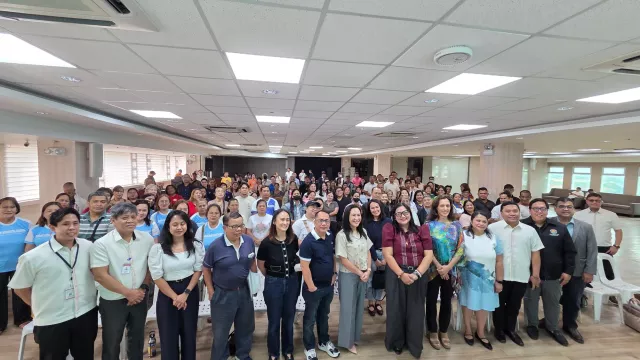
Quezon City has turned support for food vendors into policy. The Local Government of Quezon City has recently institutionalized a pilot project that aims to empower informal sector food vendors, the people that feed the city everyday. The decision marks an important moment where research and local policy came together to create real change. The city government, together with CGIAR, has launched the Vendor Business School (VBS) Ordinance (Ordinance No. 3430-S-2025) in an event on 20 January 2026. What started in 2024 as a small research‑driven partnership between CGIAR and the Quezon City Government is now embedded in city policy, showing how evidence, local leadership, and everyday realities can come together to improve livelihoods and strengthen urban food systems.
The institutionalization of VBS represents a significant step forward for urban food systems and micro-entrepreneurship. Under the ordinance, Quezon City aims to further strengthen vendors through comprehensive learning on safe food handling, climate change adaptation, and sustainability, ensuring that vendors are prepared to meet both present and future challenges.
Since its launch in 2024, the program has demonstrated how targeted capacity-building can strengthen livelihoods while improving the safety, resilience, and quality of urban food systems. This approach closely reflects Quezon City’s broader vision for inclusive development. Mayor Joy Belmonte often reminds residents that “You Are Part of Progress.” sector food This philosophy underscores the city’s commitment to inclusive development, where growth is shared and no sector is left behind.
The Vendor Business School is a flagship intervention of the CGIAR Resilient Cities Initiative, currently anchored within the Food Frontiers and Security Program. VBS was piloted in two urban contexts: Nairobi, Kenya, focusing on milk vendors, and Quezon City, Philippines, focusing on vegetable vendors. Implementation was a collaborative effort among three CGIAR centers, with ILRI leading in Kenya, and CIP and IRRI leading implementation in the Philippines.
Quezon City: Where the Vendor Business School Took Root
The heartbeat of Quezon City is in its Exploring Quezon City’s Food System: A Virtual Video Tour of Food Markets, Urban Agriculture and Sustainability – Rice Today, where vendors start their day before sunrise, and serve thousands of customers who rely on them for affordable food. These markets are more than places to buy and sell, they are where the city eats, works, and survives, shaping the daily lives of residents and the rhythm of the city itself. Quezon City stands out as one of the Philippines’ largest and most populous and dynamic urban centers. It is the largest city in Metro Manila by land area and serves as a major entry point for food and distribution across the entire metropolis. As a rapidly growing urban center, the city is dedicated to addressing the challenges of urbanization, including food security, environmental sustainability, and resilience to climate change. Quezon City was selected as a pilot site for the Vendor Business School because of its strong commitment to inclusive development and urban food systems. The city has a large informal food sector, active urban agriculture programs, and local leaders willing to test new ideas. International studies have also recognized Quezon City as a model for food and nutrition resilience, making it an ideal setting to try a research-driven approach.
To better understand what vendors needed, CGIAR and city partners carried out contextualized validation studies in Quezon City and Pasay City, revealing that most vendors face limited capital and lack basic business knowledge. These challenges were compounded by unstable food prices, intense competition, extreme heat causing food spoilage, and reduced customers during the rainy season. From the outset, vendors emphasized their need for practical business skills, food safety guidance, and support in managing daily operational obstacles. “Their input was invaluable, and we used it to design the program from the ground up, ensuring that every module and session directly addresses their real needs,” said Arma Bertuso, Research Associate, Urban Food System, Markets and Value Chains- CIP
Vendor Business School becomes a cornerstone for building more inclusive, innovative, and vibrant urban food markets.
On February 8, 2024, Quezon City, Philippines, celebrated the successful launch of the Vendor Business School (VBS) program, a collaborative initiative between the CGIAR Resilient Cities Initiative, now part of CGIAR Food Frontiers and Security program and the Quezon City Local Government. Vendors also received mentorship and coaching over six months and qualified for the city’s livelihood program, including a business capital grant to grow their businesses.
The launch event brought together city leaders, including Mayor Joy Belmonte, Vice Mayor Gian Sotto, and heads of key city departments. Right from the start, the program positioned its mission as a platform for transforming informal sector food vendors into confident, skilled entrepreneurs who contribute to a safer, more resilient urban food system.
Twelve facilitators from city departments were trained to strengthen Vendor Business School curriculum understanding and implementation. The first onboarding sessions for the 140 vendor participants were held from February 13–23, 2024, marking the start of a program expected to generate lasting impact for vendors and the city alike.
The curriculum went through several rounds of testing and revision, with direct input from vendors and city staff. Sessions were kept short, practical, and easy to follow. Training venues were chosen based on vendors’ convenience, and facilitators were trained to use simple language and real-life examples. Coaching and follow-up support were added to help vendors apply what they learned. After each session, vendors filled out short feedback forms. The results were consistently high, with many vendors saying the lessons were new, useful, and directly helpful to their businesses.
“Putting the Vendor Business School into law is what makes the difference. As VBS scales across the city, it is also becoming a model for other local governments. This experience shows what’s possible when cities use evidence to guide decisions and take ownership of good ideas, we strongly believe that Quezon City’s journey can inspire other cities in the Philippines and beyond,” said Silvia Alonso, CGIAR scientist working on urban food systems.
Changed Lives, Inspiring Stories
The Vendor Business School (VBS) is transforming not just how vendors manage their businesses, but how they see themselves. Vendors are beginning to recognize themselves as capable, confident business owners, not just individuals trying to survive. This shift in mindset, alongside the practical skills they gain, empowers them to take charge of their livelihoods and plan for a sustainable future.
The impact is evident in the voices of the vendors themselves. George, a temporary vending site vendor, shared that participating in VBS helped them improve customer relations, enabling them to better understand and respond to their clients’ needs. “Before VBS, I didn’t know how to engage with customers beyond taking their orders. Now, I listen more, communicate clearly, and even get repeat customers because they feel valued,” George said.
Arlyn, a disabled vendor described how VBS built her confidence and inspired her to aim higher. “The training taught me practical skills, yes, but it also taught me to believe in myself,” Arlyn said. “I now dream bigger for my business, and I feel capable of making those dreams happen.”
Quezon City plans to reach more vendors, integrate VBS into existing services on food safety, public health, and climate action, and continually update the curriculum to meet emerging challenges. By fostering long-term partnerships with research institutions, market associations, and community groups, the city is ensuring that VBS remains a living program, one that grows alongside the vendors it serves.
Watch vendor testimonials on the Vendor Business School curriculum