

A week inside the Alliance’s integrated approach to transforming global food and land systems
Sandra Milach, CGIAR’s Chief Scientist, visit to the Alliance showcased how integrated food and land systems—linking agrobiodiversity, climate action, landscapes, and inclusive innovation—drive scalable impact and build resilient, healthier food futures.

- climate change
- food systems
- Climate-Smart Agriculture
- food security
A week inside the Alliance’s integrated approach to transforming global food and land systems
Sandra Milach, CGIAR’s Chief Scientist, visit to the Alliance showcased how integrated food and land systems—linking agrobiodiversity, climate action, landscapes, and inclusive innovation—drive scalable impact and build resilient, healthier food futures.
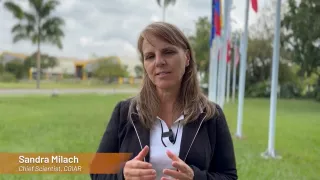
“The Alliance is not one actor among many, it is a strategic connector and integrator across science, practice, and policy,” says Sandra Milach, Chief Scientist for CGIAR. This is not a slogan. It is how the Alliance works.
For one week at the Palmira campus of the Alliance of Bioversity International and CIAT, that system-integrator role was visible everywhere, from labs and genebanks to fields and farmer conversations. Sandra Milach, accompanied by Makram Geha, Director of CGIAR’s Breeding for Tomorrow Science Program, visited the campus to engage with the science behind the Alliance’s integrated food and land systems approach. The visit brought into sharp focus how impact is generated when research connects disciplines, scales, and people, and when food and land systems are addressed as a whole rather than in parts.
At the Alliance, integration means connecting climate-resilient agriculture, soils, and modelling with long-term work in crops and value chains that shape global diets and emissions (rice, beans, bananas, and forages). We work across systems from production right through to consumption. It means linking breeding, sustainable production, and landscape management into solutions designed to scale and adapt in the face of climate and other shocks.
As Milach observed,
“Taken together, what makes the Alliance unique is its ability to connect these strengths into an integrated approach to food systems transformation.”
This approach is already delivering results. Over the past five years, the Alliance has reached more than 10 million people and improved over 6 million hectares across farms and landscapes. That impact comes from science that is practical, connected, and grounded in local realities- working always to deliver public good. And now the Alliance is looking at the next five years, with a refreshed strategy that will drive urgent research for global impact until 2030.