

Voices of Change: How Indigenous storytelling is helping shape global climate policy
As the climate crisis intensifies, the communities least responsible for global emissions are often the ones facing the most severe consequences. In the drylands of Baringo County, Kenya, the Ogiek and Endorois peoples are witnessing firsthand how altered precipitation and prolonged droughts threaten their traditional livelihoods.
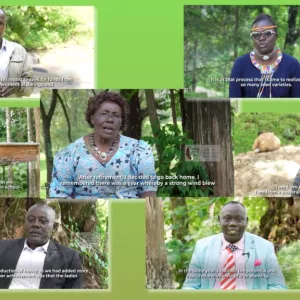
As the climate crisis intensifies, the communities least responsible for global emissions are often the ones facing the most severe consequences. In the drylands of Baringo County, Kenya, the Ogiek and Endorois peoples are witnessing firsthand how altered precipitation and prolonged droughts threaten their traditional livelihoods.
A study published by Mary Ng’endo and Esther Kariuki in Development in Practice suggests that the key to effective climate adaptation may not lie in top-down mandates, but in the authentic voices and Indigenous knowledge of these frontline communities.
The video series project, titled “Voices of Change“, was a collaborative effort between the Centre for Minority Rights Development (CEMIRIDE) and the CGIAR Research Initiative on Climate Resilience (ClimBeR). By employing a specific framework known as public narrative storytelling, researchers demonstrated how local adaptation strategies can be amplified to influence high-level global decision-making.
The power of “Self, Us, and Now”
At the heart of the study is a three-part storytelling framework: the “story of self, story of us, and story of now”. Developed by Marshall Ganz, this approach moves beyond abstract principles to engage the “heart, head, and hands,” translating values into motivation and action.
- Story of Self: Participants shared their personal journeys and their “why” for championing climate causes.
- Story of Us: Narratives linked personal experiences to the shared values and goals of the broader community.
- Story of Now: Stories articulated the urgent challenges of the changing climate and provided a clear “call to action”.
The researchers argue that the language of emotion is the language of motion; by connecting personal values with relatable lived experiences, these stories have the power to move others to take substantive action.