

Paving the way to sustainable cassava and plantain quality seed production in the Republic of Gabon
IITA–CGIAR is at the forefront of cassava and banana seed production in Gabon. The Ministry of Agriculture, in partnership with the International Institute of Tropical Agriculture (IITA), organized a two-week phased-in training to accelerate the modernization of agriculture and strengthen the national seed production through the technical assistance to the Projet d’Appui au Programme GRAINE-Phase 1 (PAPG1), under the framework of
Paving the way to sustainable cassava and plantain quality seed production in the Republic of Gabon
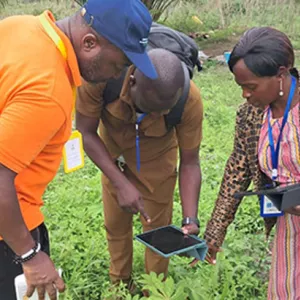
IITA–CGIAR is at the forefront of cassava and banana seed production in Gabon. The Ministry of Agriculture, in partnership with the International Institute of Tropical Agriculture (IITA), organized a two-week phased-in training to accelerate the modernization of agriculture and strengthen the national seed production through the technical assistance to the Projet d’Appui au Programme GRAINE-Phase 1 (PAPG1), under the framework of the Technologies of African Agricultural Transformation (TAAT) program. This two-week program targeted heads of agricultural division services and top government officials within the Ministry of Agriculture in Libreville, from 26 October to 5 November 2025. TAAT is a flagship program of the African Development Bank‘s Feed Africa Strategy. It aims to double crop, livestock, and fish productivity by providing over 40 million African smallholder farmers with proven technologies. Since its inception in 2018, TAAT has supported the Feed Africa Initiative by providing the necessary, productivity-enhancing, and food-processing technologies. The program has also been responsible for implementing inclusion strategies within the bank’s financing of large-scale regional and national agriculture investment projects, driving agricultural transformation across the continent.
More than ever, the Ministry of Agriculture in Gabon has demonstrated its commitment to fostering strong ties with IITA to build pathways for sustainable agrifood systems by maximizing modernized technologies for cassava and plantain seed production, aiming to become self-sufficient in the cassava and plantain value chain. The training aimed to incorporate hands-on practices using innovative digital solutions, such as the Cassava Business Connector and PlantVillage NURU, in agricultural extension services. The training also provided an avenue for participants to reflect on improving extension services to farmers and chart a strategic plan to build technical capacity across all levels of the Ministry.