

IRRI, NBAIM to advance microbial innovations for improved rice systems in India
Varanasi, July 23, 2025 — Presently, agriculture is facing the dual challenge of climate change and agrobiodiversity loss. Microbial technologies can be one of the vital solutions to achieve resilient and climate-smart farming systems. Using agriculturally important microorganisms (AIMs) offer promising, low-cost, and sustainable alternatives.
- rice systems
- microbial innovations
Varanasi, July 23, 2025 — Presently, agriculture is facing the dual challenge of climate change and agrobiodiversity loss. Microbial technologies can be one of the vital solutions to achieve resilient and climate-smart farming systems. Using agriculturally important microorganisms (AIMs) offer promising, low-cost, and sustainable alternatives.
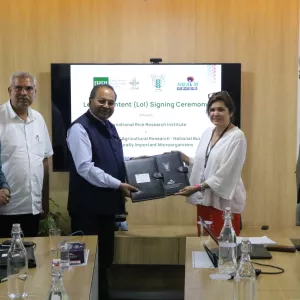
Considering the modern rice systems, productivity suffers from declining soil fertility, excessive use of chemical inputs, greenhouse gas emissions, and diminishing returns. These issues further impact smallholder farmers, particularly in rice-dominant regions of South Asia. Recognizing this need, IRRI signed a strategic Letter of Intent (LoI) with the Indian Council of Agricultural Research (ICAR)–National Bureau of Agriculturally Important Microorganisms (NBAIM). The LoI is set to pursue scientific research and capacity development within the scope of microbial innovations for rice-based systems.