

2023: A year of action research in eight countries
Country-specific research progress is steadily unfolding in the eight countries and their ALLs, with 16 innovation developments, five innovation uses, and three policy changes reported in 2023. Click on the country names below to know more or read our brochure The Agroecology Transition: Different pathways to a single destination – Eight country experiences. Burkina Faso In Burkina Faso, the pathway

2023: A year of action research in eight countries
Country-specific research progress is steadily unfolding in the eight countries and their ALLs, with 16 innovation developments, five innovation uses, and three policy changes reported in 2023. Click on the country names below to know more or read our brochure The Agroecology Transition: Different pathways to a single destination – Eight country experiences.
Burkina Faso

In Burkina Faso, the pathway to systemic change similarly entails better practices for improved livestock feeding and soil health, while seeking further benefits through innovation in the dairy value chain. On 50 dairy farms, stakeholders are experimenting with a package of agricultural practices that improve crop-livestock integration, contributing to sustainable increases in dairy production. At the same time, they are developing a business model that expands the portfolio of support services offered by milk collection centers to dairy farmers and processors. This will help scale agroecological intensification of the dairy value chain and make it more inclusive, involving women, young people, and isolated producers in governance.
Photo: Building food systems that provide healthy diets, based on local resources, food culture, gender equity: the case of fresh milk processing in Burkina Faso. Credit: E. Vall / CIRAD
India

Value chain innovations also figure importantly in the ALL established in India’s Andhra Pradesh state. Analysis of groundnut revealed much scope for strengthening fairness and economic diversification. One option is to strengthen the market links of women’s groups, so they can better serve as platforms for selling naturally produced, value-added groundnut products. Another entry point centers on integrated rice and fish farming. Demonstrations in five districts are showing promise for improving farmers’ incomes, while contributing to soil health, biodiversity, and climate change resilience.Photo: Community-led restoration initiatives supported by NGOs have improved ecological service provision in the commons, benefitting forest-dependent communities. Credit: S.Staiger / Alliance Bioversity-CIAT
Kenya
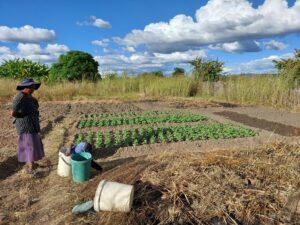
The ALLs in Kenya are strengthening farmers’ market links and creating inclusive business models in selected value chains – mango in Makueni County and leafy green vegetables in Kiambu County. Increasing awareness of the importance of organic production in the mango value chain has opened the way to conduct experiments with implementing partners on poor soil structure. For both value chains, the Initiative is helping formulate policy recommendations aimed at facilitating the agroecology transition. To create more favorable conditions for systemic change, work in the ALLs is connected with efforts to implement a national agroecology strategy.Photo: Murehwa farmer. Gardens provide vital nutrition and income, especially during droughts. Credit: D. Chrouma / CIFOR-ICRAF
Lao PDR

In Lao PDR, the ALL focuses on integrated climate- resilient production system, involving farmer-led, solar-powered groundwater irrigation and rice field fisheries. This will improve household diets and incomes alongside environmental benefits, such as increased biodiversity. An assessment of the rice value chain with the Lao Farmers Network identified opportunities to improve the farmgate price in the organic rice market. The Initiative has joined a multi-stakeholder platform, in partnership with the CGIAR Initiative on National Policies and Strategies (NPS) and the ASEAN-One CGIAR Innovate for Food project, to increase coherence across national food, land, and water policies.Photo: Area of the Living Landscape in Attapeu Province, the southernmost province of Lao PDR bordering Vietnam and Cambodia. Credit: Somphasith Douangsavanh & Mathieu Viossanges / IWMI.
Peru

In the Peruvian Amazon, cacao producers in the ALL have shown strong interest in achieving an agroecological transition. In response, the Initiative is working with the cooperative Colpa de Loros and French firm Kaoka to test sustainable practices for controlling moniliasis disease and with the cooperative Banaqui Curimaná to test biofertilizers. To promote sustainable use of native biodiversity, local government has formed a Regional Technical Commission on Biotrade, which is developing a strategic plan following an agroecology approach. Together with the NGO Terra Nuova and the Paskay company, the Initiative has supported development of the strategy and its action plan, which aim to raise awareness of Amazonian native products, strengthen farmer organizations, and support local businesses.Photo: Aromatic cocoa drying process at the Colpa de Loros Agrarian Cooperative, Neshuya, Ucayali, Peru. Credit: E. Ramirez / Alliance Bioversity-CIAT
Senegal

The decision in late 2022 to include Senegal in the Initiative led to the establishment of an ALL with a regional association and its national branch. Work is underway to include agroecology in crop-livestock systems, develop new business models for more inclusive marketing of local food products, and create a new form of governance for the agroecology transition.Photo: Participatory action research in Fatick. Credit: R. Belmin / CIRAD.
Tunisia

Tunisia’s work exemplifies how best to tailor agroecology solutions to local conditions through an integrated approach. In response to drought and land degradation, national partners have prioritized forage mixtures to enhance the resilience of predominant crop-livestock systems. Participatory experimental plots have fostered the creation of public-private partnerships, which have boosted the production and sale of forage seed, thus enabling hundreds of farmers to improve animal productivity, while lowering its ecological footprint. A novel business model has been developed as well for processing organically labeled olive oil, which promises to deliver major environmental and economic gains.Photo: Forage mixtures cultivated between lines of olive and almond trees. Credit: Z. Idoudi / ICARDA
Zimbabwe
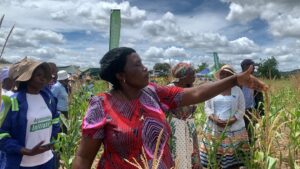
ALL members in Zimbabwe have identified various technologies that provide entry points for an agroecology transition. For example, to tackle low crop yields along with pests and diseases, farmers are testing practices such as conservation agriculture and push-pull with cowpea or beans and brachaira. Agroecology, with its emphasis on sustainable and environmentally friendly agricultural practices, has the potential to transform rural communities in Zimbabwe. However, traditional farming methods often rely on labor-intensive and time-consuming processes, which can hinder the widespread adoption of agroecological principles. This is where appropriate scale mechanization comes into play. By introducing small-scale machines and tools, farmers can streamline their operations without compromising the principles of sustainability.Photo: Partner Bio-Hub Trust attends the Initiative field day in Murehwa and witnesses how farmers embrace agroecological principles. Credit: Bio-Hub Trust
Featured image: The transition pathway as described by ALL members after a first vision-to-action activity aiming for better practices for improved livestock feeding and soil health, while seeking further benefits through innovation in the dairy value chain. Illustration by E. Vall / CIRAD