

UNEA7: Advancing sustainable solutions for a resilient planet
The seventh session of the United Nations Environment Assembly (UNEA-7) will take place from 8–12 December 2025, at the United Nations Environment Programme (UNEP) headquarters in Nairobi
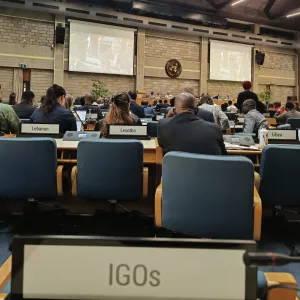
The seventh session of the United Nations Environment Assembly (UNEA-7) will take place from 8–12 December 2025, at the United Nations Environment Programme (UNEP) headquarters in Nairobi, after a week of negotiations at the seventh session of the Open-ended Committee of Permanent Representatives (OECPR) (OECPR). This year’s Assembly convenes under the theme “Advancing sustainable solutions for a resilient planet,” calling for urgent, coordinated global action to address environmental degradation, climate impacts, biodiversity loss, and pollution.
This biennial process is particularly significant, as UNEA is the world’s highest decision-making body on the environment, setting political direction, mandating scientific work, and shaping the frameworks that guide countries and institutions in advancing sustainable land and ecosystem management. Its outcomes influence global priorities and open concrete opportunities for science–policy engagement, partnerships, and on-the-ground implementation.
This is the first time that CGIAR is participating as an official observer in the meetings and negotiations taking place across a wide range of topics. These negotiations are not just diplomacy, they set the direction for global environmental governance and shape the enabling environment for integrated landscape solutions, restoration efforts, and climate-resilient development.
In the lead-up to UNEA-7, the CGIAR Multifunctional Landscapes (MFL) Program, together with the UN Decade on Ecosystem Restoration and FAO, convened a global webinar titled “Progress, Challenges & Opportunities in Land Restoration and Sustainable Land Management.” The session brought together governments, scientists, restoration practitioners, and community leaders from across regions to reflect on the state of global restoration efforts and the pathways needed to accelerate impact on the ground.
The discussion underscored that effective restoration is increasingly rooted in partnerships, science-based planning, and local leadership. Contributions from UN Decade Coordinator Natalia Alekseyeva highlighted how global frameworks are converging—from Ramsar COP decisions on freshwater ecosystems, to CBD’s Target 2 restoration roadmap, to the stronger collaboration emerging across UNFCCC, CBD, and UNCCD processes. These developments are opening new opportunities for countries to align restoration commitments with practical implementation support, capacity development, and regionally adapted solutions. The webinar also showcased real examples of progress: innovative private-sector investments in rangeland restoration, large-scale national programs such as Saudi Arabia’s work under the Riyadh Agenda, and powerful farmer-led models from Uganda demonstrating how simple, low-cost practices can transform degraded lands and livelihoods.
Negotiations Overview
While UNEA has not yet begun, discussions are already underway, and during the first three days of OECPR one of the facilitators mentioned that only about ten per cent of the text has been negotiated. This means long hours will be needed in the coming days to ensure there is agreed language ready for UNEA. From a substantive perspective UNEA-7 covers a broad spectrum of environmental issues, several draft resolutions are particularly relevant for CGIAR’s Multifunctional Landscapes (MFL) Program due to their direct links with land health, integrated landscape management, and science–policy interfaces.
After the discussions of the UN General Assembly's High-Level Meeting on Antimicrobial Resistance (AMR), which occurred in September 2024, this topic has been brought to UNEP under the resolution on the environmental dimensions of antimicrobial resistance (AMR)
Following the UN General Assembly's High-Level Meeting on Antimicrobial Resistance (AMR) in September 2024, the issue has now been taken forward within UNEP through the draft resolution on the environmental dimensions of AMR, an increasingly urgent challenge emerging at the intersection of soil and water quality, pollution, agricultural practices, and health systems. The current draft recognizes that the adverse effects of climate change, biodiversity loss, land degradation, and pollution can exacerbate infectious and non-communicable diseases, placing additional pressure on health systems and increasing antimicrobial use across humans, animals, plants, and agrifood sectors. This dynamic disproportionately affects developing countries and reinforces the need for sustainable and resilient health systems. Negotiators continue to debate the extent of UNEP’s role, particularly regarding environmental monitoring, scientific advice, and country support. For MFL, this discussion sits at the heart of its work on pollution reduction, sustainable agrifood systems, and integrated One Health approaches across landscapes.
Land–sea interactions also feature prominently in the draft resolution addressing the massive influx of sargassum seaweed blooms. The text calls for coordinated scientific and technical guidance to improve monitoring, prevention, and management strategies. Importantly, it acknowledges that coastal and marine ecosystems are highly vulnerable to pollution originating from land-based activities—including pesticide residues and agricultural runoff—which have been linked to the large-scale sargassum blooms observed in the Atlantic Ocean since 2011. This recognition reinforces the importance of watershed-to-coast approaches, a core pillar of the MFL program, which examines how landscape-level decisions shape downstream ecological outcomes.
A third resolution under negotiation centers on integrated fire management. Against the backdrop of record-breaking wildfires around the world, the text underscores the need for ecosystem-based management, early-warning systems, satellite-based monitoring, and community-centered fire governance. It strengthens the mandate of the Global Fire Management Hub and highlights the need for increased support to developing countries in prevention, preparedness, and post-fire recovery. Given MFL’s work in fire-prone drylands, rangelands, and forest landscapes, this resolution is highly relevant to the program’s efforts to generate evidence on fire ecology, landscape restoration, and risk-informed land management approaches.
Another important text under negotiation is the Coral Reef Climate Resilience Resolution, which calls for accelerated, science-based global action to protect and restore coral reefs as climate impacts intensify. It highlights the need for integrated approaches, including nature-based and ecosystem-based solutions, improved water-quality management, reducing land-based sources of pollution through sea-to-source strategies, sustainable fisheries, and effective area-based conservation measures. The resolution places strong emphasis on stewardship by Indigenous Peoples and local communities, traditional governance systems, and co-management practices, all themes that resonate with MFL’s work on inclusive, locally embedded landscape governance.
Finally, UNEA-7 includes a resolution on artificial intelligence for environmental governance, reflecting growing interest in the dual role AI can play. While AI can significantly enhance environmental monitoring, restoration planning, resource efficiency, and climate-resilience efforts, it also introduces environmental challenges, including energy demand, water use, e-waste, and pressure on critical minerals. The draft emphasizes the need for sustainable design and deployment across the full AI life cycle and calls for governance frameworks that ensure AI contributes to solutions for climate change, biodiversity loss, pollution, land degradation, and drought.
MFL Official Side Event at UNEA-7
As part of its first participation as an official observer at UNEA, the CGIAR Multifunctional Landscapes Program is co-organizing the official side event “Innovating for Climate Resilience: Integrated Solutions for Sustainable Land, Water, and Food Systems,” to be held on 12 December 2025 at 1:15 PM. This session is co-hosted with Morocco, Costa Rica, and OCP Group and will convene scientists, policymakers, and practitioners to explore how integrated soil, water, and nutrient management can accelerate climate-resilient transformation. Designed as a science-informed dialogue, the event will spotlight practical pathways for collaboration and implementation.
For the Multifunctional Landscapes Science Program, this moment provides both direction and opportunity. The global community is calling for solutions that are integrated, science-driven and inclusive, the very foundation of the MFL approach. As countries move from commitment to implementation, CGIAR’s evidence, partnerships and innovations will be essential to help translate UNEA mandates into tangible improvements in landscapes and livelihoods around the world.