

New research highlights vouchers as a tool to improve fruit affordability in Nigeria and Vietnam
A recent study published in Social Science & Medicine provides new evidence on how price-based interventions can influence consumption of healthy foods in low- and middle-income countries.
- Nigeria
- Vietnam
- Fruit Vouchers
- Market Systems
New research highlights vouchers as a tool to improve fruit affordability in Nigeria and Vietnam
A recent study published in Social Science & Medicine provides new evidence on how price-based interventions can influence consumption of healthy foods in low- and middle-income countries.
Authored by several researchers now contributing to the CGIAR Science Program on Better Diets and Nutrition (BDN), the study examined the impact of fruit vouchers in Nigeria and Vietnam. Using a randomized controlled trial, vouchers were distributed to more than 1,200 urban and peri-urban households over five months in 2021.
Key findings:
The trial showed high voucher uptake in both countries, with large vouchers used slightly more frequently than smaller ones. Despite high voucher redemption, impacts on fruit consumption varied by context:
- In Nigeria, where baseline fruit consumption was lower, vouchers led to increased consumption during the intervention period. However, these effects were not found at follow-up, suggesting that budget constraints prevented households from continuing to purchase fruit once vouchers ended.
- In Vietnam, where baseline fruit consumption was higher, vouchers had less impact during the intervention period. Some evidence of increased fruit consumption was found at follow-up, particularly among households that received larger vouchers, though these effects weakened after accounting for the fact that multiple statistical tests took place at the same time.
Implications for market systems
Overall, the findings suggest that while well-designed voucher subsidies can positively impact fruit consumption, more permanent affordability solutions are needed to shift long-term purchasing habits for low-income consumers. Future pathways could include combining vouchers with nutrition education or integrating them into cash transfer programs.
These insights align with BDN’s research on market systems for better diets (Area of Work 2), which focuses on making nutrient-rich foods more available, affordable, and desirable, while supporting inclusive income and employment opportunities for women and youth.
Read the full article: Vouchers to increase fruit affordability in Nigeria and Vietnam, Social Science & Medicine (Ambler et al., 2026).
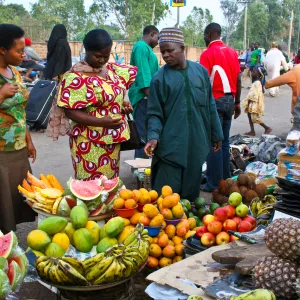
Photo caption/credit: Fruit stall: Our host helps us make a selection of fruits at the 'Park’ market/Andrew Moore.
-----------------------------
The CGIAR Science Program on Better Diets and Nutrition (BDN) identifies, co-designs, and tests food system solutions that tackle major constraints to delivering sustainable healthy diets and improving nutrition outcomes for people in low and middle-income countries. To learn more about BDN, visit https://www.cgiar.org/cgiar-research-portfolio-2025-2030/better-diets-and-nutrition