

GGA: 59 Indicators, Many Questions
COP30’s compromise on adaptation indicators positions CGIAR as a vital partner, leveraging its research to transform cautious political agreements into measurable, financeable actions that strengthen global food, land, and nutrition systems against climate change.

COP30 in Belém was meant to be a turning point for the Global Goal on Adaptation (GGA): the moment when adaptation moved from aspiration toward something more measurable, operational, and financeable. Instead, it delivered a more cautious and politically negotiated outcome. Yet for CGIAR—and for food, land, and nutrition systems more broadly—the decision may prove more consequential than it first appears.
The GGA, established under the Paris Agreement, seeks to enhance adaptive capacity, strengthen resilience, and reduce vulnerability to climate change. Unlike mitigation, however, adaptation has long been dogged by difficult questions: how to measure progress, how to compare outcomes across countries, and how to link evidence to finance. COP30 was expected to resolve at least some of these questions through agreement on adaptation indicators and clearer guidance on tracking progress toward the Global Stocktake.
What emerged was a compromise. Parties adopted 59 Belém Adaptation Indicators, drawn from a larger set of 100 proposed by technical experts, and launched the Belém–Addis Vision on Adaptation—a two-year, Party-led policy alignment process to develop guidance for using those indicators. The decision was adopted amid objections in the closing plenary, reflecting concerns over weakened language, unresolved methodological gaps, and the absence of new binding finance commitments.
For CGIAR, however, the significance lies less in what was settled than in what was left deliberately open.

The indicators themselves matter. Five adopted indicators relate directly to food and agriculture, covering adaptation-relevant agricultural practices, institutional frameworks, land degradation, yields, and access to adequate food and nutrition. Others touch on water, poverty and livelihoods, and infrastructure—domains where CGIAR research is already deeply embedded. Their inclusion reinforces a critical point: adaptation in food and land systems is no longer peripheral to the global adaptation agenda; it is central to it.
At the same time, the negotiations made clear that indicators alone do not equal action. Many Parties—particularly developing countries—argued that adoption was premature without clearer methodologies, stronger data systems, and significantly more finance and capacity support. Indicators referencing domestic budgets or national policy choices proved especially contentious, underscoring fears that adaptation tracking could become prescriptive or misaligned with agreed principles on climate finance flows.
This tension creates a strategic opening for CGIAR. The COP30 outcome explicitly acknowledges gaps in data, baselines, and methodologies—precisely the space where applied research and long-term field engagement are indispensable. As Parties move into the Belém–Addis policy alignment process, CGIAR’s comparative advantage is clear: generating credible, context-sensitive evidence that can make adaptation measurable without making it punitive or detached from reality.
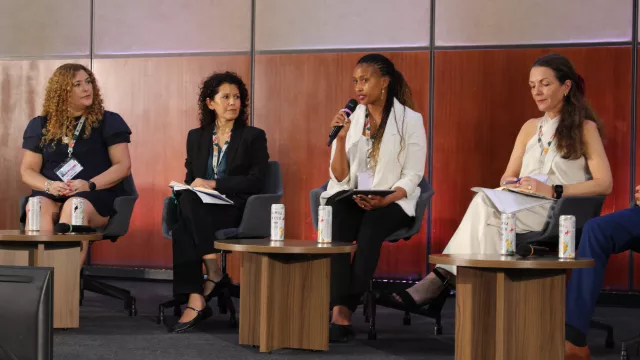
The institutional architecture set out in the decision further sharpens this role. The Adaptation Committee, supported by the Consultative Group of Experts and the LDC Expert Group, is tasked with guiding implementation and reporting. The UNFCCC Secretariat will prepare a technical paper on the use and aggregation of indicators. Climate funds are invited to support readiness and capacity building. None of these bodies can succeed without a stronger evidence base on what adaptation looks like in practice, how it unfolds over time, and how progress can be assessed across diverse agro-ecological and socio-economic contexts.
This is where CGIAR’s work becomes systemically important. First, CGIAR can help stress-test the Belém Adaptation Indicators. Through long-running research programmes across Africa, Asia, and Latin America, CGIAR generates longitudinal data on crops, livestock, land, water, and livelihoods under climate stress. This evidence can help answer questions that negotiators could not resolve: Which indicators are feasible in data-poor settings? Which captures meaningful change rather than proxy activity? And where do indicators risk obscuring distributional outcomes for women, youth, and marginalized communities?
Second, CGIAR is well positioned to support national and subnational capacity to track adaptation. Negotiations repeatedly highlighted concerns that adaptation monitoring could become a reporting burden divorced from local priorities. CGIAR’s experience in co-developing metrics with governments, extension systems, and communities offers a different model—one that aligns global frameworks like the GGA with national adaptation plans and locally grounded monitoring systems. This is particularly relevant as debates continue over whether Biennial Transparency Reports, adaptation communications, or national plans should serve as the primary reporting vehicle.
Third, CGIAR can act as a bridge between adaptation metrics and finance. Finance was among the most politically charged issues at COP30. While calls to quantify adaptation finance targets were resisted, the decision urges efforts to at least triple adaptation finance by 2035 and acknowledges the need for better methodologies to track flows. For CGIAR, this underscores an emerging demand: adaptation evidence that is credible not only to policymakers, but to funders. Robust indicators, grounded in real-world outcomes, are increasingly a prerequisite for unlocking and directing finance. CGIAR research can help ensure that the metrics used to justify investment reflect actual resilience gains in food and land systems.

The Baku Adaptation Roadmap adds another layer of relevance. Agreed as a platform for workshops, knowledge exchange, and coherence across adaptation processes from 2026 to 2028, it offers a structured entry point for research organizations to shape practice. While its role in indicator refinement remains contested, the Roadmap creates space for evidence-based dialogue—precisely the kind CGIAR can support by bringing lessons from the field into global discussions.
Ultimately, COP30 did not deliver a clean, operational framework for the Global Goal on Adaptation. But it did something arguably more important for CGIAR: it made explicit the limits of negotiation without evidence. By adopting indicators while acknowledging their weaknesses, Parties have signaled a growing reliance on research organizations to help close the gap between global ambition and on-the-ground reality.
For CGIAR, the message is clear. The future of the GGA will not be shaped only in negotiating rooms, but through the quality of data, tools, and learning that inform the next round of decisions. COP30 places CGIAR squarely at the centre of that effort—not as an observer of adaptation policy, but as a critical enabler of its credibility, usability, and impact.
