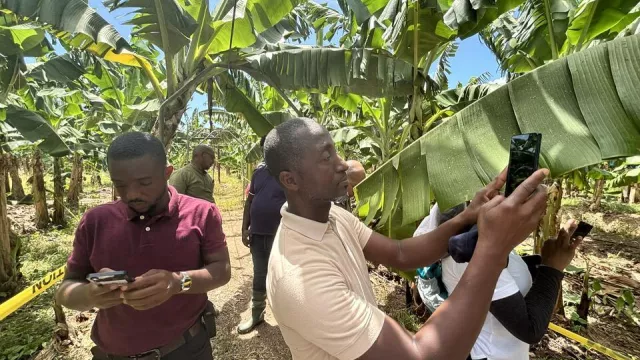

Breeders refocus products to serve multistakeholder needs
CGIAR INITIATIVES Market Intelligence Primary Impact Area Nutrition, health & food security Related Impact Areas
In four Caribbean countries —Jamaica, Guyana, Saint Vincent and the Grenadines, and Saint Kitts and Nevis— farmers, cooperatives, and extension services are testing AI-powered digital tools that could transform how crops are grown, decisions are made, and climate challenges are addressed. This pioneering initiative is supported by APC Colombia, the Caribbean Agricultural Research and Development Institute (CARDI), and the
Poultry farming plays an essential role in rural livelihoods of Africa and southeast Asia, contributing to family nutrition and income. Despite this, the poultry subsector faces several challenges in these regions: low investment and low output, high young bird mortality, and being perceived as a hobby. Tropical Poultry Genetics Solutions (TPGS), a science-led project implemented by the International Livestock Research
By Ram Dhulipala, Interim Director of CGIAR’s Digital Transformation Accelerator, and Peter Coaldrake, Interim Director of Breeding for Tomorrow CGIAR’s 2025–2030 Research Portfolio is designed to strengthen connections between science, partners, technology, and the people who rely on them. Within the Portfolio, Science Programs and Accelerators work hand in hand. An example of this integrated approach is the collaboration between
The CGIAR Sustainable Animal and Aquatic Foods (SAAF) program is advancing gender inclusivity, scientific innovation, and local partnerships including with Mali’s Institut d’Economie Rurale (IER) to strengthen the country’s small ruminant value chain. Launched in Bamako in June 2025, the five-year program is coordinated by the International Livestock Research Institute (ILRI) in collaboration with IER, the International Center for Agricultural
Message from Breeding for Tomorrow (B4T) Interim Director Peter Coaldrake to CGIAR Breeders, National Partners, and Funders. CGIAR has a track record of 50 years of success in the field of crop innovation, credited with spurring the Green Revolution and saving a billion lives, primarily in Asia where many people were on the brink of starvation. Today, as we aim
As Nepal positions itself to meet growing national demand for safe, nutritious dairy while tackling climate and productivity challenges, over 50 stakeholders gathered on May 13–14, 2025, for a national co-design workshop. The event served as a platform to co-develop a Theory of Change for Nepal’s dairy value chain under the CGIAR Sustainable Animal and Aquatic Foods (SAAF) Science Program.
By Peter Coaldrake, CGIAR Breeding for Tomorrow’s Interim Director and Christian Werner, Quantitative Geneticist for Accelerated Breeding For over five decades, CGIAR has made major contributions to crop improvement, developing thousands of improved varieties that have helped safeguard food security across the Global South. But the challenges ahead are rising, as is the bar for success in public plant breeding.