National policies and strategies driving policy innovation for global impact
Primary Impact Area Poverty reduction, livelihoods & jobs Related Impact Areas


Primary Impact Area Poverty reduction, livelihoods & jobs Related Impact Areas
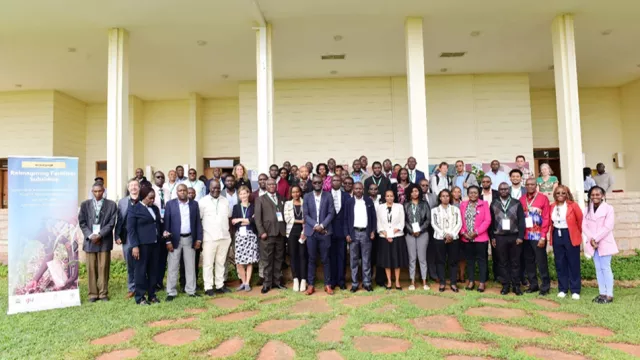
By: Hailemariam Ayalew, Faith Kimaiyo, Sally Kimathi, Michael Keenan, and Clemens Breisinger Fertilizer subsidies have played a prominent role in Kenya’s agricultural policy since 2007, helping farmers reduce production costs and improve yields. From early programs like the National Accelerated Agricultural Input Access Program (NAAIAP) to the current National Fertilizer Subsidy Program (NFSP), the government has invested heavily to
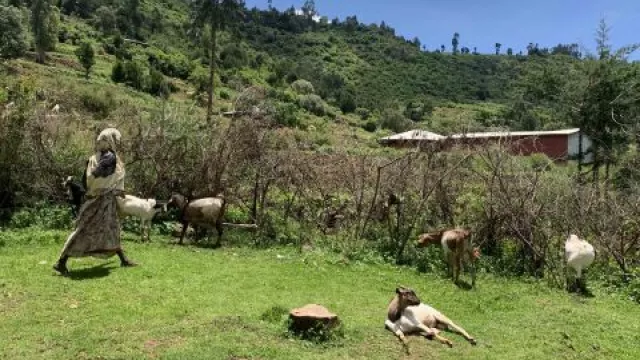
This blog was originally posted on IFPRI Ethiopia’s website. The issue of policy coherence has gained growing significance in development discussions over the past few decades. It was also emphasized in the United Nations’ 2030 Agenda for Sustainable Development and is highlighted in Sustainable Development Goal 17. Similarly, it has been noted by both experts and researchers that fragmented policies
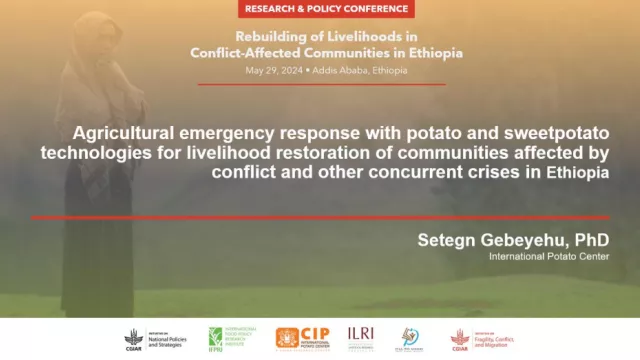
This blog was first published on IFPRI Ethiopia website. Armed conflicts and other concurrent crises that have been occurring in different regions of Ethiopia in the past couple of years have left behind a legacy of massive displacement and disruption of agricultural activities, exposing millions of people to various challenges, including food shortages, malnutrition, and loss of productive resources

This blog was originally published on IFPRI Ethiopia’s website. Over the last two decades, Ethiopia achieved rapid and substantial economic growth and development and maintained relative stability within the volatile Horn of Africa region. However, more recently, Ethiopia continue to face major challenges arising from internal conflicts and related shocks. A recent conflict that broke out in November 2020 in
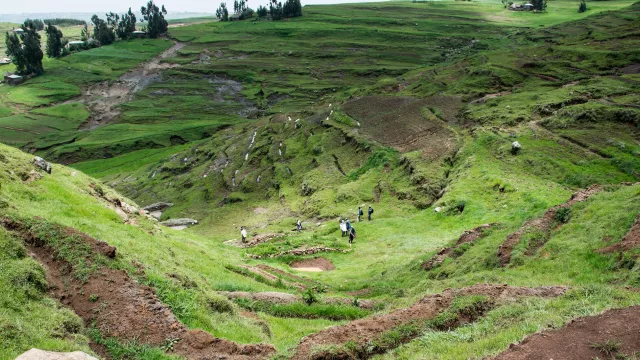
On 18 December 2024, the CGIAR Initiative on NEXUS Gains, in partnership with the Ethiopian Ministry of Water and Energy, and International Food Policy Research Institute (IFPRI), hosted an online workshop on groundwater governance. The workshop shared results from recent international research on groundwater governance and discussed opportunities for improving groundwater governance policy and practice in Ethiopia. The event aimed
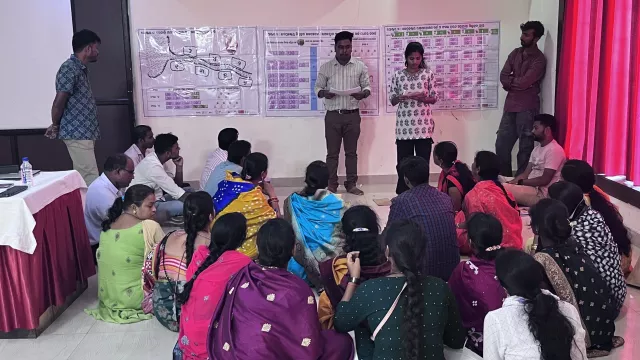
By Mequanint B. Melesse, Vishwambhar Duche, Anupama Guvvalavenkata, Dron Kumar, Richu Sanil, Thomas Falk, and Ruth Meinzen-Dick In many semi-arid and arid dryland regions of India, water scarcity is a serious challenge to development. In these regions, prolonged droughts and climate variability pose a threat to both agricultural systems and livelihoods. As a result, the majority of these regions are

By Muzna Alvi and Farha Sufian Promotion of water-intensive cotton and wheat for export has caused the Aral Sea, once one of the world’s largest lakes, to shrink dramatically. Uzbekistan, a downstream riparian country in the Aral Sea Basin, requires large amounts of water for irrigation, and for energy processing and electricity generation. In turn, energy is needed to pump,